
23 October 2026, 14:38
Loading...
Czechia pays Europe’s highest average subsidies for renewables per MWh
Dian Hrozek
11 January 2019, 11:25
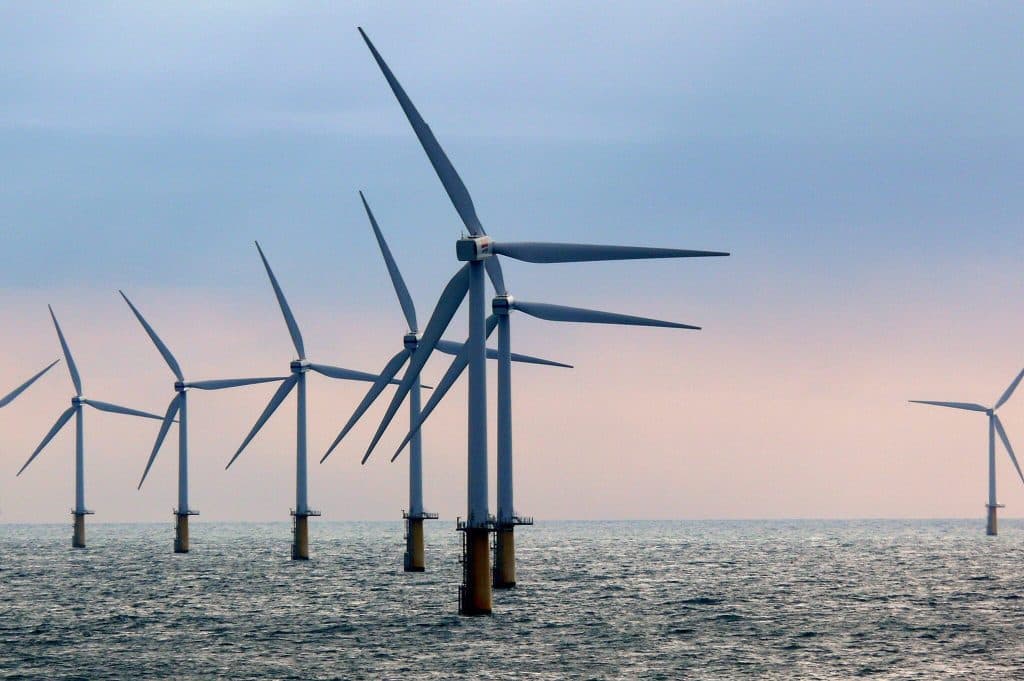
Czechia pays the highest average subsidies for renewable energy sources per MWh. This follows from a report by the Council of European Energy Regulators (CEER), which compares individual renewable support schemes across Europe. Electricity from subsidised sources accounts for approximately one-tenth of all electricity generated in Czechia. Among the countries surveyed, Germany generated the most subsidised electricity (187 TWh), which was 23 times more than in the Czech Republic (8 TWh).
The Council of European Energy Regulators (CEER) has published a Report on renewable energy support schemes in Europe, aimed at providing comparable data across 27 countries (CEER members). The report provides information on direct and indirect support schemes for various renewable energy technologies, as well as on the volume of expenditure on this support. It also provides information on the use of renewable sources for self-consumption, the occurrence of grid constraints associated with renewables, and the current state of implementation of recommendations under the EEAG (Guidelines on State aid for environmental protection and energy). Data were collected for 2016 and 2017.
Renewables are becoming cheaper in Europe, but are most expensive in the Czech Republic
An interesting comparison is provided by the weighted average level of support (across support types and technologies). Between 2015 and 2017, the average subsidy cost in the 25 countries surveyed fell by 12.6 % (from 110.22 €/MWh to 96.29 €/MWh). The lowest average subsidy is in Norway (12.8 €/MWh), while the highest is in Czechia (198.29 €/MWh). Support for renewable energy costs the average household in Europe 13 % of its total electricity bill.
In Czechia, however, electricity from subsidised renewables accounts for only 9.3 % of total electricity generation, placing the country 11th from the bottom. The average for the countries surveyed is 16.7 %. In 2016, for example, subsidised renewable sources in the Czech Republic generated 7.725 TWh, and in 2017 only 6 % more.

Most electricity in Germany, largest share in Denmark
Germany generated the largest amount of subsidised electricity from renewables among the countries surveyed. In 2016, this amounted to 161 TWh, approximately one-quarter of total German electricity generation. In 2017, subsidised German renewables generated as much as 187 TWh, a year-on-year increase of 16 %.
Denmark has the largest share of subsidised electricity from renewables in total electricity generation. Subsidised electricity clearly predominates there, accounting for a full 63 % of total generation (in 2016). Lithuania ranks second, with a significantly smaller share of 35 %. Norway has the lowest share of electricity from subsidised sources (only 3 %). Although Norway generates almost all of its electricity from renewables (primarily hydropower plants), most of these sources operate without subsidies.

Renewables are mainly paid for by customers through energy bills
The funding structure for subsidies has not changed significantly since the previous survey. In most countries, non-tax revenue sources remain the main source of funding (renewable surcharges in the electricity price). In the Czech Republic, this involves a combination of a surcharge in the electricity price (non-tax) and a payment from the state budget (tax-funded).
Individual national support schemes differ, but most countries use both direct and indirect support mechanisms. Direct support includes feed-in tariffs (FIT – Feed-in tariffs), feed-in premiums (FIP – Feed-in premium), green certificates (GC – Green certificate) or investment incentives (grants). The most common forms of indirect support are priority electricity offtake, priority grid connection and lower grid charges (connection / network-use charges).

A gradual shift towards market-based mechanisms
Market-based support mechanisms are only beginning to develop in Europe. The biggest changes during the period under review were the emergence of feed-in premiums (a supplement to the market price) in place of feed-in tariffs, as well as the development of capacity auctions (tenders). The report notes that the share of renewables required to balance deviations, like conventional sources, is gradually increasing (usually only above a certain installed capacity). The importance of self-consumption is also gradually growing, and some form of net metering has been introduced in most of the countries examined.
The first European legislation specifically focused on renewables was the European Renewable Energy Directive of 2009 (Renewable Energy Directive – RED). Renewable sources have undergone enormous development since then, and this November a new document of the European Commission revising the RED entered into force. New European rules for renewable energy subsidies are therefore expected from 2021. Changes are also expected following the approval of legislation on the Electricity Market Regulation. Both are part of the so-called „winter package“ (Clean Energy Package).
Translation disclaimer
This article is a machine translation of the Czech original and has not yet been fully reviewed. In case of any doubt, please refer to the Czech version.
Sdílejte článek prostřednictvím:
You might also like
23 October 2026, 11:01
23 October 2026, 06:34