EG.D has doubled the number of connected solar plants in Czechia this year, speeding up connections

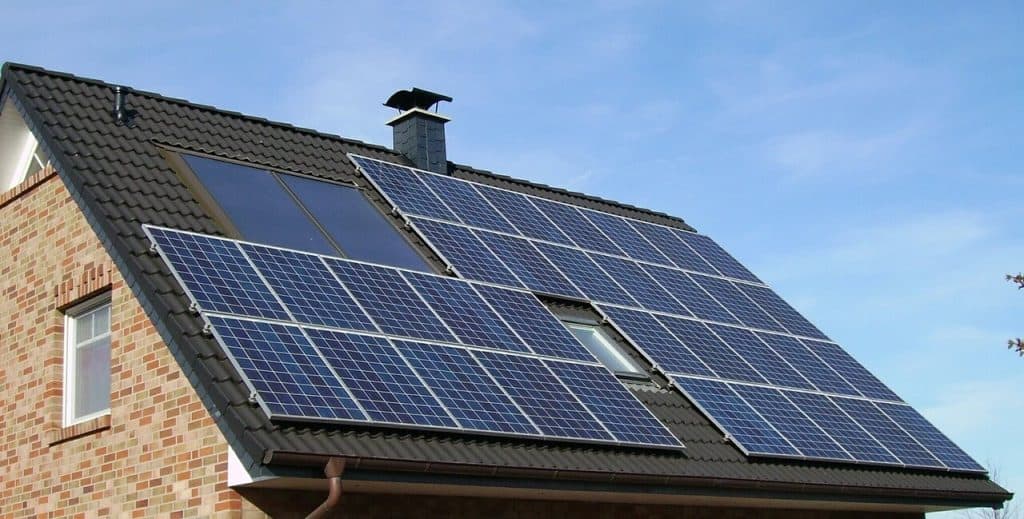
EG.D, a distribution company in the E.ON group, has connected more than 26.000 photovoltaic power plants to its grid this year, with a capacity of approximately 211 megawatts (MW). In both cases, this is more than double the number of installations connected during the whole of last year. One of the main reasons is that connections are being made faster. EG.D representatives, speaking to journalists in Prague today, said the company distributes electricity in South Bohemia and Moravia, the Vysočina Region and parts of the Olomouc and Zlín regions.
EG.D initially faced problems with long lead times for connecting new photovoltaic plants to the distribution grid. The company’s vice-chairman Pavel Čada said the number of applications in some places even exceeded the limits imposed on the distributor by law. „We were not prepared for it,“ Čada admitted. „People wanted to optimise their energy costs while also increasing their energy self-sufficiency. To cope with such a surge, which was difficult to predict at the time, we had to introduce a number of measures,“ he said.
The company therefore increased the capacity of its grid and its technical staff. According to Čada, applications for connection can now be processed within seven days, and physical connection completed within 15 days. At the beginning of the year, the lead times were more than twice as long. In some areas with many applicants, however, the company still has to reject applications to connect power plants that feed electricity into the grid.
EG.D received 37.000 connection applications over the whole of last year and expects a similar number this year. However, the trend is gradually changing, according to Libor Kolář, EG.D’s head of grid development and planning. While the company received an average of 1100 applications a week at the start of the year, the current average is around 700 per week, Kolář said.
EG.D representatives also presented a plan today for further increasing grid capacity, for which the company intends to gradually raise its budget. The plan includes, for example, a significant share of so-called undergrounding, which involves placing electricity grid cables underground. The company expects this to strengthen the grid and enable the connection of new sources that feed electricity into it. The company is currently carrying out undergrounding work on around 600 kilometres of the grid. By 2030, it wants to have 32.000 kilometres of low-voltage lines underground, representing 75 percent of the low-voltage grid.
In the first half of this year, energy companies brought 45.197 photovoltaic power plants online across the Czech Republic. The number of installations is almost a quarter higher than for the whole of last year. The sharp increase in the number of new sources in the system has already led to the first operational problems. During the Easter period, ČEPS, the operator of the Czech electricity transmission system, disconnected hundreds of domestic photovoltaic power plants from the grid for two hours. The reason was an imbalance in output across the electricity system. This was the first time ČEPS had used such a restriction in live operation.
Translation disclaimer
This article is a machine translation of the Czech original and has not yet been fully reviewed. In case of any doubt, please refer to the Czech version.




