8 November 2026, 08:10
Loading...
Europe lacks enough workers in solar energy

Zuzana Vrbová
4 October 2023, 11:44
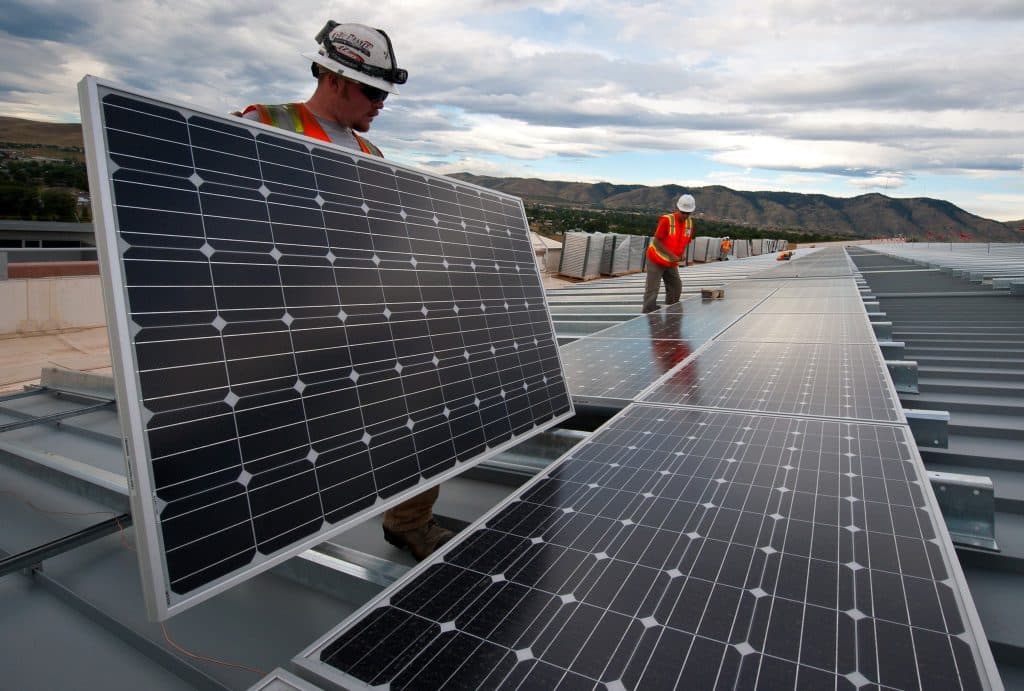
Europe has ambitious plans for solar energy. However, it is lagging behind in terms of both the number and quality of trained workers who can manufacture, install and repair solar systems. Poland has the fastest-growing solar workforce.
Solar energy is growing in Europe. The third annual EU solar jobs report was published by the SolarPower Europe association. It was reported on by CEEnergy News. The report states that by 2025 there will be more than 1 million solar energy workers in the EU. However, there is a shortage of capacity to train workers. Professional qualifications are key to manufacturing and installing a well-functioning and safe solar power plant.
"When it comes to qualifications in solar energy, Europe is now beginning to address the issue of quantity. But we must also at least double our efforts to improve quality. Citizens and businesses need to be confident that their solar projects are manufactured, installed and maintained by properly trained, trusted professionals," said Walburga Hemetsberger, CEO of SolarPower Europe.
The growth of the solar market is reflected in the rising number of workers in the sector. From 2021 to 2022, the number of people employed in the industry increased by nearly 200,000. In 2022, the sector will reach around 648,000 employees, and SolarPower Europe forecasts 800,000 for 2023. As in previous years, the installation segment continues to account for the largest share of workers, employing 84% of the total. Power plant operation and maintenance account for 8% of workers, while strategic manufacturing jobs make up more than 7% of all jobs.
Poland leads the EU in solar job creation—a testament to its large residential solar sector—with almost 150,000 solar jobs. Spain and Germany follow, each with around 100,000 solar workers.
The association's report outlines the challenges associated with the sector's growth and makes seven policy recommendations to ensure a larger, properly trained workforce. In addition to creating retraining programmes aimed primarily at current employees in the fossil fuel sector and facilitating the free movement of workers within the EU, it also recommends, for example, the cross-border recognition of certifications and skills.
Translation disclaimer
This article is a machine translation of the Czech original and has not yet been fully reviewed. In case of any doubt, please refer to the Czech version.
Sdílejte článek prostřednictvím:
You might also like
7 November 2026, 17:23

7 November 2026, 13:37