IEA: Central and eastern Europe is not tapping its huge renewable gas potential

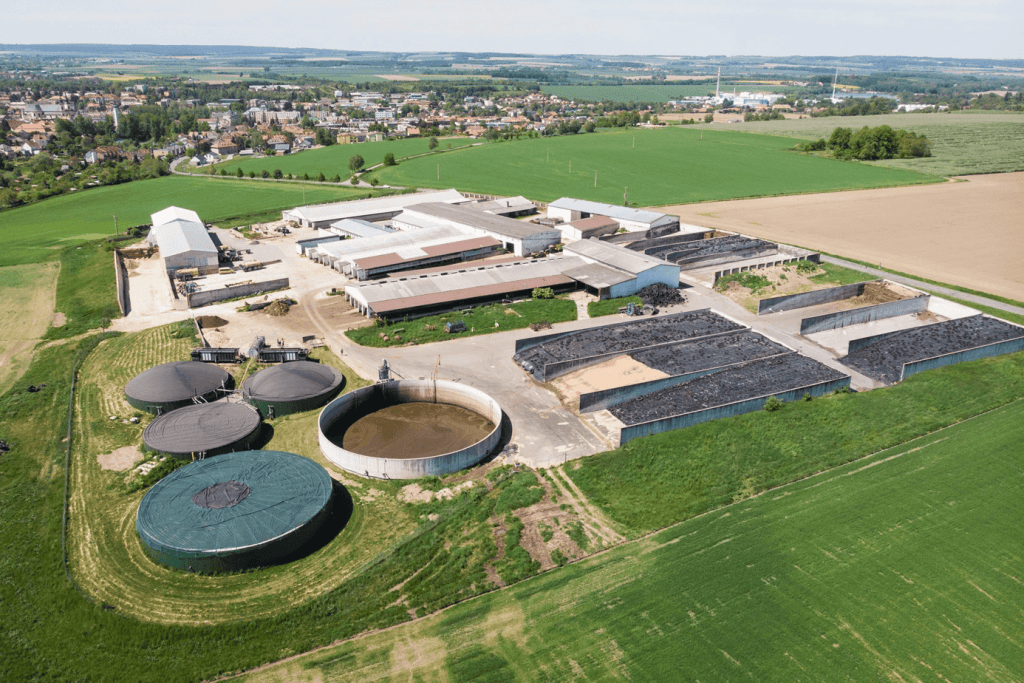
Production of biogas and biomethane in Europe has grown significantly in recent years. However, according to a new report, it still falls far short of what available feedstocks and technological capabilities would allow, particularly in central and eastern Europe. The International Energy Agency says biomethane could meet up to a fifth of global gas consumption in the future. As much as 80% of the potential for new production is in China, India and Brazil.
Europe is already a global leader in biogas and biomethane production. In 2023, biogas production in Europe reached approximately 22 billion cubic metres (bcm), of which 4.9 bcm was biomethane. This is equivalent to around 8% of total EU gas consumption, which has been around 400–450 bcm in recent years.
Last year, installed biomethane production capacity also rose to 6.4 bcm per year, a year-on-year increase of 37%. Italy, for example, quadrupled the number of its biomethane facilities and more than tripled their total capacity.
Nevertheless, the International Energy Agency (IEA) warns that the European Union is currently using only around 40% of its sustainable potential. The IEA's newly published report, Outlook for Biogas and Biomethane, also suggests that Europe has significant untapped potential. According to the authors, this is particularly true in central and eastern European countries.
The potential is further boosted by the fact that countries such as Poland, Romania, Hungary and Slovakia have substantial supplies of organic feedstocks, particularly agricultural residues, livestock manure and municipal waste, which can be used to produce renewable gases.
However, sector development in these countries is held back by a range of structural barriers. In addition to low investment and a lack of infrastructure for upgrading biomethane and injecting it into the grid, the main obstacles include complex legislative processes and a lack of political support. In some cases, there is no long-term strategy or stable subsidy framework to enable investors to plan the construction of new facilities.
Renewable gas could meet up to a fifth of global natural gas demand
According to the IEA, biomethane has considerable global potential. Modelling suggests sustainable annual production could exceed 1,000 million tonnes of oil equivalent (Mtoe). This is equivalent to more than 20% of current global natural gas demand. Around 80% of this potential is in developing economies, particularly China, India and Brazil.
However, current market prices are not conducive to further development. Biomethane production costs range globally from 10–30 USD/GJ, depending on the type of feedstock and technology used. Costs are lowest in Southeast Asia, where prices are around 9 USD/MBtu (approximately 9.5 USD/GJ), while the average price in Europe is approximately 16 USD/MBtu (about 17 USD/GJ).
By comparison, wholesale natural gas prices in Europe were around 9 USD/MBtu (approximately 9.5 USD/GJ) in 2024. This means biomethane is already cost-competitive with natural gas in some regions, while elsewhere it requires subsidies and other government incentives.
Nevertheless, the commodity offers several advantages over natural gas. It is renewable, can be produced locally and significantly reduces greenhouse gas emissions, particularly when it replaces the uncontrolled decomposition of organic waste. The IEA therefore notes that when positive externalities—such as reduced methane emissions and lower waste burdens—are taken into account, biomethane may be more economically advantageous even where its nominal price is higher than that of natural gas.
Translation disclaimer
This article is a machine translation of the Czech original and has not yet been fully reviewed. In case of any doubt, please refer to the Czech version.