
28 October 2026, 15:10
Loading...
Several major players withdraw from Norway's offshore wind auction as risks prove high

Eduard Majling
3 April 2024, 14:24
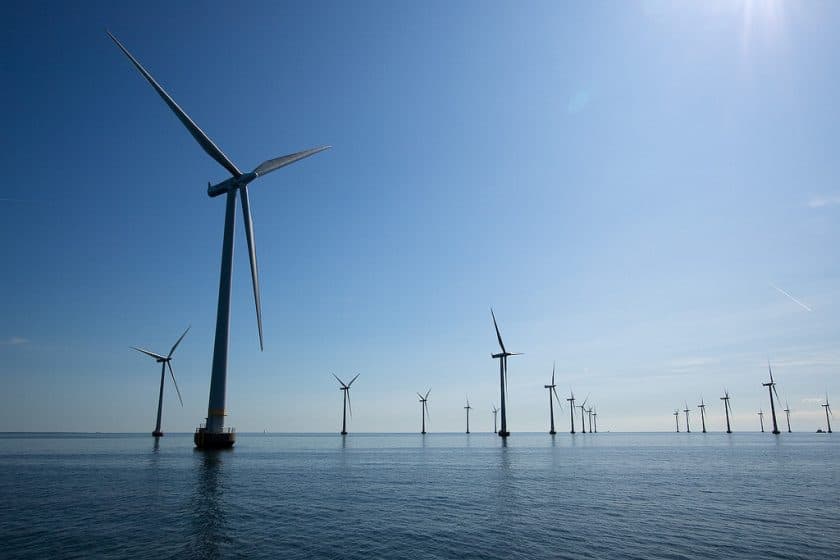
Norway held its first-ever auction to support the construction of offshore wind farms in March. Given the specific conditions, several traditional developers did not take part, saying the risks and uncertainty were too high. A Belgian-Swedish consortium ultimately won the auction with a price of almost 100 EUR/MWh.
In recent years, more and more countries have been switching to auction-based support schemes for renewable energy sources. Developers typically compete for support, with competitive pressure intended to secure the lowest possible price. Norway is no exception: in March this year, it concluded its first auction to support the construction of offshore wind farms.
Although several developers initially expressed interest in the auction, some ultimately withdrew. Two investor consortia confirmed to Montel that they ultimately did not take part in the auction. They were the consortium of Statkraft, Aker and BP, and the consortium of Shell, Lyse and Eviny.
Ventyr ultimately won the auction. The consortium comprises renewable energy developer Parkwind and the investment arm of Swedish furniture maker IKEA. For IKEA, investing in a wind farm is one way to reduce its carbon footprint and support a phase-out of fossil fuels. According to Montel, the company secured support for its 1.4GW project at a price of 1,150 Norwegian kroner per MWh, or around 99 EUR/MWh.
Norway's energy minister subsequently said he was confident the wind farm project would be built. The country's first large offshore wind farm could begin supplying electricity as early as 2030, he said. Annual generation is then expected to reach around 6 to 7 TWh.
"We took part in the auction with the aim of winning at a price that would allow us to deliver a good and profitable offshore wind project. The auction result has now shown that another player bid lower than we did, and we have to accept that," said Pal Eitrheim, head of renewables at Equinor, Norway's largest oil and gas producer.
The risk was too high for some developers
Investors cited the requirement to secure the grid infrastructure needed to connect their project as one of the main risks. This detail can be crucial for some investors, as offshore wind farm connections are usually provided by transmission system operators. When a wind farm is farther from shore, the connection can significantly increase costs.
"We considered the uncertainty too high in relation to the expected return. A central issue is the requirement for the wind farm developer to also build the onshore grid connection," said Leiv Ingve Orke, executive vice president for renewables at Lyse.
Despite the continued development of renewable energy, Norway continues to intensively develop its oil and natural gas production. Small modular reactors could also be built in Norway in the future.
Translation disclaimer
This article is a machine translation of the Czech original and has not yet been fully reviewed. In case of any doubt, please refer to the Czech version.
Sdílejte článek prostřednictvím:
You might also like

28 October 2026, 13:08

28 October 2026, 11:10

28 October 2026, 09:08
