
23 October 2026, 14:38
Loading...
Scientists successfully test robotic solution for inspecting and maintaining floating wind farms

Lukáš Lepič
14 August 2024, 16:16
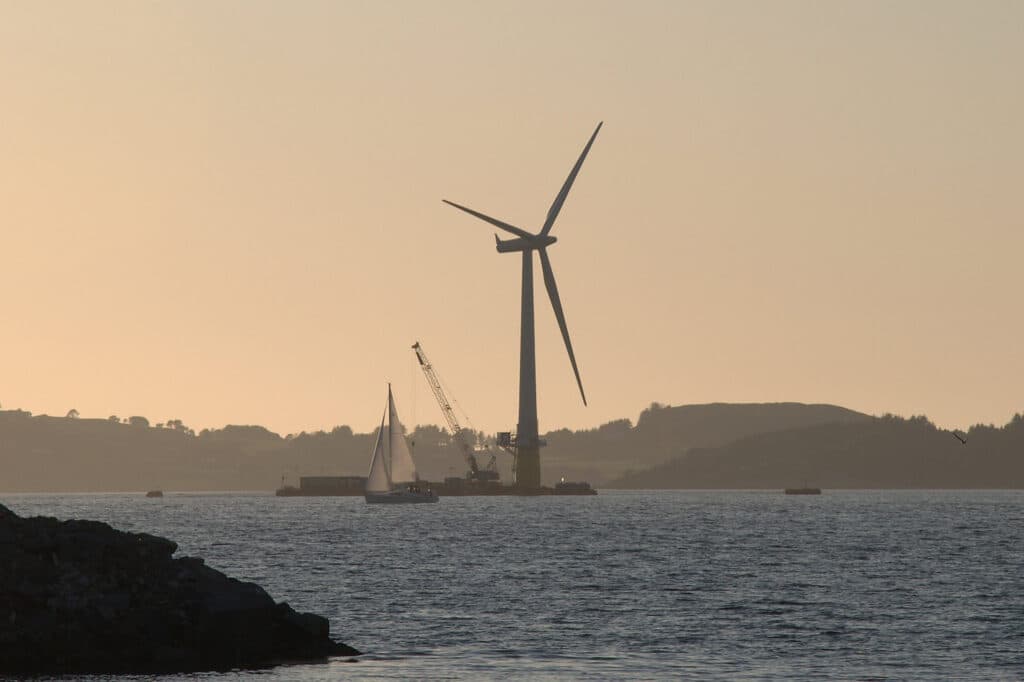
Researchers from Ireland’s University of Limerick have developed and successfully tested an innovative robotic solution that could fundamentally change how floating wind farms are maintained. Remotely operated robots could make it possible to inspect and maintain the installations more efficiently in the future, reducing costs and improving safety in challenging marine conditions. The new technology was tested at the WindFloat Atlantic wind farm off the coast of Portugal.
Researchers from the University of Limerick developed and tested in real-world conditions a robotic solution based on remotely operated robots that enables the effective inspection and maintenance of floating wind farms. The inspection and maintenance of wind farms are currently among the main challenges from the perspective of the operating economics of floating wind farms.
Wind turbines are installed on free-moving platforms, which are anchored to the seabed in various ways. Their constant movement, caused by weather conditions and the state of the sea, not only complicates the efficient management of power generation but also increases the demands of regular maintenance.
Progress in this area could therefore improve the optimal scheduling of power generation, as well as minimise the risk of capsizing, extend the overall service life and reduce regular maintenance costs. Regular inspections and maintenance currently depend to a considerable extent on human intervention. However, as the sector grows and advances, there is an increasing focus on improving reliability and reducing operating costs.
“CRIS is developing exceptional robotic capabilities that could change how we approach inspections at offshore wind farms. I am really proud of the results we have achieved in these trials, and I believe this is just the beginning of a groundbreaking partnership,” said Dr Phillipe Santos, principal investigator at the Centre for Robotics and Intelligent Systems (CRIS), commenting on the success of the study and the trials at WindFloat Atlantic.“Our goal is to continually innovate and develop robotic technologies that increase efficiency, reduce costs and, most importantly, improve safety by minimising the need for human workers to operate in hazardous conditions,” he added.
The technology was tested at one of the first 25 MW floating wind farms, located off the coast of northern Portugal. The WindFloat Atlantic project was commissioned in 2020 and generated 80 GWh in 2023, exceeding the operator’s expectations. Before it was commissioned, analysts’ main concern was the complexity of inspection and control.
The project is led by Ocean Winds, the majority owner, developer and operator of the WindFloat Atlantic floating offshore wind farm. According to a press release, the company was a key testing partner for the research project.
Translation disclaimer
This article is a machine translation of the Czech original and has not yet been fully reviewed. In case of any doubt, please refer to the Czech version.
Sdílejte článek prostřednictvím:
You might also like


23 October 2026, 11:01


23 October 2026, 06:34