European energy in Chinese hands? Nordex chief calls for EU ban on Chinese wind turbines
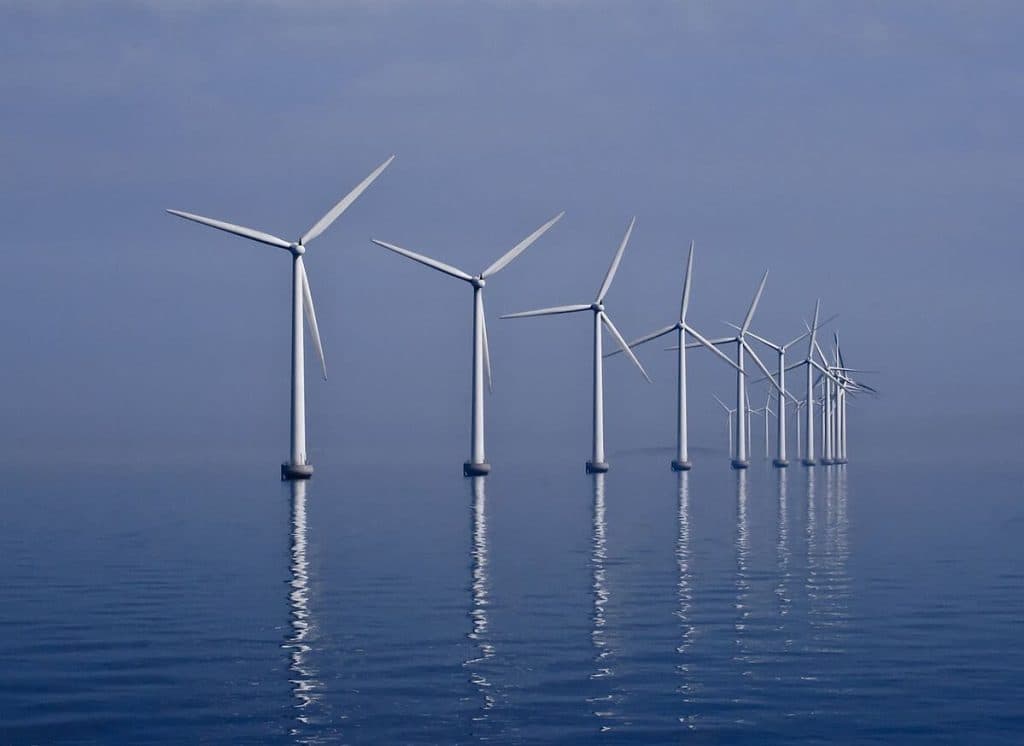
Growing interest from Chinese wind turbine manufacturers in the European market has not gone unanswered. European companies are significantly raising the debate over the fundamental security risk posed by the potential entry of Chinese turbines into the European market. Most recently, German manufacturer Nordex SE did so, with its chief executive openly calling for an EU-wide ban on Chinese wind turbines in an interview with the Financial Times.
Nordex CEO José Luis Blanco, in an interview with the Financial Times, called for an EU-level ban on “non-European” wind turbines, citing concerns over the security of Europe’s energy system as the primary reason.
The EU recently moved to ban the funding of new renewable energy projects that use Chinese voltage inverters. These have long been identified as a potentially critical threat to the security of European grids. This measure, likely to take effect from November this year, will effectively prevent China from potentially exercising control over new, particularly solar, generation assets. It prompted a sharp response from the Chinese government.
According to the head of one of Europe’s largest wind turbine manufacturers, the EU should take even more resolute action in the case of wind power.
“Western origin should be a fundamental principle for all new wind capacity connected to European grids, not only for publicly supported projects. This is primarily about technological independence and supply chain independence. The key issue is not where the servers are located, but who controls the software and access to the systems,” Blanco said.
According to him, the EU’s regulatory framework should treat Chinese manufacturers of key technologies and components as high-risk and effectively prevent them from bidding for European projects.
The remarks by one of Europe’s key players come at a time of growing interest in the European market from Chinese giants. Chinese industrial giants such as Mingyang, Envision and Goldwind openly identify European expansion as their primary goal, particularly due to the growth prospects of the European market and China’s enormous excess capacity.
These efforts are prompting a response from European companies, although they still have a firm grip on the local market. Nordex, together with two other manufacturers, Vestas and Siemens Gamesa, dominates the European wind market with more than a 90 % share of new installations. Nordex itself generated 84 % of its EUR 7.5 billion turnover in Europe last year.
However, following their experience in the solar sector and China’s growing dominance in battery storage, European players are understandably concerned about the potential large-scale entry of Chinese turbines and are increasingly calling for strict EU-level measures.
Chinese firms reject accusations, point to “double standard”
Chinese manufacturers strongly reject the arguments about threats. They say European companies are merely trying to eliminate foreign competition by pushing for changes to EU legislation.
In a recent interview with Recharge, Yong Yu, director of Chinese state-owned wind turbine manufacturer Windey, made this argument, pointing to a “double standard” in European security concerns. Danish giant Vestas, he said, “has installed thousands of turbines in China without a single Chinese accusation of espionage.”
He also pointed out that another Chinese manufacturer, Goldwind, has already installed hundreds of turbines in both the US and Australia. According to him, the governments there have by no means responded with the same level of security concerns as in Europe, where significantly fewer Chinese turbines are in operation. Chinese manufacturer Windey has so far won the only project in Europe – the 854 MW Maestrale Ring wind farm in Serbia.
Beyond the security dimension, the Chinese also reject another line of argument from European manufacturers concerning state subsidies for Chinese companies. European manufacturers say these subsidies, together with the size of the Chinese market, have enabled Chinese manufacturers to build technological and manufacturing capacities that pose an existential threat to Europe’s wind sector.
The UK recently decided to ban turbines made by Chinese manufacturer Mingyang from its offshore projects due to national security concerns. According to the Chinese government, this move will damage bilateral relations. Whether and to what extent the concerns of European manufacturers will also be reflected in EU legislation remains an open question, although an answer should emerge in the near future.
Translation disclaimer
This article is a machine translation of the Czech original and has not yet been fully reviewed. In case of any doubt, please refer to the Czech version.