10 October 2026, 07:37
Loading...
Italian industry pressures government over high electricity prices: seeks commissioner to speed up renewables permitting
Veronika Jurcová
18 June 2026, 10:13
Italy’s business lobby is warning the government that high electricity prices are threatening the competitiveness of industry. Confindustria is therefore pushing for emergency measures, including the appointment of an “energy commissioner” to unblock thousands of renewable energy projects and reduce the country’s dependence on expensive gas, Reuters reports.
High energy prices are pushing industry to the brink
Italy is facing mounting pressure over high electricity prices, which are among the highest in Europe. The main cause is its heavy dependence on imported natural gas, which accounts for almost half of electricity generation—the highest share in the entire European Union.
The recent rise in gas prices, intensified by the geopolitical situation in the Middle East, has, according to industry, only highlighted the system’s weaknesses. Energy costs are becoming a key factor in competitiveness, and business associations say they are beginning to threaten the very viability of production in the country.
Italy’s business confederation Confindustria is therefore openly warning that, unless the situation changes, some companies may move production to countries with cheaper energy.
Businesses see slow renewables development, which has failed to offset expensive fossil fuels, as the core of the problem. Italy has long been aiming for a significant increase in green power generation—in line with its plans, renewables should meet more than 60 % of the country’s electricity consumption by 2030.
Four thousand applications are waiting. A special commissioner is supposed to be the solution
The key obstacle is not a lack of projects, but their approval. Around 4000 renewable energy projects with a combined capacity of about 130 gigawatts are currently awaiting permits in Italy.
Confindustria says this “pipeline” of investment needs to be unblocked urgently. It is therefore proposing the appointment of a special government commissioner to centralize and simplify the permitting process—similar to the government’s approach in 2022, during the energy crisis, when it was building LNG terminals.
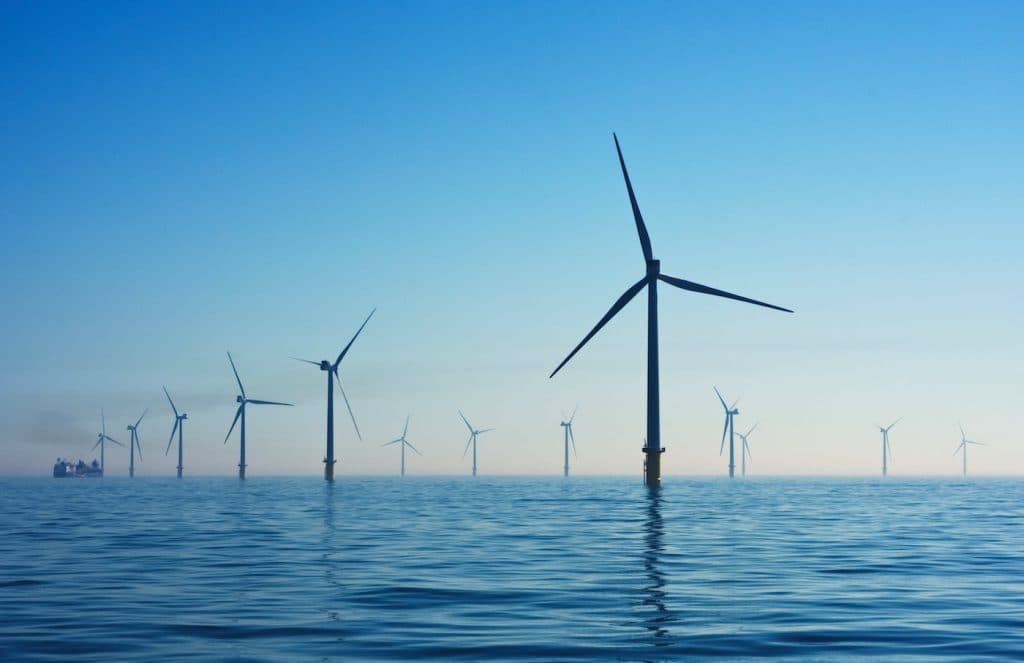
The main problem is the overlap in responsibilities between the state and the regions, which leads to lengthy delays. Offshore wind projects are among those most affected.
The potential is significant. According to estimates, offshore wind farms could meet up to 7 % of Italy’s electricity consumption by 2030.
More wind, cheaper electricity
Faster wind power development could significantly reduce electricity prices.
"If the climate and energy plan targets are met and renewables’ share of domestic electricity consumption reaches 63.4 % by 2030, up from around 49 % in 2025, average wholesale electricity prices could fall by 20 to 30 EUR/MWh,said Carlo Stagnaro, director of research and studies at the Bruno Leoni Institute, during a wind energy conference in Rome.
Such a decline would effectively eliminate the current gap between electricity prices in Italy and Germany and significantly ease pressure on industry and households.
Beyond lowering prices, a larger share of wind power would also help stabilize the system. Wind generation naturally complements solar power, reducing price volatility.
At the same time, the country would reduce its heavy dependence on fossil fuel imports, which currently meet around 80 % of Italy’s total energy needs.
Czech debate: acceleration zones and opposition to wind turbines
Czechia is having a similar debate, although from a different starting point. Wind power accounts for around one percent of electricity consumption there, while the European average is about 20 percent. According to an analysis by the WindEurope association, the development of wind power in the country is significantly hampered by disinformation and misleading claims about its impacts.
At the same time, debate is intensifying over so-called acceleration zones, areas where renewable energy projects can be permitted more easily and quickly. The government has significantly narrowed their scope and is currently working with a proposal for 94 sites. A proposal to increase the minimum distance between wind turbines and populated areas from 500 to 900 meters also looks unlikely to pass. According to the European Commission, such a move could jeopardize the fulfillment of Czechia’s renewables commitments and its access to European funding.
Europe is looking for quick solutions
Although conditions in Czechia and Italy differ, the common denominator is clear: the main barrier has long ceased to be technology or capital. It is now the speed of permitting processes and the state’s ability to convince the public that the development of renewables is a matter of both economic competitiveness and energy security.
The Italian example highlights a wider European problem: political will is running up against complex bureaucracy and local disputes, while energy prices react to geopolitical shocks almost immediately. This mismatch between the speed of the market and the slow pace of construction is becoming one of the main risks to the transition. Italy is now testing whether permitting can be accelerated in “crisis mode.” If successful, its approach could point the way for other European countries, including Czechia.
Translation disclaimer
This article is a machine translation of the Czech original and has not yet been fully reviewed. In case of any doubt, please refer to the Czech version.
Sdílejte článek prostřednictvím:
You might also like
10 October 2026, 07:02

9 October 2026, 13:47