23 October 2026, 14:38
Loading...
Major wind turbine manufacturer in crisis as shares plunge 90%

Martin Voříšek
24 March 2019, 09:17
Senvion, a major wind turbine manufacturer, has decided to withdraw from a total of 30 countries as a result of unfavourable market developments. At the same time, it has created the position of chief restructuring officer within its management team.
It appears that the golden era for wind turbine manufacturers is gradually coming to an end, with competition for every order intensifying in the market. Manufacturers are increasingly feeling that the market is becoming more competitive and that some markets are no longer as promising as they once were.
Unfavourable market conditions are being felt particularly by German manufacturer Senvion, which has already taken initial steps to restructure the company and improve its financial performance. As one remedial measure, Senvion has decided to reduce the number of wind turbine models it offers and the number of markets in which it operates.
The exact turbine models and countries from which the company is to withdraw have not yet been specified, but the company expects these steps to bring a significant improvement in its results.
At the same time, the company has also strengthened its staffing. Neil Robson, who has more than 30 years of experience in the field, has become the new chief restructuring officer.
His main task is to set the company on a path to further growth, although achieving this will not be easy. The company’s condition is best illustrated by the fact that its shares have fallen by more than 90% since last May alone – their price stood at just EUR 1.02 at the end of last week, compared with more than EUR 11 in the second half of May.
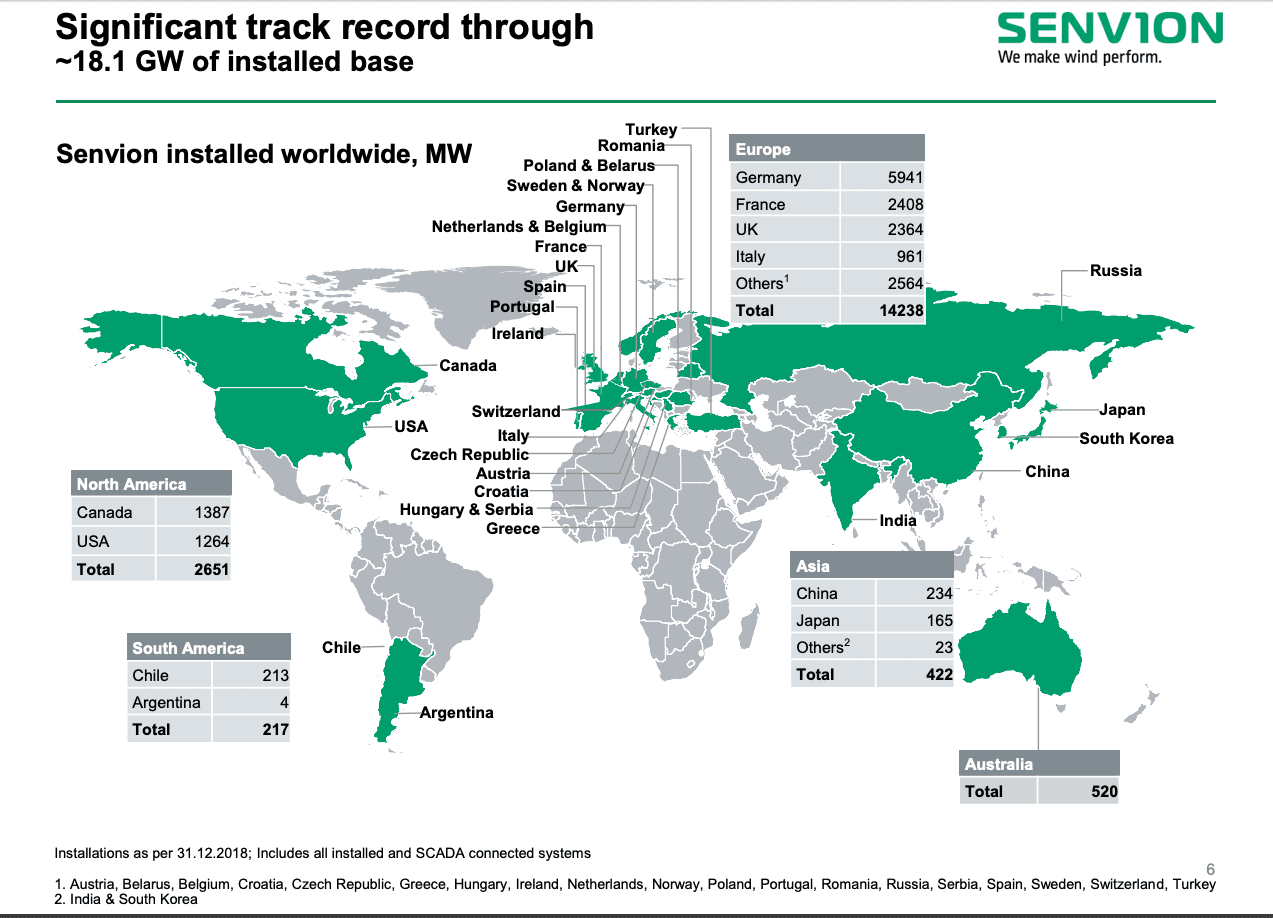
Senvion’s main market is Germany, where it has installed nearly 6 GW of capacity. This may be the company’s main problem, as wind turbine installations there fell by more than half last year.
According to the company’s presentation, Senvion secured orders in Germany in the third quarter for only 130 MW of capacity. By contrast, the company performed well in Chile and India, for example, where it secured orders for 630 MW and 550 MW, respectively.
Translation disclaimer
This article is a machine translation of the Czech original and has not yet been fully reviewed. In case of any doubt, please refer to the Czech version.
Sdílejte článek prostřednictvím:
You might also like
23 October 2026, 11:01

23 October 2026, 06:34