
1 November 2026, 21:20
Loading...
The first offshore wind transmission development plan is here

Marek Kršák
27 January 2024, 08:21
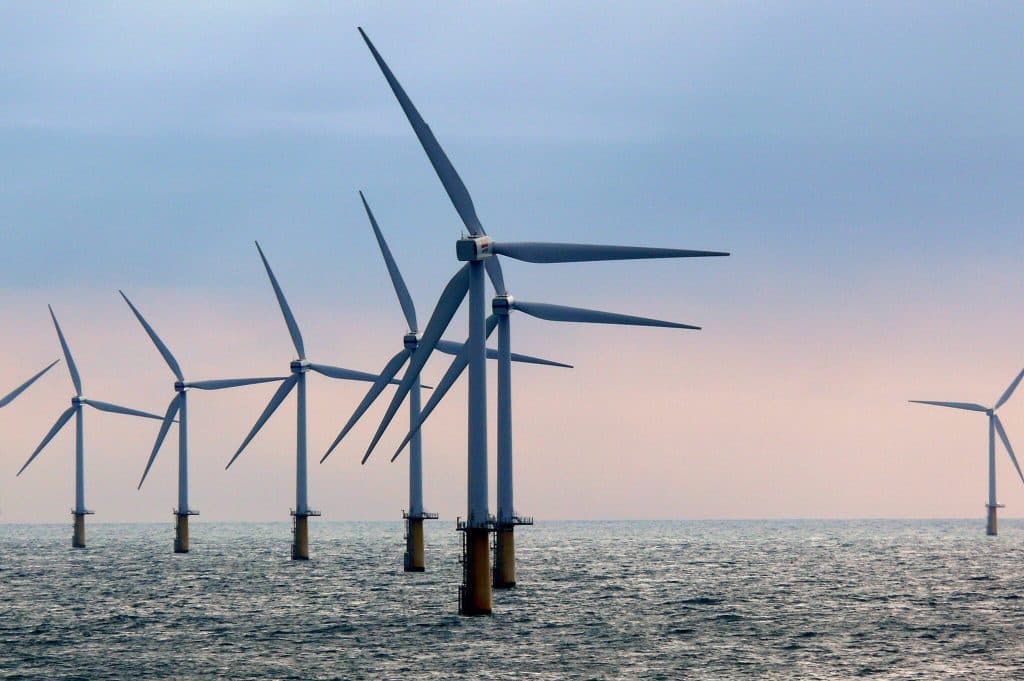
According to the plan published by the European Network of Transmission System Operators, robust connections between offshore wind farms and customers on land will need to be in place by 2050. This will require the construction of at least 54 000 kilometers of transmission lines and investment of around 404 billion euros.
According to the targets set out in the plan, European countries are to install up to 354 GW of offshore wind capacity by 2050, more than ten times today’s installed capacity. If Norway’s and the United Kingdom’s targets were also included, total installed offshore wind capacity would rise to 496 GW. The annual increase in installed capacity is set at a minimum of 22 GW, compared with growth of around 2.5 GW in recent years.
The vast majority of today’s offshore wind farms are connected to land by direct links. So-called hybrid links, which are more capital-intensive, currently account for just over 5% of all connections. ENTSO-E expects direct links to remain the most widespread option in the future. However, the number of hybrid links will increase significantly, requiring the construction of highly specialized infrastructure. Hybrid lines are estimated to account for more than 20% of all connections by 2050.
EU Energy Commissioner Kadri Simson welcomed ENTSO-E’s offshore network development plan, saying that it “reflects the direction set by the EU” and, thanks to contributions from EU member states, makes existing European plans for offshore energy “even more ambitious.” WindEurope CEO Giles Dickson said the plan “will help people decide how best to build offshore grids” and identify bottlenecks.
Technology of the future
Hybrid links make the entire system more secure, help reduce price differences between individual markets, and support the more efficient use and distribution of energy generated offshore.
On the other hand, they represent a more complex system that requires more demanding planning and a greater number of backup and protection devices to prevent serious faults. Precise coordination between the various parties will also be needed to ensure an adequate and timely response in the event of an accident.
The European Network of Transmission System Operators acknowledges that building these assets will be very difficult. Nevertheless, this step is essential to create a robust, interconnected system that meets requirements both offshore and on land.
“If we make it more complex—with more offshore wind farms connected to the mainland—we can’t do it with today’s technology, because if there is a fault, the whole structure collapses,” explained Gerald Kaendler, head of asset management at Amprion GmbH and chair of ENTSO-E’s System Development Committee.
According to ENTSO-E, additional interconnection capacity between EU countries is estimated at 13 GW with DC circuit breakers by 2040, plus a further 7.5 GW without them. Within EU countries, the need is estimated at 13 GW with DC circuit breakers and 2 GW without them.

Hybrid interconnections between offshore transmission systems, source: ENTSO-E
Then there are supply-chain challenges, including “support for manufacturing capacity, such as vessels, shipyards, ports and ports for assembling and deploying offshore equipment, as well as the human resources needed to design, build and operate offshore systems.”
Another obstacle is the supply of critical raw materials needed to build the infrastructure.
“The challenge ahead is immense, because the offshore infrastructure market is now global and resources are scarce,” ENTSO-E added.
Closer political cooperation
Offshore wind farms are also often connected to more than one country, requiring closer coordination between governments, generation asset owners and grid operators than traditional renewable energy projects.
“Policies on grid access and connection, especially for hybrid grid connections, are complicated,” said Giles Dickson of WindEurope. “The issue of cost sharing must be resolved as soon as possible. Otherwise, the EU risks losing investment,” he warned.
According to ENTSO-E, overcoming these challenges will require unprecedented cooperation between public authorities and industry, with a system-wide approach to grid planning and construction.
The good news is that EU policymakers are aware of these challenges. Last November, the European Commission presented an action plan setting an ambitious target of building at least 60 gigawatts (GW) of offshore wind capacity by 2030 and 300 GW by 2050. However, these figures are lower than ENTSO-E’s projections for installed capacity.
Translation disclaimer
This article is a machine translation of the Czech original and has not yet been fully reviewed. In case of any doubt, please refer to the Czech version.
Sdílejte článek prostřednictvím:
You might also like

1 November 2026, 16:09
1 November 2026, 07:59

31 October 2026, 12:55

31 October 2026, 08:21