23 October 2026, 14:38
Loading...
Wind power covers 11% of global electricity consumption after record growth, but sector still faces major challenges

Jan Budín
24 April 2026, 06:03
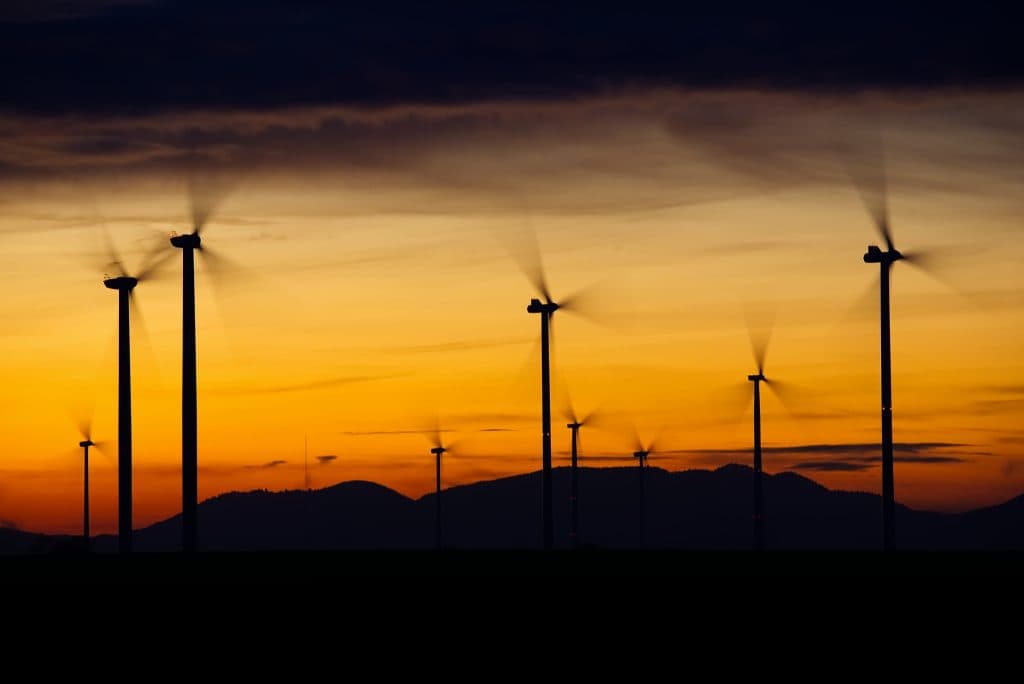
Global installed wind power capacity grew by a record 169 GW last year to 1,346 GW. More than three-quarters of the new installed capacity was added in China, where wind farms with a total installed capacity of 130 GW were commissioned. Annual wind power generation thus reached nearly 3,000 TWh, equivalent to more than 11% of global electricity demand. This follows from the annual report of the World Wind Energy Association (WWEA).
Although 2025 was for the wind sector, despite record generation, one of the worst years in recent decades, it also brought a record increase in global installed capacity of 169 GW. It should be noted that China accounted for 77% of this increase, adding 130 GW on its own and operating wind farms with a total installed capacity of almost 700 GW at the end of 2025.
India became the second-largest market for new wind farms last year, commissioning wind capacity totalling 6,300 MW and narrowly overtaking the United States with 6,272 MW. In a notional fourth place, the WWEA recorded Germany, where 4.6 GW of new wind capacity was installed last year.
"At the end of 2025, 46 countries had installed wind power capacity exceeding 1,000 MW, two more than in 2024. The new members of the 'gigawatt club' are Serbia and Peru, which commissioned 460 MW and 270 MW of new wind capacity, respectively, in 2025," the association said.
Thanks to record growth in installed wind capacity, electricity generation from these sources also rose significantly, reaching almost 3,000 TWh. According to the WWEA, this means that wind farms generated more electricity than nuclear power plants last year and covered more than 11% of global electricity demand.
"Twelve countries now generate more than 20% of their electricity from wind, while Denmark, Germany, the United Kingdom, the Netherlands, Ireland and Uruguay have shares exceeding 30%. The global leader is Denmark, which generates more than half of its electricity from wind power," the association added.
Barriers to faster growth
Despite record growth in wind power last year, the WWEA noted that the wind sector is not in an optimal position. Aggressive actions against wind power in the United States led by the current Donald Trump administration are, according to the WWEA, not only disrupting the development of US wind power but also destabilising international supply chains.
The association also identified continued support for fossil fuels as a barrier. Although some countries began reassessing this support following the energy crisis triggered by Russia's invasion of Ukraine, growing geopolitical tensions in recent months have led to similar initiatives being halted in many regions.
One of the most significant barriers preventing faster wind power development, however, remains lengthy permitting processes for new projects.
"The average permitting period exceeds five years, and in some countries it even reaches 10 years or more. Such delays are indefensible in a sector where technology and demand are evolving at such a rapid pace. Reducing these processes to two years or less would unlock significant growth, especially in the replacement of older turbines, where capacity at a given site could be tripled or quadrupled," the WWEA said.
Finally, the WWEA also warned about the growing amount of fake news about wind power, which it says must be countered. This could include, for example, direct support for residents affected by wind power development.
"People who know and experience the benefits of wind farms will become immune to this false information," the WWEA added. According to the association, wind power's share of global electricity generation could rise to 40% by 2050. This would require installed capacity to increase to 10,000 GW, it said.
Translation disclaimer
This article is a machine translation of the Czech original and has not yet been fully reviewed. In case of any doubt, please refer to the Czech version.
Sdílejte článek prostřednictvím:
You might also like
23 October 2026, 11:01
23 October 2026, 06:34