
23 October 2026, 14:38
Loading...
Wind turbines are improving and getting cheaper, with support from oil giant Shell

Martin Voříšek
16 June 2016, 14:30

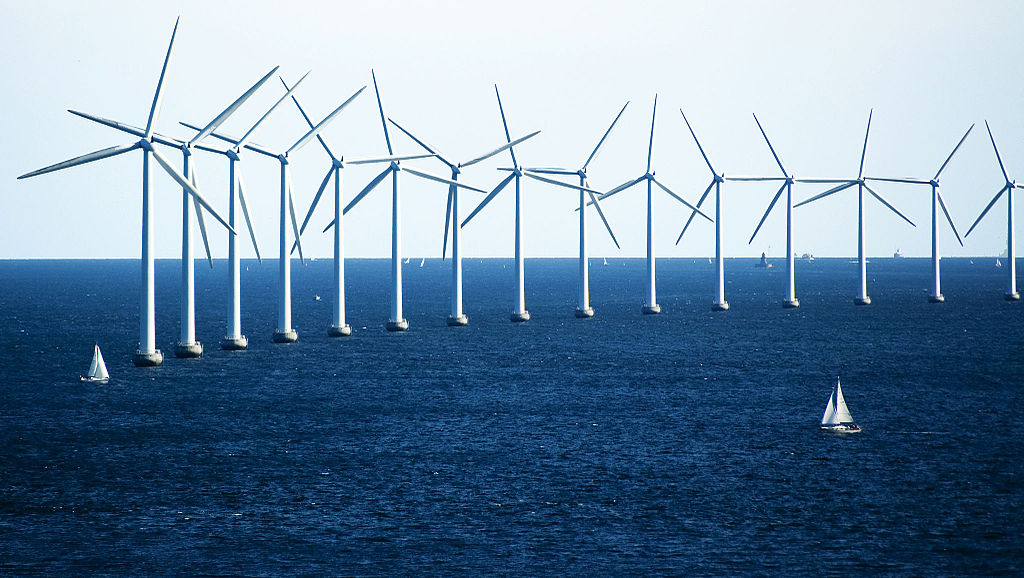
Yesterday marked the launch of cooperation between 16 Dutch companies aiming to reduce the cost of offshore wind farms to 70 EUR/MWh and further develop this electricity generation technology. Alongside Delft University of Technology, the oil company Shell has also joined the cooperation, for example. Wind farms are already improving, with their costs falling and their capacity factors increasing.
A total of 16 Dutch companies have formed an association called GROW („Growth through Research, development & demonstration in Offshore Wind“) to enable the further development of offshore wind farms. The aim is to use new technologies to reduce costs to a level at which wind farms will be competitive with other renewable and fossil-fuel sources.
The project follows the previous five-year FLOW programme, which according to a press release contributed to a 20 % reduction in the cost of offshore wind farms and helped a number of innovative technologies enter the market. According to an IRENA analysis, wind turbine prices have fallen by 30-40 % since 2009, while offshore wind farms are expected to see a further 35 % decline by 2025.
More than EUR 100 million (approximately CZK 2.7 billion) should be invested under the programme over the next five years.
In addition to Shell, the programme includes, for example, Danish and German transmission system operator TenneT, Delft University of Technology and Delft Offshore Turbines.
Wind farms are improving their capacity factors
It is not only solar power plants that are undergoing development that will enable significant reductions in electricity generation costs. Efforts are also being made in the field of wind turbines, where the cost of generated kWh is gradually declining while wind farm capacity factors are increasing.
In general, offshore wind farms have better generation conditions, which increase their capacity factors. According to a newly compiled Bloomberg New Energy Finance analysis, the average capacity factor has been increasing for wind farms in general in recent years.
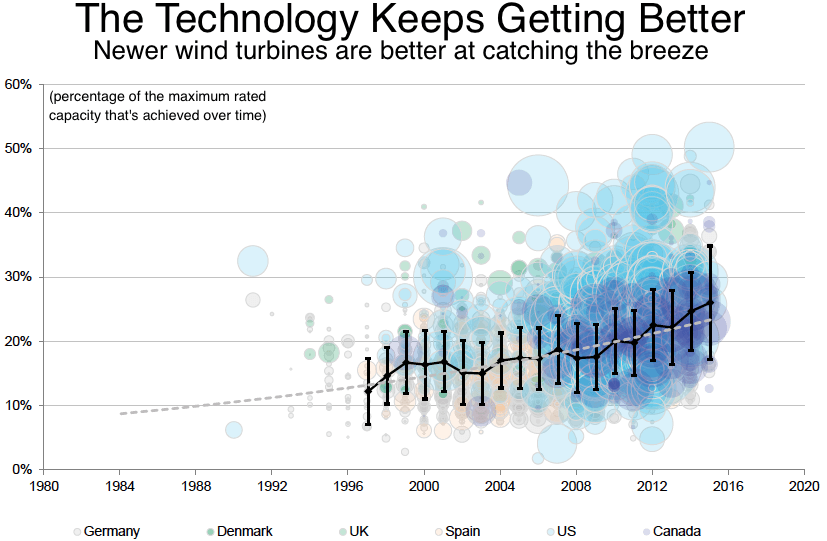
Higher capacity factors stem not only from the introduction of new technologies to the market, but also from better planning of locations where wind farms will be built. The Bloomberg New Energy Finance analysis even states that wind farms in Mexico have capacity factors of up to 50 %.
A much closer example of a high capacity factor can be found at offshore wind farms off the coast of the United Kingdom. Last December, thanks to exceptionally favourable conditions, the capacity factor at the London Array wind farm reached as much as 78.9 %. Its annual capacity factor, however, is around 45 %.
Translation disclaimer
This article is a machine translation of the Czech original and has not yet been fully reviewed. In case of any doubt, please refer to the Czech version.
Sdílejte článek prostřednictvím:
You might also like


23 October 2026, 11:01

23 October 2026, 06:34