
23 October 2026, 14:38
Loading...
Carbon storage: the United Kingdom wants to be a leader

Zuzana Vrbová
24 September 2024, 15:07
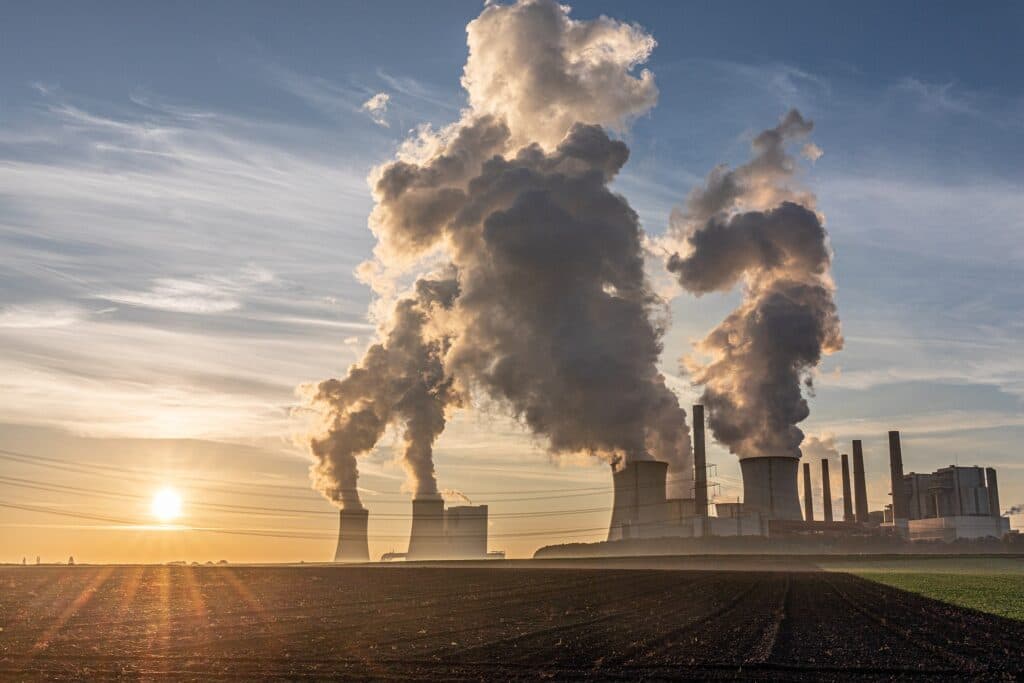
The United Kingdom aims to become Europe’s main hub for storing captured carbon dioxide. However, regulatory barriers after Brexit are complicating cooperation with the European Union.
The United Kingdom is betting on a new economic opportunity in the form of carbon dioxide storage. Eni UK plans to convert a depleted gas well in Liverpool Bay into a storage site and, as Euractiv reported, it is not the only such plan in the United Kingdom. The project is part of a broader initiative to store captured CO2, which is to be brought to the UK from local and other European factories and power plants. According to Eni, this cooperation will reduce costs and make decarbonisation efforts more effective.
Carbon storage is one of the priorities in the British government’s climate strategy. Almost 40% of Europe’s CO2 storage capacity is located in the UK. Its proximity to industrial hubs in northwestern Europe makes the United Kingdom an attractive option compared with more distant alternatives such as Norway. The UK has already signed bilateral agreements with France and Germany, signalling its readiness for cross-border cooperation on CO2 storage.
However, the United Kingdom’s exclusion from the EU ETS complicates this vision somewhat. The system is designed to provide financial support for carbon storage. At present, though, it does not recognise CO2 stored at sites in the United Kingdom. European companies may therefore be cautious about choosing a location for permanent carbon storage. Linking the British emissions trading system with the EU ETS could resolve this problem. But for the UK, that would mean partially relinquishing control over some regulatory decisions—a politically sensitive issue after Brexit.
Despite these challenges, alternatives exist. The EU strategy for managing industrial carbon emissions gives third countries such as the United Kingdom the option of storing European CO2, provided certain conditions are met. Given existing plans to ship captured CO2 to non-EU countries such as Norway, it is plausible that the United Kingdom could also become part of this solution. However, the European Commission is cautious about cooperation with the UK and makes future collaboration conditional on strict compliance with existing agreements between the EU and Britain.
Translation disclaimer
This article is a machine translation of the Czech original and has not yet been fully reviewed. In case of any doubt, please refer to the Czech version.
Sdílejte článek prostřednictvím:
You might also like


23 October 2026, 11:01


23 October 2026, 06:34