China pushes companies to comply with emissions trading system rules
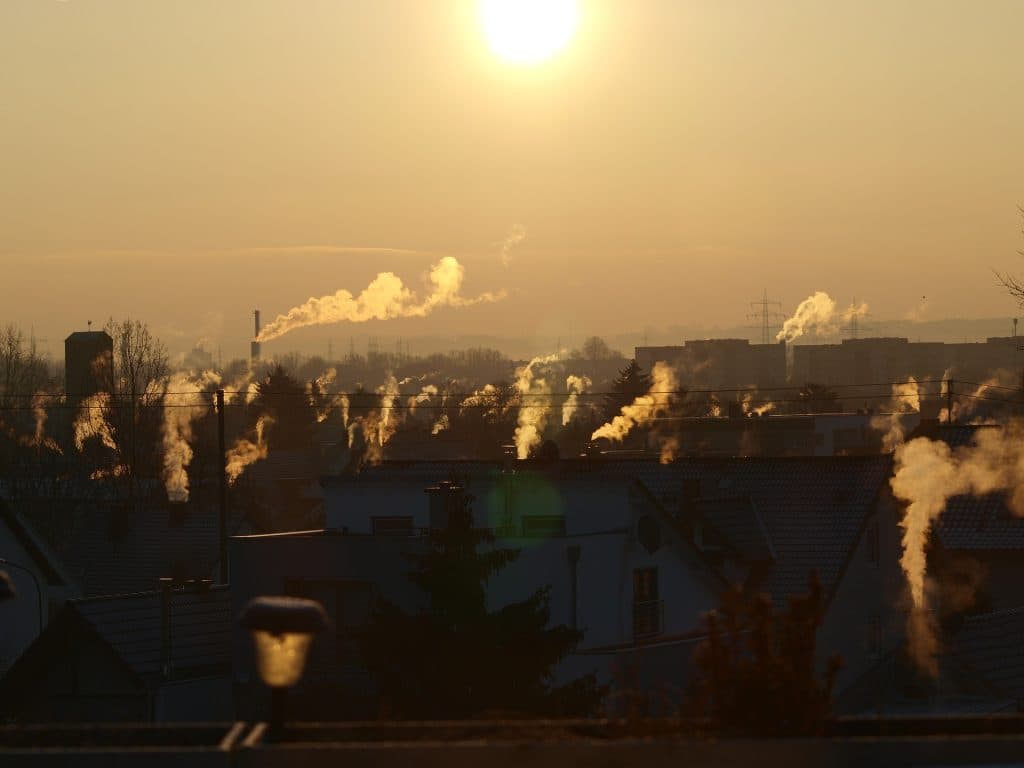
Beijing issued new regulations on Sunday aimed at improving the regulation of carbon trading and cracking down on emissions data fraud. Bringing emissions under control is a key part of the world’s largest greenhouse gas producer’s efforts to expand the market into new industrial sectors.
China’s State Council approved new rules for emissions trading (ETS). They will take effect on 1 May and are intended to provide a stronger legal framework for the system, Reuters reports.
"Once the new regulations take effect, we can expect stronger law enforcement by the Ministry of Ecology and Environment and its local counterparts," said Shawn He, a Beijing-based lawyer specializing in carbon compliance.
The largest emitter with the largest ETS
China is currently the world’s largest producer of carbon dioxide emissions. It produces roughly twice as much CO2 as the United States each year.
Although thecountry only began contributing to global CO2 emissions on a larger scale around the turn of the 21st century, last year it had the world’s second-largest cumulative CO2 emissions total. That is still only half the total for the United States, where industrialisation began much earlier.
China’s national emissions trading system is also the world’s largest in terms of the volume of emissions covered. It accounts for more than 40% of the country’s carbon emissions.
China’s national ETS operates in a similar way to the European EU ETS. It was formally launched in 2021 after years of delays, partly due to concerns about the accuracy of the data. It regulates more than 2,000 companies in the power sector, with total annual emissions of around 5 billion tonnes of CO2.
Both combined heat and power generation and electricity generation alone are covered. The system is intensity-based, with allowances allocated free of charge using benchmarks and based on actual production levels. Market participants can meet their emissions targets by buying allowances from other companies.
By the end of last year, emissions allowances covering a total of 442 million tonnes of CO2 had been traded. The value of the transactions reached nearly 25 billion yuan, or about $3.5 billion. Fraud within the system, however, remains a major problem.
Data quality control
The new rules will therefore introduce a new oversight system and require market participants to develop data quality control plans. They will also give authorities greater powers to investigate and punish companies that falsify data—including third-party firms involved in monitoring and verifying emissions.
"They could now confiscate illegal gains and impose tougher penalties for market misconduct," He said.
According to an outlook report published last month by the Beijing Institute of Technology, China’s ETS is expected to expand to more than 3,500 companies by the end of 2025 as new sectors, such as cement and aluminium production, are included. Other sectors, including glass and chemicals, could join by the end of the decade, the report said.
Translation disclaimer
This article is a machine translation of the Czech original and has not yet been fully reviewed. In case of any doubt, please refer to the Czech version.