Commission: Global emissions are rising, but the EU leads in reducing them

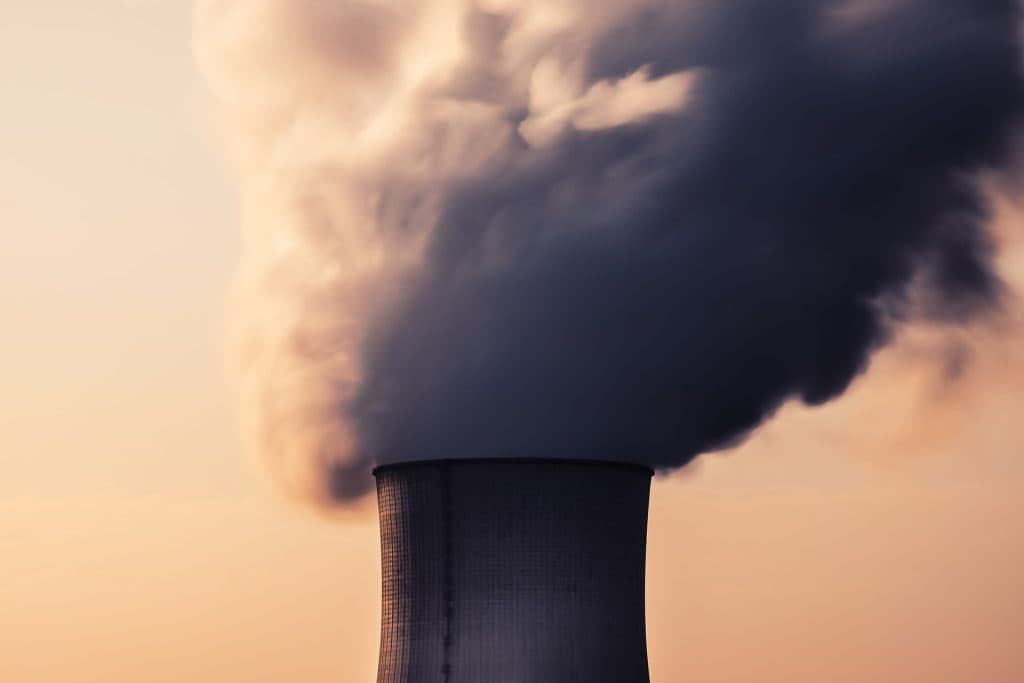
Emissions: Global greenhouse gas emissions reached an again unprecedented high in 2024. However, the European Commission says the world’s major economies are managing to combine economic growth with emissions reductions. The EU is leading the way.
As the European Commission said on its website, according to the Commission’s Emissions Database for Global Atmospheric Research (EDGAR), human activities produced a total of 53,2 gigatonnes of CO2 equivalent in 2024. That was an increase of 1,3 % compared with the previous year, and roughly equivalent to Germany’s annual emissions. The increase was driven primarily by the energy sector, which saw the largest absolute rise.
Despite this global trend, the European Union managed to reduce its greenhouse gas emissions by 1,8 %, equivalent to nearly 60 million tonnes. Japan, for example, cut emissions by 2,8 %, while India recorded the largest absolute increase, at 165 million tonnes of CO2 equivalent compared with the previous year.
The report highlights that the eight largest emitters—China, the United States, India, the EU, Russia, Indonesia, Brazil and Japan—accounted for two-thirds of global emissions in 2024. Together, they represent 54,6 % of the world’s population, 68,3 % of global GDP at purchasing power parity (GDP PPP), 68,3 % of global primary fossil fuel consumption (coal, oil and natural gas), and 66,2 % of global greenhouse gas emissions. Of these, only the EU and Japan managed to reduce emissions year on year.
However, according to the Commission, all the major economies made progress in reducing emissions intensity. This means that emissions did not grow as quickly relative to economic growth as they had in previous years. The results were even better in the United States, Russia and Japan: they achieved what is known as absolute decoupling of emissions from GDP PPP growth. Their emissions are lower than in 1990, even though GDP PPP is significantly higher than it was that year.
The role of land use and forestry further complicates the picture. Globally, managed forests removed 5,5 gigatonnes of CO2 from the atmosphere in 2024, offsetting almost 14 % of anthropogenic emissions. Deforestation and forest fires together released 5,8 gigatonnes into the atmosphere. Excluding emissions from fires, forests therefore stored a net 1,3 gigatonnes of CO2, equivalent to just 2,4 % of global emissions. Forests are one of the main sinks for greenhouse gas emissions on which humanity relies.
Translation disclaimer
This article is a machine translation of the Czech original and has not yet been fully reviewed. In case of any doubt, please refer to the Czech version.




