23 October 2026, 14:38
Loading...
Commission plans to ease EU ETS. Free allowances for industry to be extended

Jan Budín
9 February 2026, 06:36
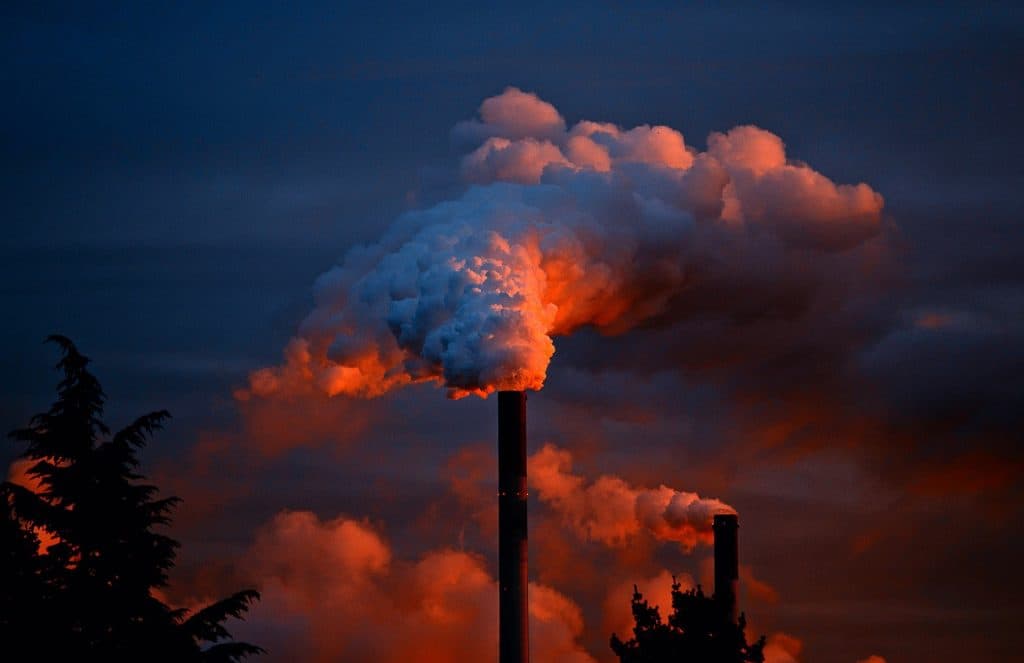
The European Commission plans to extend free allocations of emissions allowances to industry beyond 2034 and prolong the period during which additional emissions allowances are released onto the market through auctions. Foreign news website Clean Energy Wire reported, citing the German daily Handelsblatt.
The EU ETS is the EU's flagship climate protection policy and requires large industrial companies and energy installations to surrender emissions allowances for their greenhouse gas emissions.
Some emissions allowances are allocated free of charge to selected emitters. These include industrial companies exposed to foreign competition, with the free allocations intended to prevent so-called carbon leakage — the relocation of emissions-intensive industry to countries where emissions are not priced as highly.
Introduction of carbon border levy is not enough
In addition to free emissions allowance allocations, Europe's emissions-intensive industry is also meant to be protected by the European Carbon Border Adjustment Mechanism (CBAM), which came into force this year.
The introduction of CBAM was intended to enable the gradual reduction of free allowance allocations to European industry from this year and their complete phase-out after 2034. However, according to information published last week, the European Commission will propose extending this deadline.
The Commission is also expected to propose postponing another key milestone: ending the release of new allowances onto the market through auctions in 2039. For now, however, it is unclear whether the total number of allowances that may be issued under the EU ETS will be adjusted, or whether auctions will simply be extended beyond 2039 while maintaining the same volume of greenhouse gas emissions.
The European Commission's proposal is due to be published in July this year and will subsequently have to be approved by the European Council and the European Parliament.
Translation disclaimer
This article is a machine translation of the Czech original and has not yet been fully reviewed. In case of any doubt, please refer to the Czech version.
Sdílejte článek prostřednictvím:
You might also like
23 October 2026, 11:01
23 October 2026, 06:34