
10 September 2026, 15:21
Loading...
IEA: Global greenhouse gas emissions from fossil fuels fell slightly in 2019
Daniel Galis
13 August 2021, 13:23
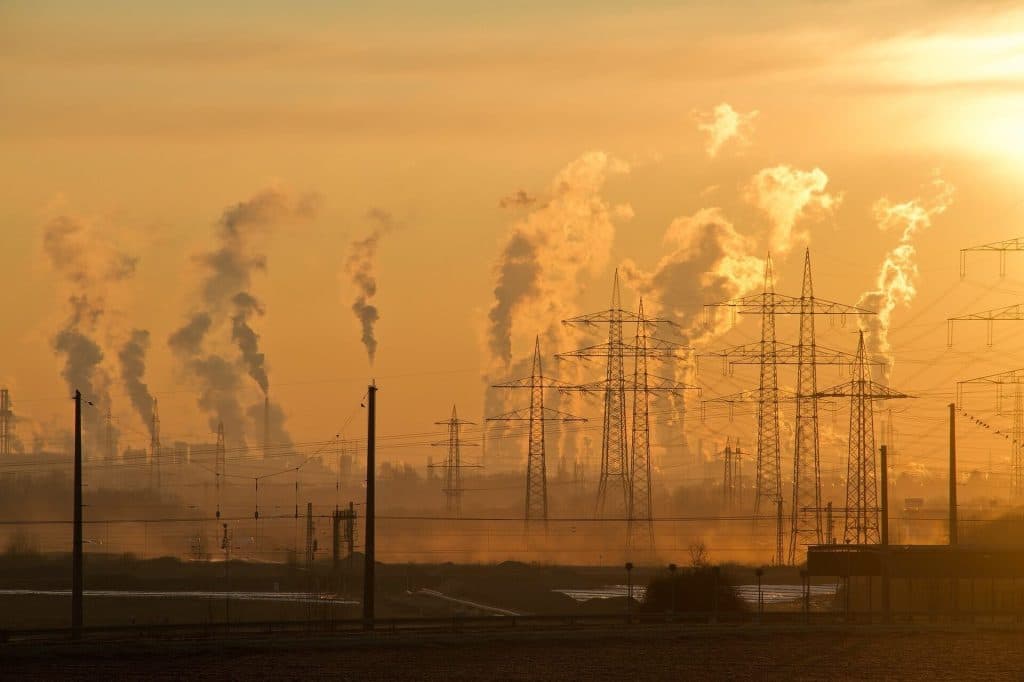
Global greenhouse gas emissions produced by burning fossil fuels reached 34.2 Gt of CO2 equivalent in 2019, one tenth of a gigatonne less than in 2018, according to a report by the International Energy Agency. This was mainly due to lower emissions in the US and the European Union, with an even more significant reduction expected in 2020. Over the long term, electricity generation from coal and oil has stagnated, while the importance of gas and renewable sources is growing.
The International Energy Agency (IEA) published a report this week compiling global data on greenhouse gases emitted by the energy sector up to 2019.
The data show that their volume already fell very slightly in 2019, from 34.3 Gt to 34.2 Gt of CO2 equivalent per year. Based on preliminary data for 2020, an even more significant year-on-year decline in emissions can be expected as a result of lower energy demand caused by the COVID-19 pandemic.
The main drivers of emission reductions in 2019 were the United States and the European Union, where emissions fell by 3.4 and 4.9 %, respectively. In 2020, US emissions are expected to fall by as much as a record 9.7 % year on year, specifically due to the COVID-19 pandemic.
China, by contrast, continued its trend of increasing emissions, which is expected to continue until 2030. Electricity and heat generation accounted for approximately 45 % of all global greenhouse gas emissions. Transport, the second-largest polluter, accounted for only a quarter.
Gas on the rise despite the transition to renewables
The data also point to a gradually changing global energy mix. Between 2011 and 2019, electricity generation from coal and oil stagnated at between ten and eleven thousand TWh per year, despite growing electricity demand.
By contrast, electricity generation from gas rose by almost a third over the same period, from approximately 4.9 to 6.3 thousand TWh per year. Non-hydropower renewables saw the greatest growth in both relative and absolute terms, rising from one to almost three thousand TWh per year.
Similar changes can also be observed in the Czech Republic, where coal was no longer the largest source of electricity last year for the first time, having been overtaken by nuclear energy. Daniel Křetínský's Energy and Industrial Holding also announced that it would stop using coal for electricity and heat generation in the Czech Republic by 2030.
However, the importance of gas has increased, which may pose a problem given its rising price and the EU's opposition to its use as part of the transition to carbon-neutral energy.
Translation disclaimer
This article is a machine translation of the Czech original and has not yet been fully reviewed. In case of any doubt, please refer to the Czech version.
Sdílejte článek prostřednictvím:
You might also like


10 September 2026, 10:37

9 September 2026, 15:05

9 September 2026, 13:24