
28 October 2026, 15:10
Loading...
Closing Czech lignite mines and impacts on the supply chain
oEnergetice.cz
21 May 2024, 15:46
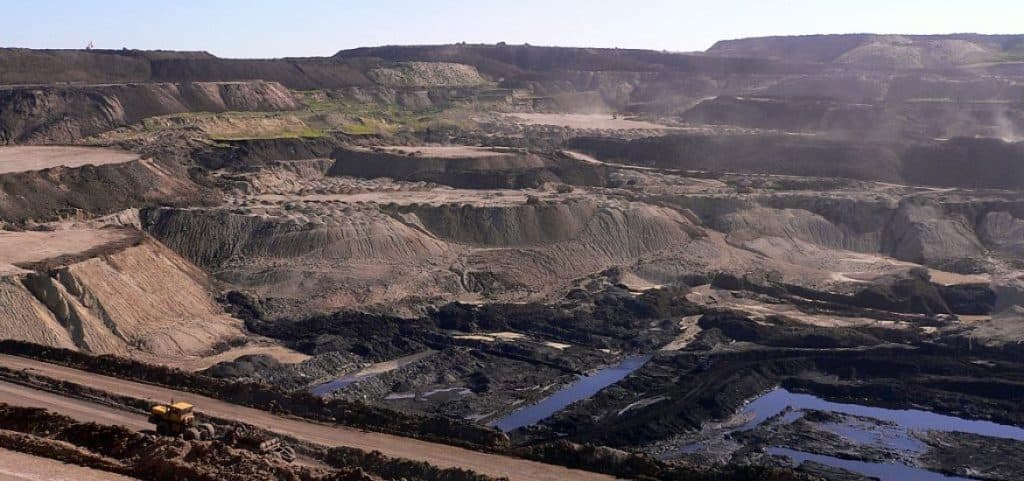
Information about the end of coal in the Czech Republic and its potential impact on the Czech power system is currently appearing across the media. One of the latest reports was published by Ekonomický deník. It is interesting because it considers not only the impact of the end of coal on the power system, but also the end of the coal supply chain.
Coal supplies in the Czech Republic come primarily from five mines: Vršany, Nástup - Tušimice (Libouš), Bílina, Jiří mine and the Czechoslovak Army mine. The last of these will suspend operations in the coming months, as Severní energetická announced a few days ago.
This is the first mine to fall victim to tighter regulation, the price of emission allowances and low electricity prices. All these factors affect mining at the site, or rather the amount of coal taken from the mine, as major customers include district heating plants and power stations, whose operations are negatively affected by these factors.
The closure of the mine will also lead to the closure of coal-fired power plants, which will lose their fuel supplier. But this is not just about power plants closing: it is important to remember that entire supply chains depend on coal deliveries. Leaving aside the local impact on regions—which includes economic losses for dozens of companies and thousands of employees—district heating plants and industrial energy systems depend directly on coal supplies.
One example of an industrial energy system is the captive power plant at the chemical plant in Litvínov, owned by Orlen Unipetrol, which produces a large share of the fuels used on the Czech market. It uses around 1 million tonnes of low-calorific-value coal from Vršany mine to produce process steam. This coal is different, for example, from the high-calorific-value coal from the ČSA mine. Crucially, infrastructure between the two locations makes the supply chain logistically efficient.
If Vršany mine were to close in the future, the question is how and how quickly this coal could be replaced. The type of coal burned depends on the boilers installed at a given facility and the requirements of the combustion process. These cannot be changed easily without substantial investment and technological modifications.
Coal types and their properties reveal the problem hidden behind the closure of lignite mines, and especially the supply chains that depend on them logistically and through their infrastructure, including district heating plants, power stations and industrial energy systems.
How much coal will we need in the future?
The answer to this question would interest not only lignite mine operators but also the state, which has spoken of a managed phase-out of coal. Ideas are therefore emerging about reducing the number of open-pit mines and keeping just one in operation to meet all lignite needs—most often, Bílina mine is mentioned, including by the ČEZ Group.
Bílina has a high ratio of overburden to extracted coal: 4.39. This means that in 2022, 4.4 times more overburden had to be removed than the amount of coal extracted, resulting in high stripping costs. Vršany mine, by contrast, has a ratio of 1.26, so its future operation will probably be cheaper.
Bílina's economics depend on coal sales. The mine supplies the Mělník energy complex, which provides heat to Prague and is due to continue running on coal until 2030. It also supplies Ledvice power station, the most modern facility that burns lignite. However, the gradual decline in electricity prices and rise in the price of emission allowances are reducing the profitability of lignite power plants, and they will eventually become uneconomic to operate.
The issue of adapting boilers to burn a different type of coal, mentioned above, arises again. Another factor is the existing infrastructure: coal is transported exclusively by rail, with tracks usually running from the mine directly to a coal preparation plant and then on to places where it is used. The infrastructure would therefore need to be modified, bearing in mind that transporting coal is costly because of the volumes involved, which amount to hundreds of railcars a day.
The priority should be to secure supplies during the winter months, a critical period for district heating plants, whose transition to other types of energy source is far from complete. Support for gas-fired cogeneration is lacking, and building new facilities or converting existing ones takes several years. Completion by around 2027 therefore cannot be expected, especially at a time of increased demand for gas turbines.
A basic principle of energy security is diversifying supply sources, as history has shown us several times. This helps mitigate the risk of an outage, which can occur for various reasons. Coal supplies do not pose a political risk, but they can be interrupted by technical problems. These may be related to landslides at mines, damage to equipment or various faults that are common in technologically complex operations. Risks can never be avoided entirely, but they can at least be mitigated—one of the reasons why we need a managed phase-out of coal.
Translation disclaimer
This article is a machine translation of the Czech original and has not yet been fully reviewed. In case of any doubt, please refer to the Czech version.
Sdílejte článek prostřednictvím:
You might also like

28 October 2026, 13:08

28 October 2026, 11:10

28 October 2026, 09:08
