
23 October 2026, 14:38
Loading...
Japan plans to close its least efficient coal-fired power plants by 2030

Jan Budín
13 October 2024, 08:28
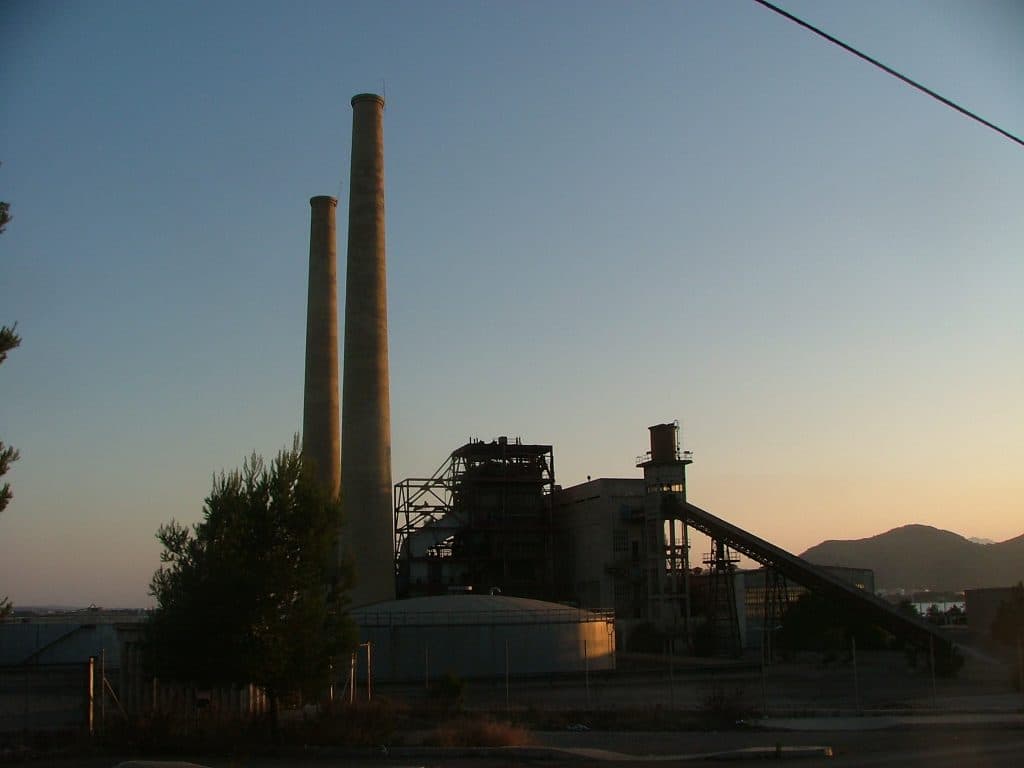
Japan plans to close its least efficient coal-fired power plants by 2030, according to the country’s environment minister. However, the country has yet to announce further details of a complete phase-out of coal. The news was reported by the international news service Argus.
Japan generated almost 29% of its electricity from coal in 2023. Overall, fossil fuel-fired power plants account for nearly two-thirds of electricity generation in Japan. Natural gas has an even larger share than coal, at around 32%.
To move closer to meeting its target of reducing CO2 emissions by 46% by 2030, the country plans to gradually start closing coal-fired power plants, alongside developing renewable energy sources and restarting more nuclear units.
Although the country has not yet published a detailed plan to phase out the use of coal for electricity generation, newly appointed Environment Minister Keiichiro Asao recently announced that Japan would close all of its subcritical coal units by 2030.
The international news service Argus added that the target is not particularly ambitious, since the subcritical units account for only around one-fifth of Japan’s coal fleet and, because of their higher variable costs, generate only a small share of total electricity from coal-fired power plants.
“This means that total coal-fired electricity generation in Japan will be affected less than the total installed capacity of the coal fleet,” the international news service Argus added.
Five EU countries have already ended coal-fired power generation
The closure of coal-fired power plants in Europe is currently a frequent topic of discussion. In April this year, G7 ministers committed to phasing out coal by 2035, with some exceptions. The European Union (EU) is also planning to phase out coal under the Green Deal, a strategy for achieving climate neutrality by 2050. The Fit for 55 package builds on it, aiming to reduce the EU’s greenhouse gas emissions by 55% by 2030 compared with 1990.
According to beyondfossilfuels.org, Belgium became the first EU country to completely end coal-fired power generation in 2016. Austria, Sweden and Portugal followed, and Slovakia did so this year. The United Kingdom also ended coal-fired power generation this year, after 142 years, closing its last operating coal-fired power plant at the end of September.
The trend is likely to continue, with around half of Europe’s coal-fired power plants expected to be decommissioned by 2030. Most European countries plan to end coal combustion completely by 2040, while the Czech government expects to phase out coal combustion for electricity generation by 2033.
Coal remains the leading source of electricity
Worldwide, 35.5% of electricity was generated from lignite and hard coal last year, according to data from Ourworldindata.org (OWID), making coal still the leading source. Natural gas ranked second (22.5%), followed by hydropower (14.3%), nuclear power (9.1%), wind power (7.8%) and solar power (5.5%).
According to the independent group Global Energy Monitor (GEM), global installed coal-fired power capacity rose by 2% last year, the largest increase since 2016. The growth was driven by new construction in China and delays in decommissioning old power plants in a number of countries.
Coal-fired power plants with a total installed capacity of 69.5 GW came online worldwide last year, including 47.4 GW in China. For the first time since 2019, installed coal-fired capacity also increased outside China. Global installed coal-fired capacity therefore stood at 2 130 GW at the end of the year.
Translation disclaimer
This article is a machine translation of the Czech original and has not yet been fully reviewed. In case of any doubt, please refer to the Czech version.
Sdílejte článek prostřednictvím:
You might also like


23 October 2026, 11:01


23 October 2026, 06:34