EU emissions allowance prices fall below 72 euros per tonne amid industrial slowdown

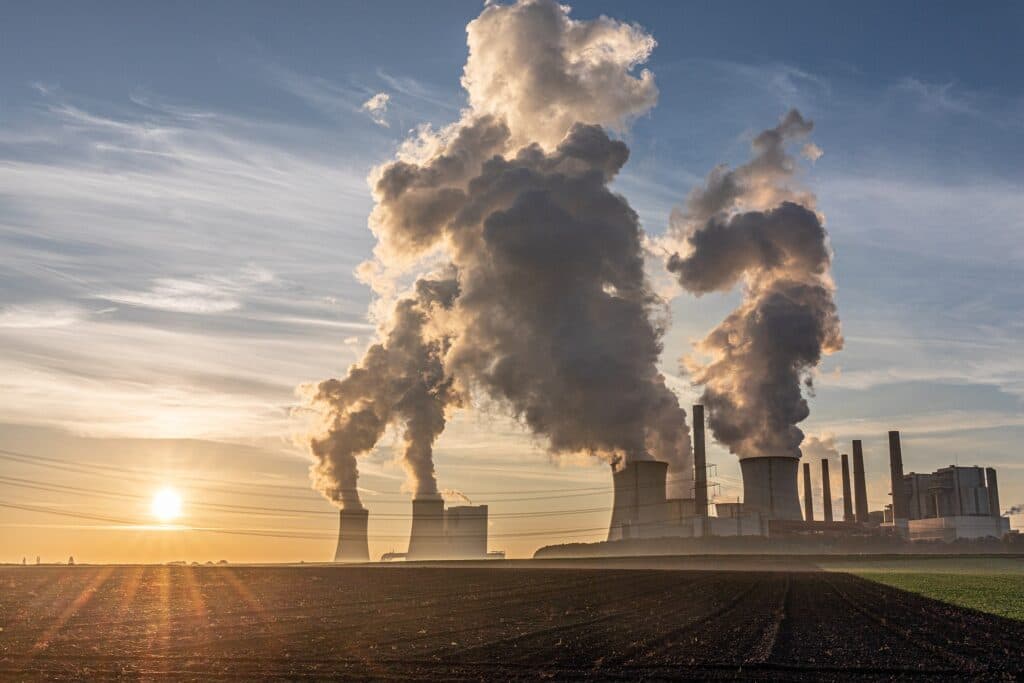
The price of emissions allowances in the European Union is falling faster, losing around five percent this afternoon to below 72 euros (1755 Kč) per tonne. It is now at its lowest level in more than a year, according to statistics. Analysts say the price decline is being driven by weak demand due to problems in industry, as well as falling natural gas prices. This spring, allowance prices reached a record high of around 105 euros per tonne.
The latest data on industrial activity in the eurozone showed that the sector contracted for the seventeenth consecutive month in November, according to the S&P Global Purchasing Managers' Index (PMI). Of the eight countries surveyed, six were in contraction. The situation is worst in Austria, Germany and France, although the pace of contraction there eased somewhat compared with previous months. The Netherlands and Spain also recorded a milder decline in industrial activity, while the downturn in factory activity deepened in Italy.
Emissions allowance prices are also affected by developments in the natural gas market. This afternoon, its wholesale price at the Title Transfer Facility (TTF), a virtual trading hub in the Netherlands, was down 3.5 percent at 38.70 euros per megawatt-hour (MWh). Persistently low demand has enabled EU countries to maintain high storage levels at the start of the winter period. Prices at the TTF are a key benchmark for the European market.
The European Emissions Trading System (ETS) is the EU's main tool for reducing greenhouse gas emissions. It sets limits on the total amount of greenhouse gases that sectors covered by the system can emit, while allowing companies to obtain or purchase emissions allowances, which can be traded as needed. When allowance prices rise, companies have a greater incentive to reduce emissions.
Ten years ago, emissions allowance prices in the EU ranged from five to seven euros per tonne, and began rising more significantly only in 2017. From around five euros, they reached approximately 25 euros by mid-2019, before falling below 15 euros per tonne at the start of the Covid-19 pandemic in spring 2020. By the summer of that year, however, they were above 27 euros, and by the end of 2021 they had rapidly climbed above 70 euros per tonne. Last year, prices fluctuated within a wide range of around 65 to 98 euros per tonne.
Electricity demand in Europe also remains weak, and rating agency Moody's predicts little change next year in its outlook for six major European markets. It attributes this mainly to the growing share of electricity generated from renewable sources, which, together with the availability of nuclear power, should continue to reduce fossil fuel-based power generation. Consumption is unlikely to return to pre-energy-crisis levels before 2026, Reuters reported, citing a Moody's report.
Moody's also expects electricity consumption in European countries to rise by only 1.5 percent next year. It attributes this to weak industrial output, improved energy efficiency and a moderation in extreme weather fluctuations. Last year, industry across Europe reduced its electricity demand due to a substantial increase in prices. The price rises were partly driven by the effects of the war in Ukraine, as Russia restricted gas supplies after launching its invasion. At the same time, French nuclear power plants were experiencing outages.
Last year, demand for emissions allowances in Europe's power sector increased because restrictions on Russian natural gas supplies led to a rise in coal-fired power generation. This type of generation produces roughly twice as much carbon dioxide emissions as gas-fired power generation, and therefore requires more emissions allowances.
Translation disclaimer
This article is a machine translation of the Czech original and has not yet been fully reviewed. In case of any doubt, please refer to the Czech version.




