14 October 2026, 09:58
Loading...
Oil exemptions and Czech reality: Why are we still paying Russia billions?

Libor Láník
4 November 2024, 15:18
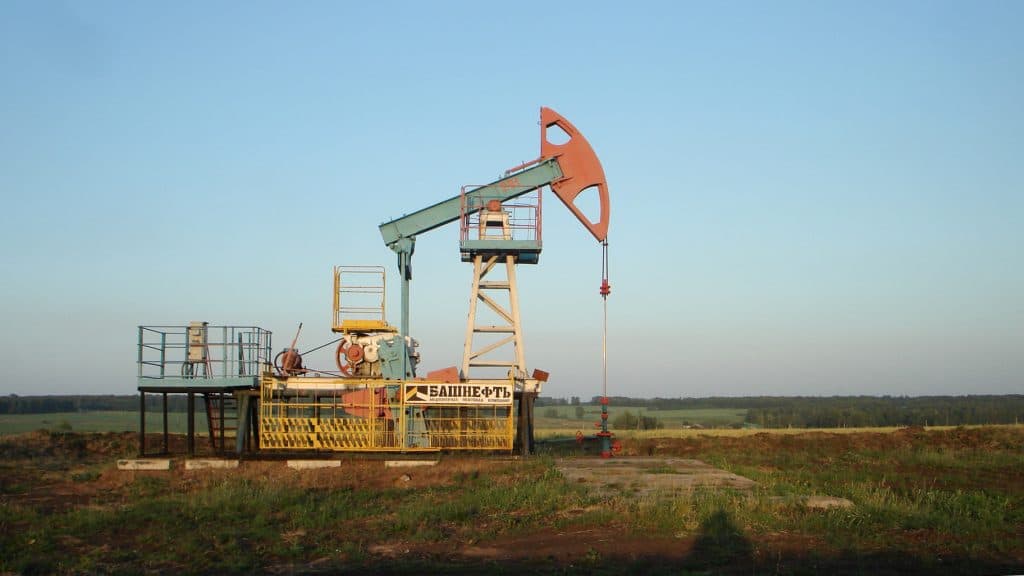
Since the start of the war in Ukraine, the Czech Republic has paid five and a half times more for Russian energy than it has provided in aid to Ukraine. While the gas situation appeared to have been resolved, data show that supplies rose again in the first half of 2024. Oil imports have long stood between 50 and 60 percent. News outlet Politico reported on the Czech energy balance.
The report draws on findings from a study by CREA (Centre for Research on Energy and Clean Air), which states that since the start of the Russian invasion, on 24 February 2022, the Czech Republic has paid more than EUR 7 billion for Russian oil and gas, generating more than EUR 2.3 billion in tax revenues for Russia. By comparison, according to data from the Kiel Institute for the World Economy (IfW Kiel), Ukraine received EUR 1.24 billion in aid over the same period.
In this regard, the Czech Republic relies on an exemption, as do landlocked Hungary and Slovakia, granted by the European Union to give the countries more time to transition to alternative supplies. Czech energy sector representatives also point to the owner of Czech refineries, Polish company Orlen.
“It is important to realise that Russian oil is imported by private company Orlen Unipetrol,” the Ministry of Industry and Trade told Politico. “The government has no direct control over the decisions of a private business.” An Orlen spokesperson countered that the company “complies with all applicable domestic and international laws and regulations” and operates under an EU-granted sanctions exemption.
According to the study, Orlen has used the exemption from the ban to purchase large volumes of discounted Russian oil, which in 2023, for example, was on average 21% cheaper than the alternative, Azerbaijani oil. This profit-maximising strategy contributed to a surplus of around EUR 1.2 billion, but this was not reflected in lower consumer petrol prices in the Czech Republic.
Possible solutions
The study clearly points to the need for decisive and coordinated action on the energy independence of the Czech Republic and the European Union. Closing loopholes in oil sanctions and systematically ending imports of Russian oil and gas are key steps that would strengthen European energy security and reduce the Kremlin's revenues from fossil fuel exports.
Thanks to its ability to use alternative pipelines and strategic reserves, the Czech Republic has a genuine opportunity to replace Russian supplies without fundamentally affecting its energy stability.
It is also essential for the Czech Republic to cooperate with neighbouring countries to ensure stable access to alternative oil and gas transport routes. The planned increase in capacity of the TAL oil pipeline will provide greater flexibility and ensure sufficient supplies even during unforeseen disruptions.
This coordinated approach can help not only to stabilise the market but also to reduce financial flows to Russia. Clear political will to end dependence on Russian fossil fuels will enable the Czech Republic and the EU to achieve genuine energy sovereignty and ensure long-term supply stability.
Translation disclaimer
This article is a machine translation of the Czech original and has not yet been fully reviewed. In case of any doubt, please refer to the Czech version.
Sdílejte článek prostřednictvím:
You might also like
13 October 2026, 20:19
13 October 2026, 16:07
13 October 2026, 15:54