10 September 2026, 15:21
Loading...
ČEZ share price in Czech politicians’ hands: “Lex ČEZ” to be debated by lower house
Daniel Grecman
28 January 2024, 09:09
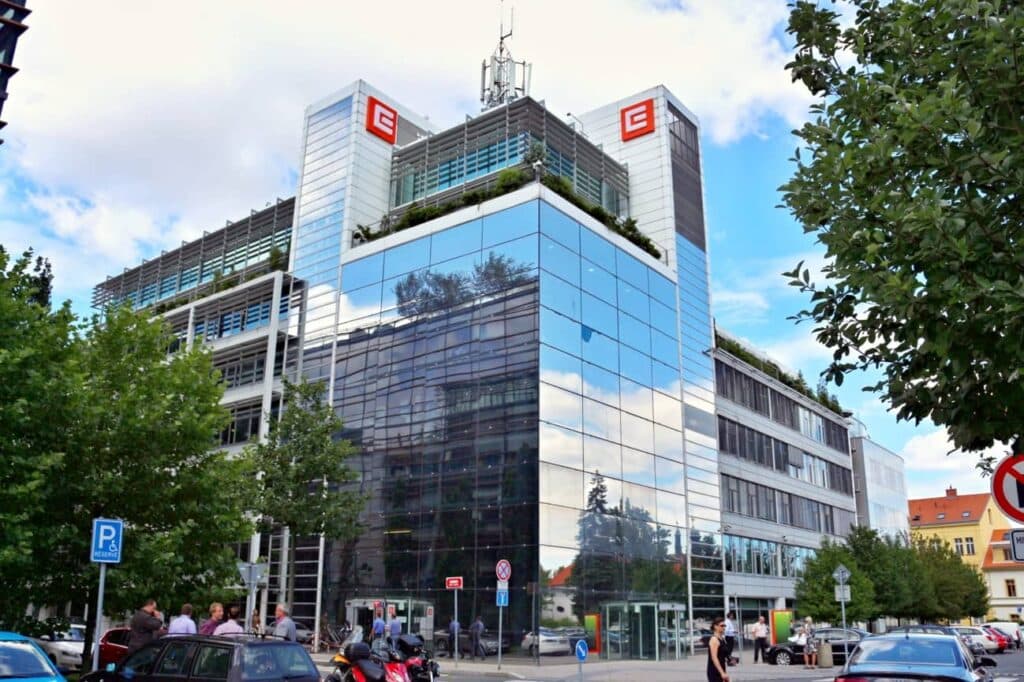
The draft amendment to the Business Transformations Act, commonly referred to domestically as Lex ČEZ, is due to be debated by the Constitutional and Legal Affairs Committee next week. Its discussion in the committee has already been postponed several times; however, the amendment has now also been placed on the agenda of the Chamber of Deputies. Many analysts and lawyers considered the original draft amendment purely expedient and deliberately targeted at a single company, while even subsequent changes to the wording did not please them. ČEZ shares therefore react very sensitively to every piece of news concerning the legislative changes.
The share price of Czech energy giant ČEZ fell by almost 10% over two days last year, to around CZK 1,020 per share, following news that the government had approved the highly controversial draft Business Transformations Act. This was due to concerns that the government did not want to settle the squeeze-out of minority shareholders in the manner chosen, for example, by France.
The share price was also hurt by the combination of the windfall tax (WFT) and a levy on excess revenues, under which thresholds defining excess revenue were set for individual energy sources. In the case of nuclear power plants, for example, the threshold is set at just EUR 70/MWh.
Extraordinary revenues for extraordinary spending
Both the combination of the measures and the WFT’s parameters were already raising eyebrows at the end of 2022. The Finance Ministry’s assumption that approximately CZK 33 billion in WFT would be collected from the banking sector can only be described as a fiasco. Experts pointed out at the time that the assumption was completely detached from reality – we wrote about it here. Their prediction proved correct, with the state collecting CZK 0.73 billion from the banking sector. ČEZ alone, by contrast, will pay CZK 28-34 billion in WFT.
The WFT is in force from 2023 to 2025. Commodity prices, however, have already returned to levels that can no longer be described as crisis levels. The electricity price for next year (PXE – Cal25; baseload) has already fallen below EUR 85/MWh. Taking the price of emission allowances into account, prices can instead be considered standard. Finance Minister Zbyněk Stanjura has said several times that if there are no extraordinary expenses (i.e. extremely high energy prices), there will be no extraordinary revenues either. The market is therefore waiting to see whether the minister keeps his word.
Share prices fall below CZK 900
Now, however, the so-called Lex ČEZ is on the agenda. According to Petr Bezouška, a former public administration lawyer, its wording has no equivalent in the EU. His view is therefore directly at odds with what government members say. You can read Bezouška’s statement here. The market sees it the same way, and ČEZ’s share price, together with the aforementioned decline in energy commodity prices, has fallen below CZK 880 per share.
It should be noted here that ČEZ continuously hedges the price of electricity it sells. Therefore, the same applies as when prices were rising – current exchange prices for the near term have a much smaller impact on financial results, as production (and thus the price) has already been sold and largely hedged.
A change in ČEZ’s ownership structure is sought with regard to financing new nuclear units, as members of the board have also cautiously stated. Put simply, investment in nuclear energy is not for private capital. There is increasingly talk of four new large units, which will probably also be an outcome of the updated State Energy Policy.
Translation disclaimer
This article is a machine translation of the Czech original and has not yet been fully reviewed. In case of any doubt, please refer to the Czech version.
Sdílejte článek prostřednictvím:
You might also like

10 September 2026, 10:37

9 September 2026, 15:05
9 September 2026, 13:24