10 September 2026, 15:21
Loading...
Czech energy regulator expects higher support for supported energy sources and revises heating regulation for first time since 2013
Daniel Grecman
2 October 2020, 07:52
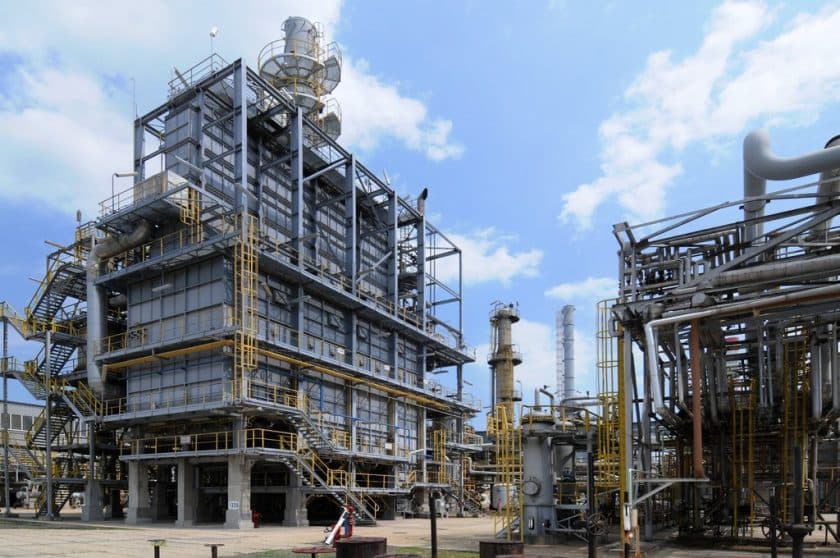
The Energy Regulatory Office (ERÚ) issued a price decision setting support for supported energy sources (POZE) for 2021. For the first time since 2013, it also issued a new price decision for the heating sector, responding to developments in the thermal energy market under its new regulatory framework.
POZE
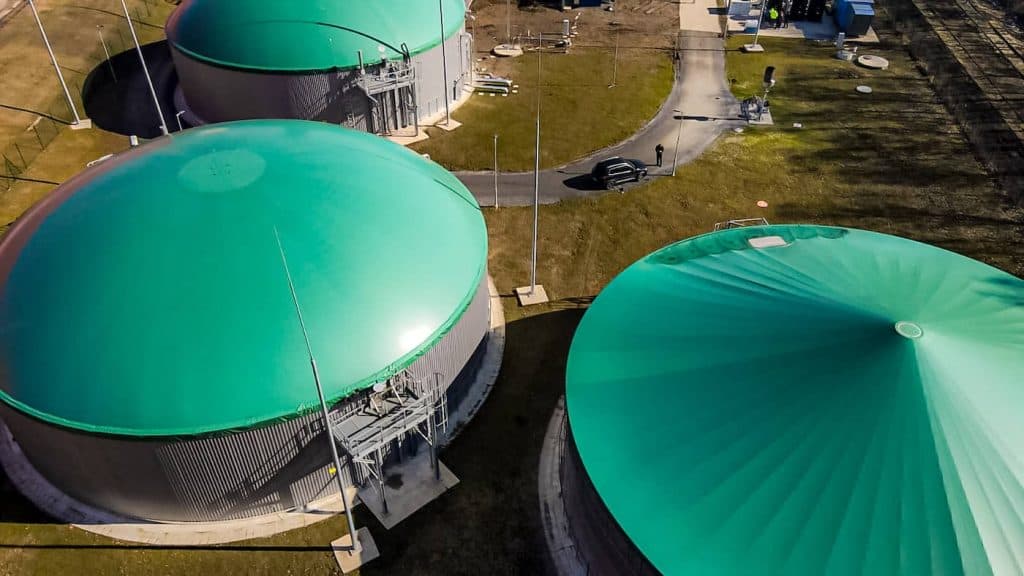
The term supported energy sources is enshrined in Act No. 165/2012 Coll., on supported energy sources and on amendments to certain acts. In addition to renewable energy sources, supported sources also include high-efficiency combined heat and power generation (CHP), biomethane and secondary sources.
The government approved a long-prepared amendment to Act No. 165/2012 Coll. in April this year. The amendment responds to the current EU target for 2030, namely a share of renewable energy sources of at least 32 % in gross final energy consumption. Instruments and measures are therefore to be introduced to ensure the EU target is met (the introduction of auctions, setting the level of support and others).
In the meantime, however, the European Commission has presented a proposal for a new climate plan that would tighten the EU's 2030 targets. The central element of the proposal is a 55 % reduction in greenhouse gas emissions compared with 1990. According to the Commission's calculations, the share of renewables in gross final consumption would be between 38 % and 40 %. Individual instruments and targets may therefore need to be revised soon.
The amendment to the Act on supported energy sources includes, among other things, plans to set permitted profitability for individual supported energy sources through the internal rate of return (IRR), or in other words, so-called overcompensation control. However, IRR values differ among individual sources, with for example the IRR set at 6,3 % for solar PV and 10,6 % for biogas plants. The opposition has criticised the setting of different IRRs and plans to submit an amendment. The energy subcommittee is due to discuss the amendment on 7. 10. 2020.
ERÚ was also able to set support for plants due to be commissioned in 2021, thanks to European Commission decision SA.58041 (2020/N) of 25 August 2020, which the Czech Republic received on 28 August 2020 and which extends the existing notification of support schemes by one year. The European Commission will still have to notify another support scheme based on Act No. 165/2012 Coll. (following approval of the amendment and submission of the support scheme to the Commission in view of the EU targets).
POZE support
According to an ERÚ press release, the cost of financing support for 2021 is set to rise by approximately 2 billion Kč compared with the previous year.
“The main reason for the increase in costs is the decline in wholesale electricity prices on the market, which must be offset by a rise in the green bonus. This principle is defined by law and our calculations must follow it. The expected growth in support is also driven by so-called indexation for non-fuel sources, likewise stipulated by law, amounting to two percent annually, which alone represents an increase of hundreds of millions of crowns,” explained Stanislav Trávníček, chairman of the ERÚ Council, in justification of the price decision.
Part of the costs is paid by consumers in the form of a contribution for supported energy sources through their electricity bills (the maximum amount is determined by multiplying 495 Kč/MWh by the total electricity consumption in MWh). The remaining costs fall on the state budget. The government has already decided on the state's contribution to POZE, which, as this year, is to amount to 27 billion Kč, but costs for next year will be higher year on year.
Last year, settled support for renewable energy sources amounted to 42,5 billion Kč, of which 68,5 %, or more precisely 29,1 billion Kč, was paid to solar PV. CHP support received 2,6 billion Kč, support for heat from renewables amounted to 0,2 billion Kč and secondary sources received 0,1 million Kč. The total was therefore 45,4 billion Kč.
Renewable sources generated a total of 8 393 GWh in 2019, of which solar PV generation was 2 246 GWh (26,76 % of total renewable generation). CHP generation amounted to 7 107 GWh, heat from renewables reached 1 102 GWh and secondary sources generated 658 GWh.
New heating-sector framework
ERÚ acknowledged that the current thermal energy regulation system no longer meets market requirements. It wants to prevent large-scale disconnections from district heating (CZT), which it considers the most efficient option from an environmental perspective and whose continued operation it sees as being in the public interest.
At the same time, it sees the position of smaller customers as having worsened and therefore plans to specify procedures for setting thermal energy prices in two stages. The first will take effect from 2021, while the second is planned from 2022.
For 2021, changes will include the preparation of preliminary heat price calculations, which will newly be based on customer consumption over the previous three to five years, while changes on the customer side must be taken into account (insulation upgrades, disconnections, etc.).
Economically justified costs that may be included in the price of thermal energy will also be specified, for example the allocation of costs in CHP. From 2021, the price decision will newly regulate three cost-allocation methods – the product method, the reference-price method and the ratio of delivered to generated heat method. For 2021, however, producers will still be able to apply their own method (provided the conditions of the price decision are met).
From 2022, ERÚ plans to divide customers into two groups with different levels of regulation: protected customers (apartment buildings, smaller businesses, etc.) and eligible customers (customers with a stronger negotiating position). The concept of reasonable profit should also be defined more clearly, as its specific level has not yet been specified in price decisions beyond a reference to Act No. 526/1990 Coll.
Translation disclaimer
This article is a machine translation of the Czech original and has not yet been fully reviewed. In case of any doubt, please refer to the Czech version.
Sdílejte článek prostřednictvím:
You might also like


10 September 2026, 10:37
9 September 2026, 15:05
9 September 2026, 13:24