24 September 2026, 11:23
Loading...
EU member states to decide on ending Russian gas and oil imports
Kristýna Klasová
14 October 2025, 10:39
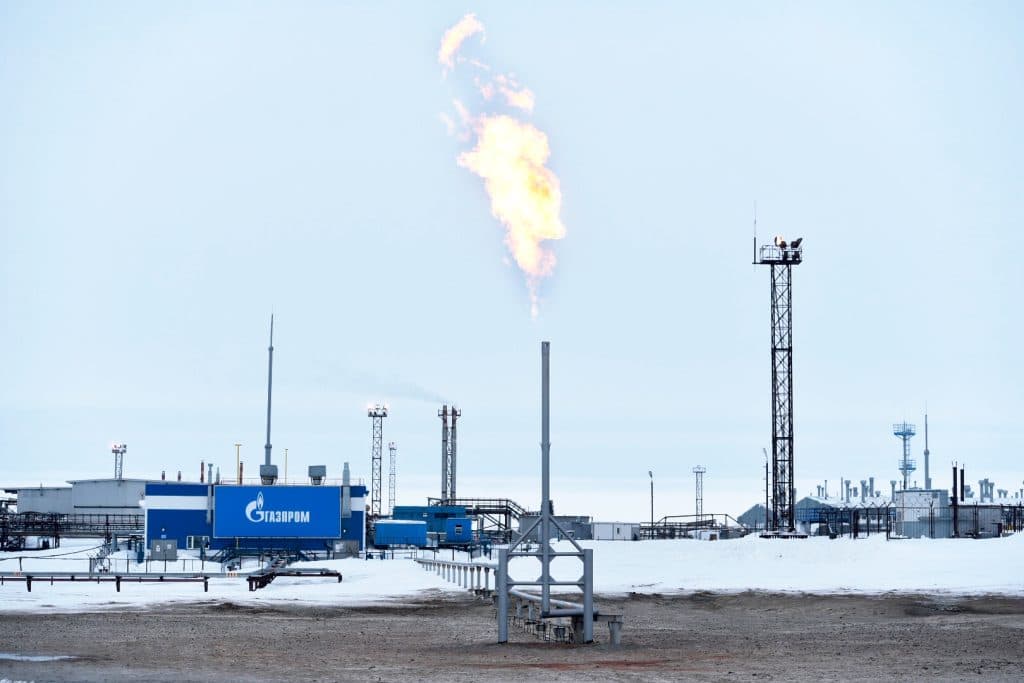
EU member states will decide on a proposed law aimed at ending imports of Russian energy commodities by 2028. The move represents a major political milestone on the path to energy independence from Russia. Energy ministers will decide on the proposal on 20 October, potentially definitively confirming a common European position, Reuters reported.
At a closed meeting on Wednesday, EU ambassadors agreed to submit the proposed law to their ministers for approval at a meeting on 20 October, three diplomats told Reuters.
The legislation aims to cut the Kremlin off from energy revenues that continue to help finance the war in Ukraine. Under the proposal, new contracts for imports of Russian gas would be banned from January 2026, short-term contracts from June 2026 and long-term contracts from January 2028. If member states approve the plan, Europe will definitively end its dependence on Russian energy supplies.
Europe transforms supply chains
Before Russia's invasion of Ukraine in 2022, as much as 45% of Europe's gas came from Russia. Today, this has fallen to only around 12%. Dependence has been reduced through the accelerated construction of LNG terminals, increased imports from Norway and the US, and faster development of renewable energy sources. Nevertheless, energy security remains a key issue.
The plan to gradually move away from imports of Russian energy commodities is part of the broader REPowerEU strategy, which is intended to secure new supply routes while reducing fossil fuel consumption. In parallel, the EU is also preparing a new package of sanctions that could ban imports of Russian LNG as early as 2027.
Differences among member states
Most member states have expressed support for the proposal. Hungary and Slovakia are exceptions, as they still import Russian oil. Both countries have criticised the law and are seeking a longer transition period. The new legislation would require them to submit national plans for ending imports by 2028.
France and Italy support the proposal but have raised concerns over technical details. Countries are addressing whether shipments of liquefied natural gas (LNG) will be approved in advance or inspected only upon entry into European ports. This is intended to prevent imports of gas of Russian origin disguised through third countries.
What comes next
Adoption of the proposal requires a qualified majority, meaning at least 55% of member states. Given the current support from most countries, smooth approval is expected. Negotiations with the European Parliament on the final form of the law will then begin.
If the proposal passes, it will represent not only a legislative but also a symbolic step. For the first time since the Cold War, Europe would completely break away from Russian energy commodities, which have shaped relations between Russia and the EU for decades.
A new era for European energy
The EU must now ensure that moving away from Russian energy commodities does not undermine the competitiveness of European industry. For Czechia, which officially no longer purchases Russian gas, securing stable LNG supplies via Germany and Poland remains crucial.
A united EU approach is important for the future of European energy. The future will also depend on how quickly member states can invest in their own resources and innovation.
Translation disclaimer
This article is a machine translation of the Czech original and has not yet been fully reviewed. In case of any doubt, please refer to the Czech version.
Sdílejte článek prostřednictvím:
You might also like
24 September 2026, 10:30
24 September 2026, 06:56
23 September 2026, 17:27