23 October 2026, 14:38
Loading...
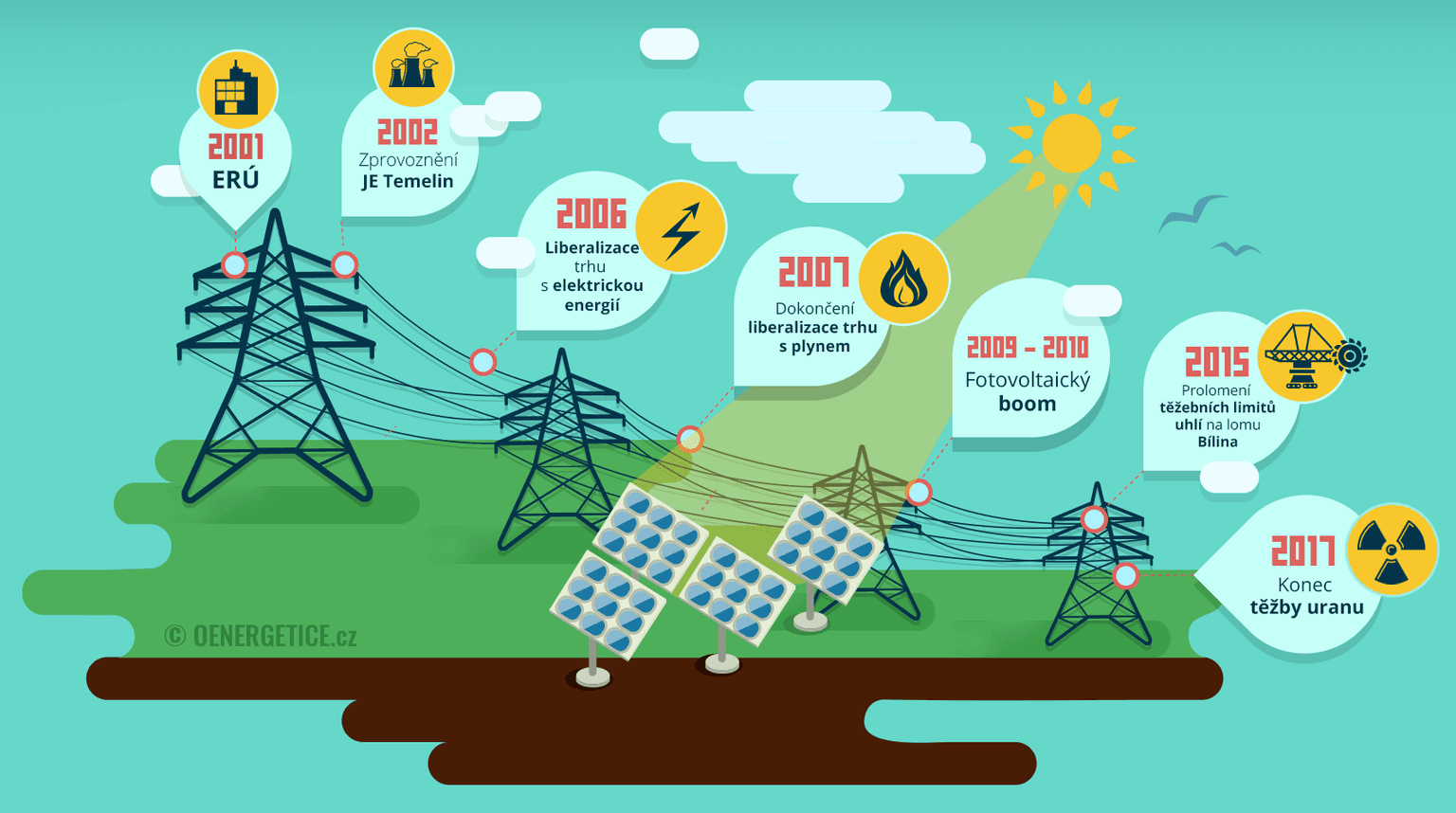
Infographic: Czech energy sector in the 21st century
oEnergetice.cz
2 November 2017, 18:11
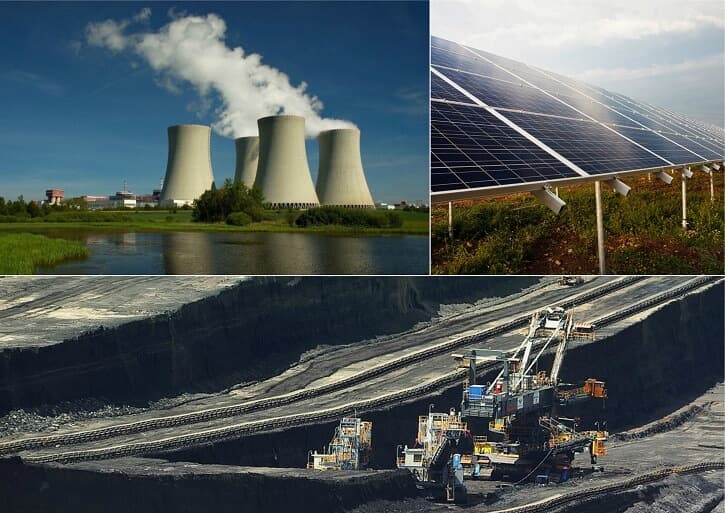
Since the start of the millennium, the Czech energy sector has undergone a number of significant changes. In addition to the liberalisation of the electricity and natural gas markets, the energy mix has also changed due to declining coal-fired power generation and the growth of other sources.
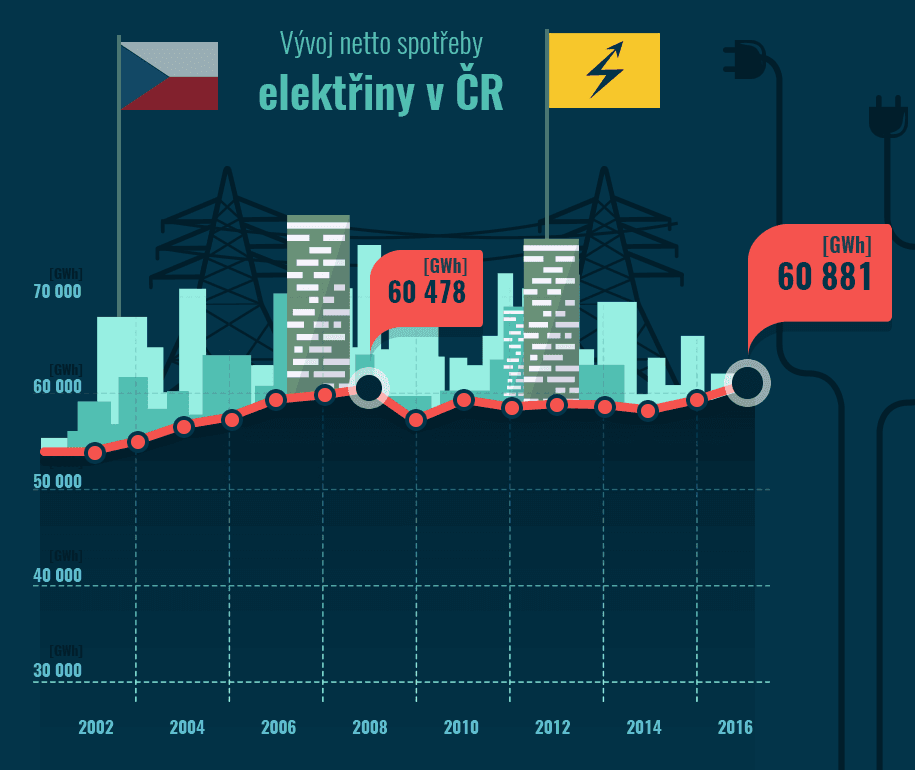
Domestic electricity consumption last year reached its highest level since 1990. According to data from the Energy Regulatory Office, gross electricity consumption in the Czech Republic rose to 72.4 TWh in 2016, while net consumption similarly rose to a record high of 60.9 TWh. Consumption rose most among households last year, which used 437 GWh (+ 3 %) more electricity year on year than in 2015.
Future electricity consumption will depend on many factors. The latest report by market operator OTE, for example, expects long-term growth in electricity consumption, driven primarily by advancing automation and mechanisation in the manufacturing sector and increased use of appliances in households. Electricity consumption growth is also expected to be supported by the replacement of primary fossil sources with renewable energy sources, through the use of heat pumps and the development of electromobility.
From coal to nuclear, gas and renewables
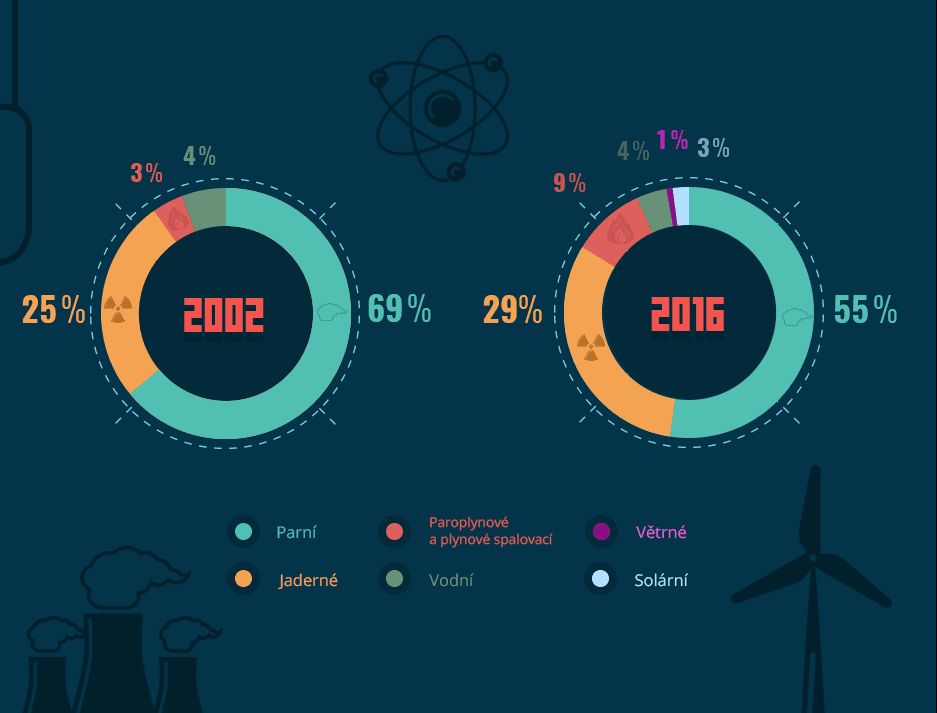
Despite a gradual decline in output, with fossil-fuel-fired steam power plants generating more than 52 TWh of electricity in 2002, coal-fired sources still dominate the Czech energy sector. Lignite-fired power plants have traditionally accounted for the largest share of electricity generation, producing 36.2 TWh last year. Unlike in Germany or Poland, where hard-coal-fired sources also have a significant share, Czech hard-coal-fired power plants generated only 5.72 TWh.
The second most important source of electricity generation in the Czech Republic is the Temelín and Dukovany nuclear power plants, which generated 24.1 TWh of electricity last year.
In recent years, nuclear power plants, along with gas-fired and renewable sources, have taken a share of electricity generation from steam power plants. While steam power plants, especially lignite- and hard-coal-fired facilities, generated nearly 70 % of electricity in Czechia in 2002, their share last year was only slightly above half.
Renewable sources have gained the most in recent years, with photovoltaic generation rising to 2.1 TWh in 2016, particularly thanks to the solar boom. Although wind power has not yet seen significant development in the Czech Republic, Czech wind farms generated almost 500 GWh of electricity last year.
The Czech energy sector has seen a number of milestones
In addition to the partial change in the generation base brought about by the completion of the Temelín nuclear power plant and the photovoltaic boom, the Czech energy sector has undergone other significant changes over the past nearly two decades. These included the establishment of the Energy Regulatory Office, the opening of the electricity and gas markets, and the decision to lift mining limits at the Bílina lignite mine.
Establishment of the ERO (2001)
The Energy Regulatory Office (ERO) was established on 1 January 2001 to carry out energy regulation. The ERO is tasked with regulating prices, promoting the use of renewable and secondary energy sources and cogeneration, protecting the interests of consumers and licence holders, promoting and, where necessary, investigating conditions of economic competition, as well as overseeing energy markets. Within its powers, the office regulates prices in the electricity, gas and heat sectors.
The office underwent a fundamental change this year, when the ERO's leadership was replaced from a single chairperson by a five-member council.
Temelín NPP commissioned (2002-2003)
The Temelín nuclear power plant is the Czech Republic's largest power plant and has prompted extensive debate ever since its inception. The plant is currently approximately halfway through its planned lifetime and will most likely operate for longer than the originally planned 30 years.
The construction of a nuclear power plant at the Temelín site, originally with 4 VVER 1000 units, was approved in 1980. Construction of the operational buildings began in February 1987; however, after 1989 the project was reassessed and, under a 1993 government resolution, it was decided to complete the Temelín NPP with two units.
The scaled-down project, modernised in terms of technology, was completed and fuel was loaded into the reactor in July 2000. The plant generated its first electricity from the first unit on 21 December of the same year. Trial operation of the first unit subsequently began on 10 June 2002, while the second unit began almost a year later on 18 April 2003. The power plant was thus commissioned between 2002 and 2003.
After ten years, the plant was upgraded through a capacity increase. From September 2013, it operated at 2 x 1055 MWe, 80 MWe more than upon completion, enabling it to generate up to 600 thousand MWh more electricity annually. From September 2014, the capacity of the first unit was further increased, allowing it to operate at up to 1078 MWe.
Opening of the electricity and gas markets (2002-2007)
Until relatively recently, electricity and natural gas customers could not choose their supplier. This changed in 2002, when the electricity market began to open gradually. The first to be able to switch suppliers were large customers consuming tens of GWh annually, and later even single-digit GWh volumes; Czech households gained this option from the start of 2006.
The natural gas market followed three years later, when large customers with annual consumption above 15 million m3 were able to choose their supplier from 1 January 2005. In the second phase, from 1 January 2006, the market opened to all other customers except households, which gained this option on 1 January 2007, completing the effective liberalisation of the market.
However, final electricity and gas consumers began making greater use of their right to switch suppliers only in 2009 and 2010, when the annual number of supplier switches in both markets exceeded 100 thousand.
Photovoltaic boom (2009-2010)
As part of its support for renewable energy sources, the Czech Republic committed to the European Union to cover 13 % of the country's gross final energy consumption from these sources by 2020. As renewable sources have not yet been economically viable without financial support, a subsidy system had to be created.
However, this system was set up very poorly in the Czech Republic for photovoltaic power plants, and the situation led to an enormous expansion of solar power plants. The solar boom in Czechia was triggered in 2008 by the setting of excessively high feed-in tariffs for electricity from photovoltaic power plants and the inability to reduce them more significantly in subsequent years, which would have been a necessary response to falling costs.
Lifting of mining limits (2015)
Considerations over lifting mining limits at the Bílina and ČSA mines became a widely debated issue in 2015. The territorial environmental limits on lignite mining in northern Bohemia were set by a government resolution of Prime Minister Petr Pithart on 30 October 1991. The limits guaranteed towns and municipalities located above coal deposits that they would not be demolished because of mining, while as boundaries that mining cannot cross they are also intended to protect the remaining natural areas as well as transport and technical infrastructure in the North Bohemian lignite basin.
The main argument for lifting the limits was that, thanks to the use of its own coal reserves, the Czech Republic is one of the EU's most self-sufficient countries in terms of electricity generation. The share of renewable sources in energy generation remains negligible, and the Czech Republic has no domestic oil or gas reserves. Given uncertain future developments, building nuclear power plants is difficult in Europe's current energy situation.
The government ultimately decided in October 2015 to lift the territorial mining limits at the Bílina mine. However, mining must take place at least 500 metres from municipalities. The long-anticipated scenario of postponing a decision on the ČSA mine also materialised, as lifting the limits there would entail the demolition of Horní Jiřetín.
End of uranium mining in the Czech Republic (2017)
Uranium mining has a long history in the Czech Republic, with its origins dating back to the 16th century. However, it saw its greatest expansion in the period after the Second World War, when the development of nuclear power and especially the massive production of nuclear weapons sharply increased global demand for uranium.
During the second half of the 20th century, then-Czechoslovakia became a uranium powerhouse. The significance of Czech uranium is also demonstrated by the fact that, despite its size, Czechia ranked among the top ten countries with the highest uranium production. More than 110 thousand tonnes of uranium had been mined from Czech mines by 2007.
Until the end of last year, when commercial uranium mining at the Rožná mine ended, the Czech Republic was therefore the only uranium-mining country in Central Europe. Among other European Union countries, uranium ore is mined only in Romania.
The full-resolution infographic on the Czech energy sector in the 21st century is available here.
Translation disclaimer
This article is a machine translation of the Czech original and has not yet been fully reviewed. In case of any doubt, please refer to the Czech version.
Sdílejte článek prostřednictvím:
You might also like
23 October 2026, 11:01
23 October 2026, 06:34