10 October 2026, 07:37
Loading...
Data centers at sea: startup Panthalassa bets a billion on computing power from the ocean
Veronika Jurcová
13 May 2026, 06:30
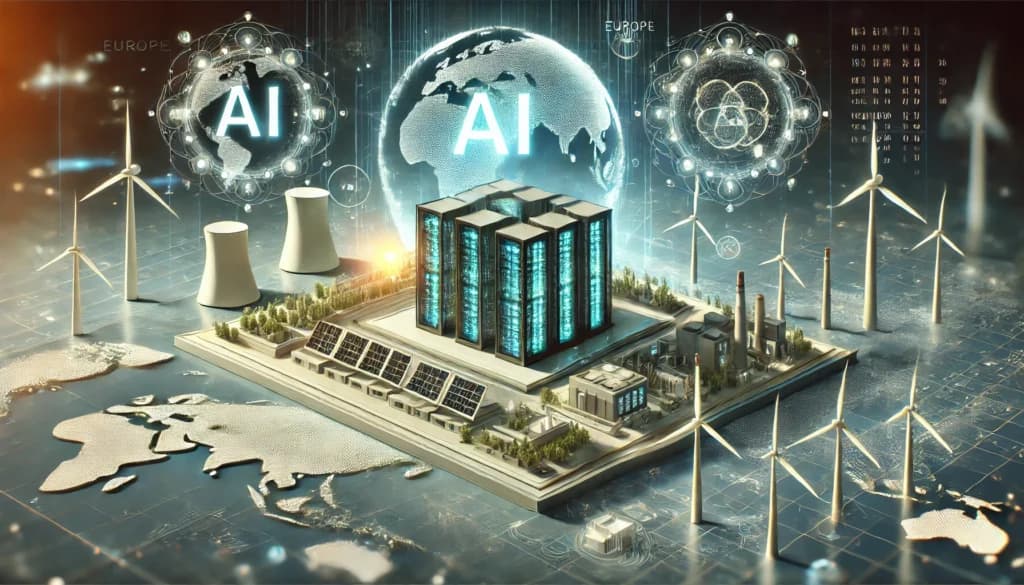
The artificial intelligence boom is running up against limits on available energy and infrastructure. That is why American investor Peter Thiel is backing a startup that wants to move data centers to the open sea and power them with wave energy. The Panthalassa project shows just how far the search for new sources of computing power for AI could go, the Financial Times reports.
The technology sector faces a paradox: artificial intelligence promises to revolutionize every industry, but its development is being held back by a shortage of energy. As demand for computing power grows faster than the ability to build new data centers, increasingly unconventional solutions are emerging. One of them is backed by billionaire Peter Thiel.
He has invested 140 million dollars in the American startup Panthalassa, which plans to build autonomous data centers in the open ocean. The company wants to harness the energy of ocean waves on site, avoiding the need to connect to the electricity grid or build transmission infrastructure.
The system is based on so-called “nodes”—large steel structures that move with the waves, converting their motion into electricity. This then directly powers the computing hardware housed inside the units. Data is transmitted back to shore via satellites as the results of computations.
The ocean as a new energy source and heat sink
The key difference is that the project combines energy generation and consumption in one place, setting it apart from previous attempts to harness ocean energy. It replaces the transmission of electricity with the transmission of data.
“One of the key insights we came to was that it is very important to use electricity on site,” said Garth Sheldon-Coulson, co-founder and CEO of Panthalassa. “We will never transmit electricity back to shore. That sets us fundamentally apart from every other ocean energy project that has been tried in the past.”
Panthalassa is also tackling several problems faced by data centers on land: limited grid capacity, lengthy permitting processes, growing public opposition, and a shortage of water for cooling.
The ocean, by contrast, offers an almost limitless energy source as well as cooling potential. The floating units use the surrounding water as a natural heat exchanger, significantly reducing the energy required to operate them.
The startup’s ambitions are far greater than those of individual pilot projects. The company envisages fleets of these units that would together function as a distributed data center. A pilot deployment of the next-generation nodes is planned for 2026, with commercial expansion expected a year later.
Investor interest also suggests this is no fringe experiment. Alongside Peter Thiel, the project has won backing from other prominent Silicon Valley players, reflecting a broader trend: finding new energy sources for AI is rapidly becoming as strategic an issue as developing the algorithms themselves.
Panthalassa is not alone. Similarly ambitious projects are exploring data centers in space and linking computing infrastructure directly to renewable energy sources.
Whether ocean-based data farms will actually take off remains an open question. The key challenges will be the equipment’s resilience in extreme conditions and the reliability of satellite communications.
For now, only one thing is certain: as artificial intelligence’s energy demands grow, the boundaries of technological exploration are shifting farther from land—and sometimes beyond it.
Translation disclaimer
This article is a machine translation of the Czech original and has not yet been fully reviewed. In case of any doubt, please refer to the Czech version.
Sdílejte článek prostřednictvím:
You might also like

10 October 2026, 07:02


9 October 2026, 13:47