10 September 2026, 15:21
Loading...
Demand for PPA contracts is growing rapidly and currently exceeds supply
Daniel Grecman
12 July 2023, 07:08
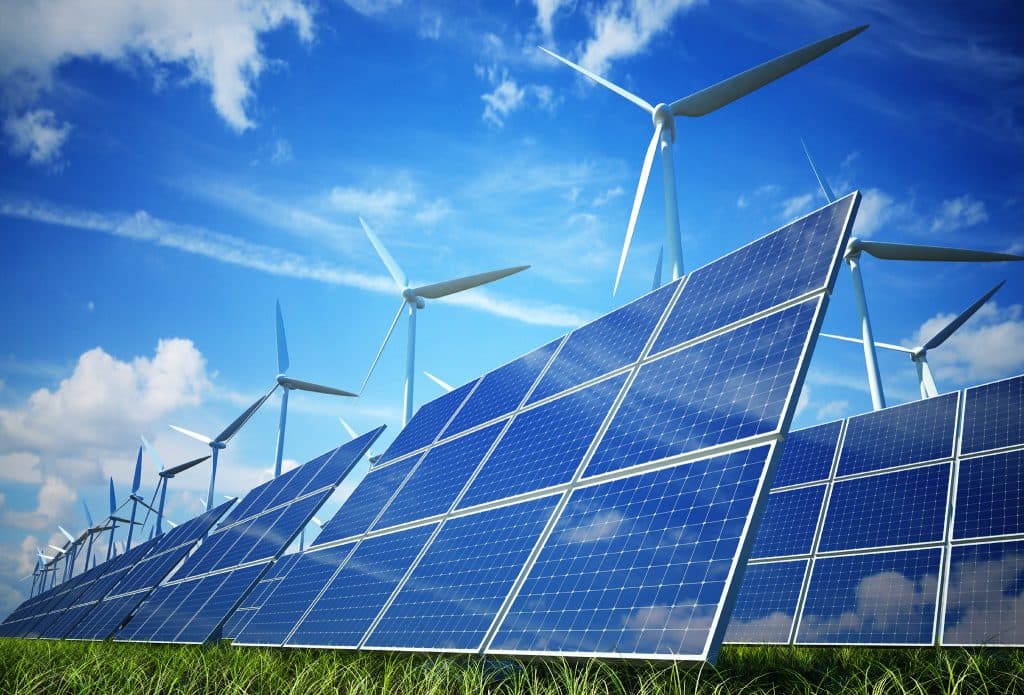
Demand for so-called PPAs (Power Purchase Agreements), contracts for the purchase of electricity, now significantly exceeds supply as a result of the current geopolitical situation and energy crisis. The reasons include lengthy permitting processes for the construction of new energy sources across the EU, as well as the fact that developers in some Member States can make use of state operational support schemes, which carry lower risk for them.
Growing demand for PPAs
Analysts at consultancy Aurora Energy Research predicted as early as 2021 that demand for PPA contracts in Germany would exceed supply by 2030. At the time, they cited companies’ efforts to decarbonise and improve their public image as one of the main motivations. However, in light of subsequent geopolitical developments and the current situation on European energy markets, the main motivation for companies, and the reason for increased demand, is to reduce operating costs and energy bills.
Energy market participants in France report that demand for PPA contracts has already significantly exceeded supply following last year’s extreme and still very high electricity prices.
"Corporations sought to secure available projects last year due to market prices, and demand exceeded supply,"said Laura Ordner from RWE’s French branch, adding that the supply of projects with valid building permits in France is limited primarily due to lengthy permitting procedures. However, there should be sufficient projects in the pipeline.
Last year, France commissioned a total of 1.9 GW of onshore wind capacity and 2.6 GW of solar PV capacity. One of the main motivations for concluding PPA contracts, which can run for 5, 10 or even 15 years and longer, is to reduce current electricity costs for offtakers and, conversely, to secure stable purchase prices for suppliers, which are often important for a project’s economics.
In France, futures prices for 2024 and 2025 stand at EUR 179/MWh and EUR 150/MWh, respectively. High wholesale electricity prices for the coming years have increased PPA contract prices, making them more attractive for developers. However, this has its pitfalls.
PPA or CfD?
While the prices offered are attractive to developers, the counterparty seeking them also matters. PPA contracts are typically long-term in nature, and it is therefore also necessary to address how the contract is secured so that both counterparties meet their obligations now and in the future. Given the current state of the economy, for example, an offtaker may become insolvent, or wholesale electricity prices may fall, making it no longer advantageous for the offtaker to fulfil the contract.
"Where it is possible to conclude a state-backed contract for difference (CfD), there is no reason for a developer to conclude a PPA," said Pierre Dennery of Aurora.
In Czechia, the state currently does not offer, nor does it plan to offer, operational support for solar PV plants, which are expected to see the greatest expansion in terms of installed capacity. In many cases, developers will therefore be forced to conclude PPA contracts to secure bank financing, and the PPA market will have to develop as a result.
The situation is different for wind power plants, for which two auctions have already been held in Czechia. The first ended poorly, with not a single bid submitted. The second attracted two bidders, who offered a reference auction price at the cap of 3500 CZK/MWh – as we wrote here.
Translation disclaimer
This article is a machine translation of the Czech original and has not yet been fully reviewed. In case of any doubt, please refer to the Czech version.
Sdílejte článek prostřednictvím:
You might also like

10 September 2026, 10:37

9 September 2026, 15:05
9 September 2026, 13:24