
22 September 2026, 14:20
Loading...
ACER: Splitting current bidding zones in Europe is inevitable

David Vobořil
20 October 2019, 12:16
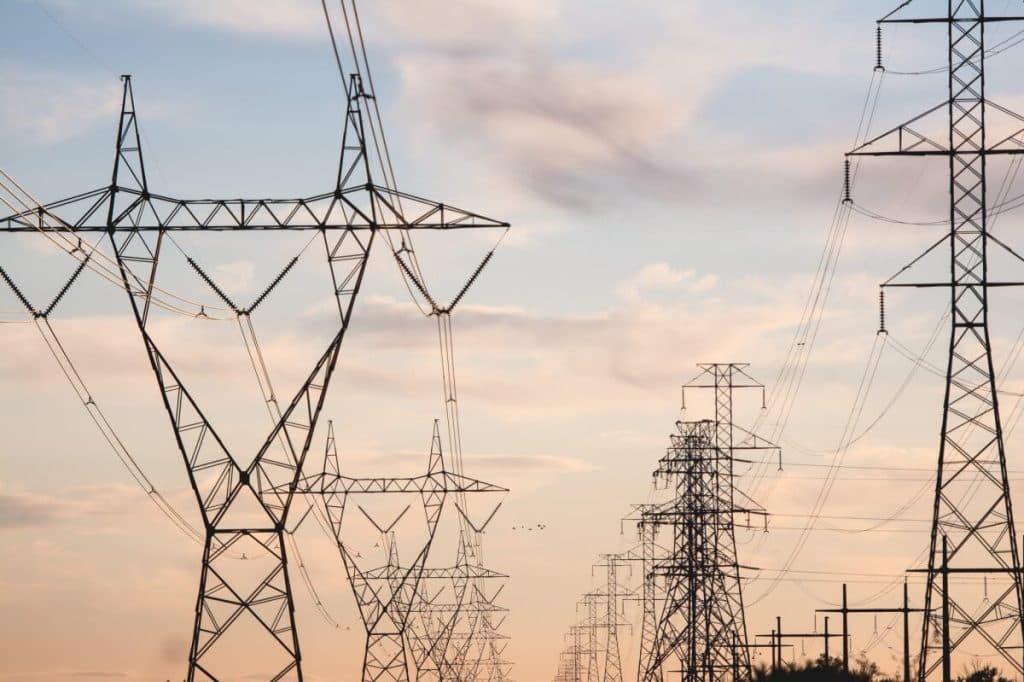
According to the head of ACER’s electricity department, splitting the current bidding zones in Europe is inevitable. Otherwise, it will not be possible to meet the requirement arising from the newly approved European Union legislative package – to make at least 70 % of the technical capacity of cross-border interconnectors available to the market. However, there is currently uncertainty over the precise definition of this requirement.
“Although there is not strong enthusiasm in the market for moving towards splitting price zones, I would say it is inevitable. … I am relying on the support of the Nordic countries, which will help us move in this direction,” said Christophe Gence-Creux, head of the electricity department at the Agency for the Cooperation of Energy Regulators (ACER).
According to Gence-Creux, bidding zones in Europe will be split in order to meet the obligation to make at least 70 % of technical cross-border transmission capacity available for trading by 2020. This requirement for transmission system operators (TSOs) was enshrined by the May adoption of the final legislation under the fourth energy package.
Bidding zones are areas in which a single wholesale electricity price applies. In most cases, bidding zones follow national borders; the exception is the Nordic region, which is divided into 12 bidding zones. Trading between individual bidding zones can take place only until the available transmission capacity at their borders is exhausted.
“All countries in continental Europe will strive to achieve this target,” said Gence-Creux, adding that availability on several cross-border interconnectors is currently significantly lower than the target mentioned.
Countries at risk of failing to meet this condition are required to come up with action plans to remedy the situation or request derogations by the end of this year. Derogations may then be granted until the end of 2025. If the condition is not met, countries will face the risk of being forced to split their bidding zones, with the European Commission having the final decision on the matter.
Analysis of alternative configurations launched
European transmission system operators (TSOs) launched the first step of the process to analyse alternative bidding zone configurations on 4 October. They submitted their proposals for alternative configurations and research methods to national regulatory authorities.
Of the 15 bidding zones falling within the Central Europe region, Germany, the Netherlands and Austria submitted alternative proposals for bidding zone configurations. The Czech TSO, ČEPS, did not offer an alternative to the current arrangement, justifying this step by saying that it is fully in line with the conclusions of ACER’s 2017 Market Monitoring Report and a technical report provided by the European Network of Transmission System Operators for Electricity (ENTSO-E), according to which the Czech transmission system does not contain bottlenecks resulting in congestion meeting the criteria of so-called structural congestion.
Method for calculating cross-border flows remains unclear
It remains unclear how cross-border flow values will be calculated. However, the methodology needs to be clarified for TSOs to decide on the next steps.
“It is not entirely clear which electricity flows are counted towards the 70 % level, or whether parallel and loop flows will be taken into account. ČEPS, like other transmission system operators, is working very closely with ACER (the Agency for the Cooperation of Energy Regulators) on this issue in order to clarify the interpretation while maintaining the operational security of the transmission system,” explains Martin Kašák, director of the Energy Trading Section at ČEPS, in the energy magazine Pro-Energy.
It is therefore currently unclear how ČEPS will proceed in meeting the requirement. Requests for a derogation or an action plan are also possible, with everything depending on final agreements with ACER and the Energy Regulatory Office on the calculation methodology.
Translation disclaimer
This article is a machine translation of the Czech original and has not yet been fully reviewed. In case of any doubt, please refer to the Czech version.
Sdílejte článek prostřednictvím:
You might also like
22 September 2026, 12:50
22 September 2026, 06:09
21 September 2026, 15:25