FT: Countries restrict data centre construction over huge energy consumption

Governments around the world are tightening oversight of new data centre construction. They are concerned that the centres’ huge energy consumption is putting excessive strain on power grids and threatening countries’ climate targets. In recent years, Ireland, Germany, Singapore, China, some counties in the United States and the Dutch capital Amsterdam have introduced restrictions on new data centres. The British newspaper the Financial Times (FT) reported this, citing a report by Barclays.
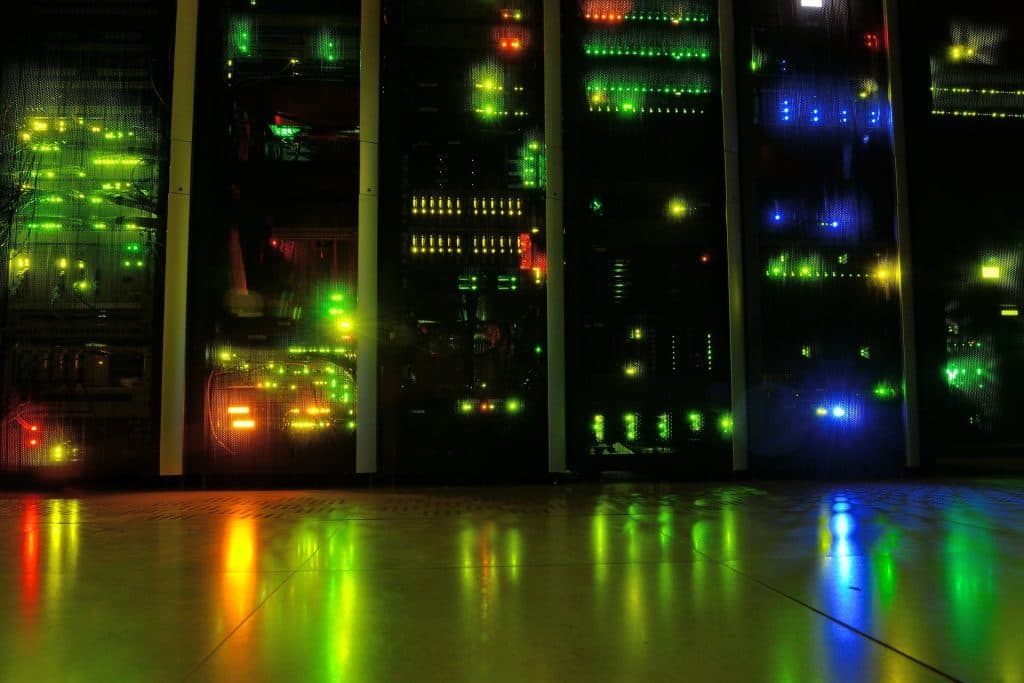
Data centres are huge facilities housing servers that act as online repositories for the data of millions of people. Their environmental impact is becoming an increasingly serious problem around the world.
New projects are most at risk in Ireland, a sought-after location for data centres built by numerous companies specialising in so-called cloud computing, including US firms Google and Microsoft. They are drawn to Ireland mainly by its low tax rate and easy access to high-capacity undersea cables that carry global internet traffic. This is due to a 2021 decision by Ireland’s energy and water regulator to limit new data centre connections to the electricity grid.
Last year, Irish authorities rejected permits for new projects in Dublin by data centre operators Vantage, EdgeConneX and Equinix. According to an estimate published last month by the International Energy Agency (IEA), data centres will account for 32 percent of Ireland’s total electricity demand in 2026.
Loudoun County in the US state of Virginia and Germany recently introduced several new measures. These include restricting permits for data centres in residential areas and requiring data centres to use renewable energy and feed it into the grid, as well as to reuse waste heat.
Barclays analysts warn that governments have yet to account for the impact of growing internet use on their electricity grids. They therefore expect similarly significant and frequent restrictions in other countries in the years ahead.
This could put pressure on businesses focused on data centres and cloud services, market research firm Industry ARC said. The market is currently valued at an estimated USD 220 billion (CZK 5.2 trillion). By the end of the decade, however, it could grow to USD 418 billion as demand for data surges worldwide. Market research group Dell’Oro estimates that global capital spending on data centres will exceed USD 500 billion in 2027.
The IEA says data centres are driving a significant increase in energy consumption in the US and China. Around a third of the world’s 8000 data centres are located in the United States, and about a tenth in China. According to Barclays analysts, data centre operators and technology companies will therefore need to play a more active role in energy systems in the future, for example by generating more energy from renewable sources and working on measures to improve energy efficiency.
Amazon, Microsoft and Google, the companies that operate the world’s largest data centre complexes, are investing in wind and solar power to meet their sustainability targets. But they are also turning to other energy sources. Last year, for example, Microsoft said it would buy nuclear power to meet 35 percent of the needs of one of its data centres in Virginia when wind or solar power is unavailable. The company is also betting on the future of nuclear fusion and has already signed an agreement to purchase power from the private US company Helion.
Another challenge is replacing diesel, the fuel typically used to power data centre backup generators. Amazon plans to switch the generators at all its data centres in Europe to biofuel made from waste oils.
Data centres, cryptocurrencies and artificial intelligence (AI) are expected to double global electricity consumption between 2022 and 2026, the IEA said in January. Morgan Stanley analysts expect generative AI to account for more than three-quarters of global data centre electricity demand in 2027.
Translation disclaimer
This article is a machine translation of the Czech original and has not yet been fully reviewed. In case of any doubt, please refer to the Czech version.