11 October 2026, 08:24
Loading...
German government considers limiting priority grid access for renewable electricity

David Vobořil
13 February 2026, 07:49
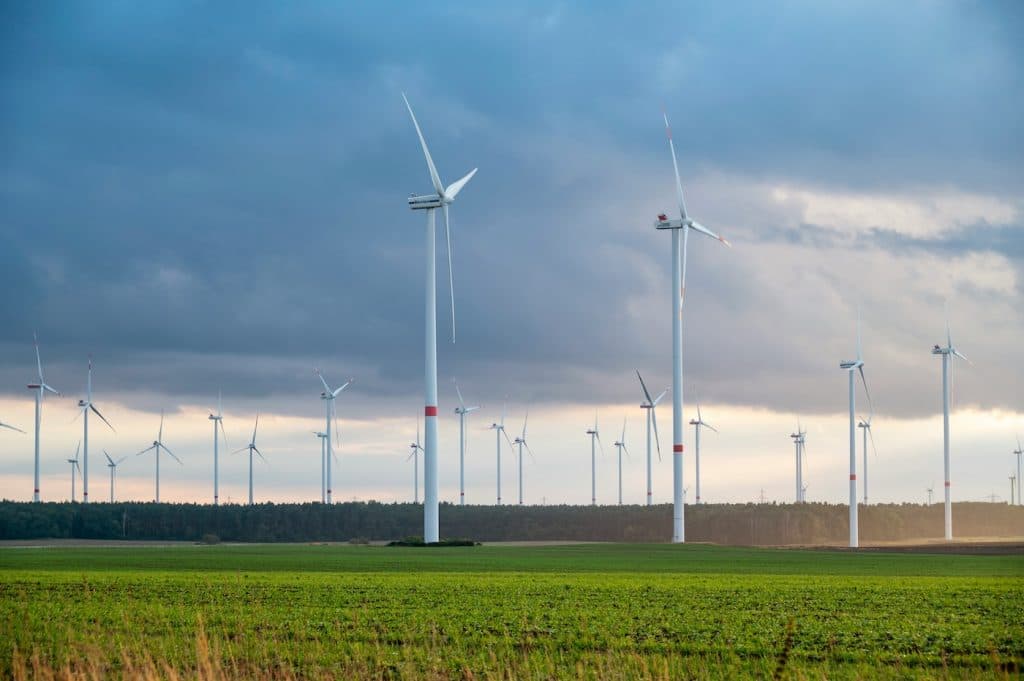
The German government is preparing changes to the rules governing power system operations that could allow limits on renewable energy sources’ priority access to the grid. The aim of the measures is to strengthen grid stability when the rapid growth in wind and solar generation runs up against the technical limits of transmission infrastructure. The plan is controversial: while some experts consider it a pragmatic response to operational realities, critics warn of negative effects on the investment climate for renewables.
According to Spiegel, Germany’s Ministry for Economic Affairs (BMWK) is preparing changes that would allow transmission system operators to limit the priority access to the grid given to electricity from renewable sources. This principle has long been one of the cornerstones of Germany’s energy transition and has played a key role in the massive expansion of wind and solar power plants in recent years.
Priority grid access for renewable energy sources is enshrined in the Renewable Energy Sources Act (EEG). It stipulates that grid operators must not only prioritize connection requests for renewable energy projects, but also purchase the electricity those projects generate.
This guarantee gives investors certainty when planning and makes financing easier. Guaranteed payments for electricity supplied by renewable energy projects have been at the heart of Germany’s energy transition since their introduction in 1990, and similar systems were later adopted in many other countries.
Grid operators currently regularly curtail wind and solar power plants during periods of peak generation as part of the process of preventing grid congestion, known as redispatch. This is because transmission and distribution networks cannot carry the electricity generated during peak periods to consumers.
Redispatch is when power plants in a different location are brought online instead of the generators originally scheduled to supply electricity to the grid, in order to prevent congestion in parts of the power system. These measures are costly because the original generators must be compensated for being unable to supply electricity to the grid, while the replacement generators must also be paid for the electricity they produce.
The renewable power plants affected currently receive compensation for electricity they are unable to generate as a result of these interventions. The total cost of these measures, including the need to compensate renewable energy operators, runs to billions of euros a year.
The draft reform says that connecting both generators and consumers to the grid is also becoming an increasingly serious problem. It adds that grid operators are being inundated with applications to connect large battery storage facilities, which are competing for grid connections with industrial plants, data centers, charging infrastructure, telecommunications networks and other large consumers.
According to the newspaper, the reforms set out in detail in the ministry’s draft would significantly reduce the appeal of building renewable energy projects in regions with congested distribution networks. In areas where it was not possible to feed more than 3% of the electricity generated in the previous year into the grid, renewable energy investors would receive an immediate grid connection only if they waived compensation for future curtailments for up to ten years.
The draft also stipulates that grid operators could charge renewable energy investors for part of the costs of upgrading and expanding the networks, further increasing investment costs, the article reports.
A threat to the decarbonization of Germany’s energy sector
Critics warn that interfering with the principle of priority grid access for renewables could undermine investor confidence. Priority grid access has so far been considered one of the key stabilizing elements of the investment framework for renewable energy projects.
According to some experts, weakening it could increase the risk premium for new projects and ultimately slow the pace of energy sector decarbonization, the German Renewable Energy Federation (BEE) told Tagesspiegel Background.
Experts told Spiegel that waiving compensation would likely make many projects unprofitable, given that many areas in Germany face generation curtailments of more than 3%.
Environmental organizations also point out that grid stability should primarily be addressed by accelerating the development of flexibility, for example through battery storage, demand management or expanded cross-border transmission capacity, rather than by limiting generation from zero-emission sources. In their view, the draft is more a consequence of poorly coordinated infrastructure planning than a systemic solution.
German transmission system operators are also preparing to change the rules for connecting new large electricity consumers. Going forward, connection will be offered to projects with a higher likelihood of being completed or that bring greater benefits to the system.
Translation disclaimer
This article is a machine translation of the Czech original and has not yet been fully reviewed. In case of any doubt, please refer to the Czech version.
Sdílejte článek prostřednictvím:
You might also like

10 October 2026, 13:19

10 October 2026, 07:37

10 October 2026, 07:02