Net electricity generation in Czechia fell 10% year on year last year, its lowest since 2002

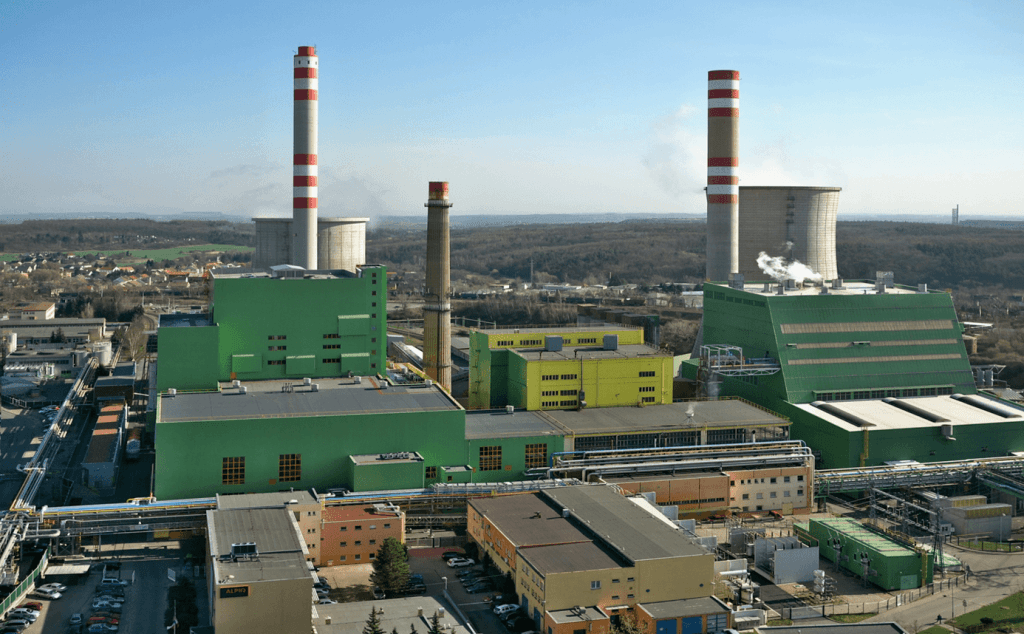
Net electricity generation in the Czech Republic fell 10 percent year on year last year, with domestic power plants producing a total of 72 terawatt-hours (TWh) of electricity. This was the lowest output since 2002. The main reason was lower economic activity in industry. Electricity consumption is falling as well. This is according to an analysis by consulting company EGÚ Brno, provided to the Czech News Agency (ČTK). Across the EU, electricity generation fell by 66 TWh last year.
“This is primarily a result of lower economic activity and stagnant economic performance in EU member states. It is not related to the application of technical energy-saving measures. Electricity consumption is falling despite the expected electrification of heating, transport and industry. Lower consumption is then indirectly reflected in a decline in coal-fired electricity generation,” said Matěj Hrubý, managing consultant at EGÚ Brno.
Nuclear and coal accounted for the largest share of electricity generation, together producing almost 80 percent (56 TWh). Despite their large share, coal-fired generation fell 11 percent year on year last year, while nuclear generation declined by 0.6 percent, the company said.
After a long period, solar generation in Czechia rose, increasing by 17 percent to 2.8 TWh, according to the analysis. Natural gas-fired plants generated 3.3 TWh of electricity, as gas-fired power plants operated only to a limited extent due to lower electricity consumption and the high price of the commodity. Hydropower plants supplied 2.3 TWh of electricity. Wind power remained stagnant in Czechia in 2023, with generation reaching 700 gigawatt-hours (GWh).
Although generation from renewable sources increased last year, this is not enough to meet the 2030 targets, according to EGÚ Brno. “The updated Czech draft National Energy and Climate Plan (NECP) envisages wind power generation of approximately three terawatt-hours in 2030. New legislation, which now supports the development of community energy, should provide a significant boost to further growth. Around seven percent of Czechia’s territory has optimal potential for wind turbine installations, including 99 municipalities that could generate up to a further 1.5 terawatt-hours of electricity from wind,” Hrubý said.
Nuclear power was the largest source of electricity generation across the EU last year, producing 589 TWh. Wind power came next, at 450 TWh, up 13 percent year on year. Wind now accounts for more than 18 percent of total electricity supply. “Output was higher primarily because of better weather conditions, not because of an increase in installed capacity, which has stagnated recently,” Hrubý said. Germany generated the most wind power, at more than 140 TWh. Other major producers include Spain, France and Sweden.
Solar power also recorded an 18 percent year-on-year increase, according to the analysis, reaching an eight-percent share of total electricity generation in the EU (196 TWh). All renewable sources, including biomass and hydropower, accounted for 45 percent of total EU generation in 2023, supplying 1100 TWh of electricity in total. Since 2015, renewables have added approximately 250 TWh to electricity generation.
Coal-fired electricity generation is declining across the EU. The largest drop was in Germany, where coal generation fell 22 percent year on year, followed by Poland, with an 18 percent decline. Significant reductions in coal generation are also evident in Czechia, Italy, Belgium and Romania. “If we are serious about replacing coal-fired sources, expanding solar and wind alone will not be enough. The key question will be how many new gas-fired power plants can be built in time, because under current conditions neither Germany, Czechia nor Poland can afford to close coal-fired power plants,” Hrubý added.
Electricity generation in the EU was already falling in 2022, when it declined by almost 100 TWh year on year.
Translation disclaimer
This article is a machine translation of the Czech original and has not yet been fully reviewed. In case of any doubt, please refer to the Czech version.




