
28 October 2026, 15:10
Loading...
Renovation of European buildings is hampered by insufficient capacity
Veronika Jurcová
8 May 2024, 12:33
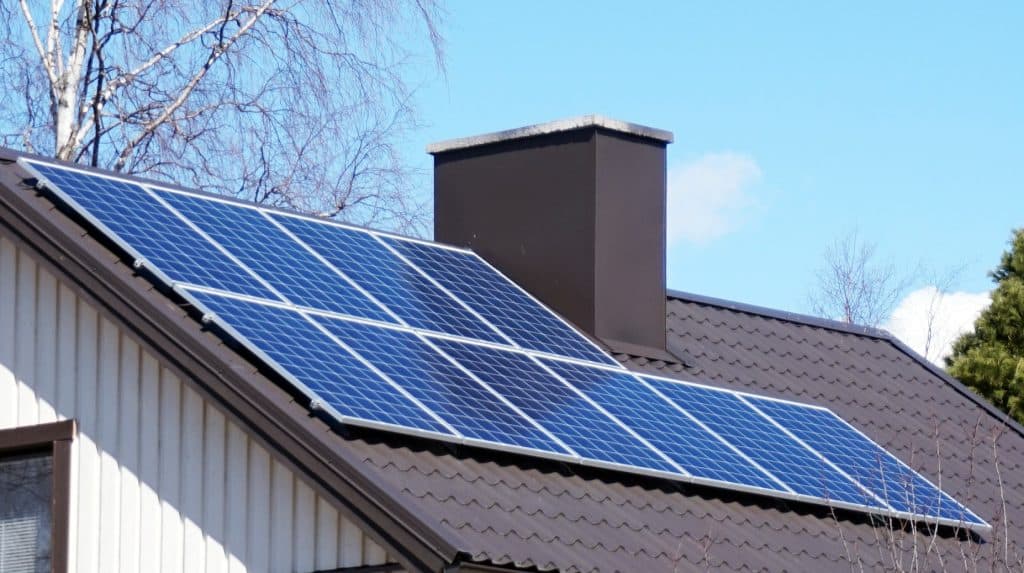
The success of the European REPowerEU strategy will increase the energy efficiency of European buildings and reduce Europe’s dependence on Russian fossil fuels. However, according to McKinsey, scaling up technologies is essential to achieving these goals, reports Euractiv. The McKinsey report identifies insufficient capacity in the renewable energy technology market as the main barrier, including manufacturing, workforce and financial capacity.
In May 2022, in response to Russia’s invasion of Ukraine, the European Commission presented the REPowerEU plan, which is based on three key pillars: reducing energy demand by promoting energy efficiency, diversifying Europe’s energy supplies away from Russian sources, and accelerating Europe’s transition to clean energy through a combination of investment and legislative reforms.
The transition to clean energy and energy savings require a massive expansion of technologies, with the buildings sector playing a key role in reducing energy consumption.
Potential of the buildings sector
Buildings account for 40% of energy consumption in the EU and 36% of greenhouse gas emissions. According to Eurostat data, 85% of European buildings were built before 2000 and 75% have low energy efficiency.
The REPowerEU plan therefore proposes a significant increase in energy-efficient building renovations and renewable energy technologies such as solar technology and heat pumps.
The plan proposes expanding the installation of solar panels to all new public, commercial and residential buildings by 2029, with the aim of reaching more than 320 GW of photovoltaic capacity by 2025 (more than double the 2020 level) and nearly 600 GW by 2030. If the target is met, solar power will become the EU’s largest source of electricity by 2030, with more than half of its capacity expected to come from rooftops.
The plan also proposes doubling the current rate of heat pump deployment in buildings across the European Union, with a specific target of adding 10 million new heat pumps over the next five years.
Insufficient capacity
According to a McKinsey analysis, however, Europe lacks the capacity to deliver the technology needed to meet these targets at the current pace of manufacturing and installation. Increasing capacity will also require more workers to build, install and maintain the technology, as well as adequate financing.
By 2030, the EU will need more than 1 million workers in the solar sector to meet its higher renewable energy targets. According to European Commission estimates, an additional 750,000 installation technicians will be needed to scale up heat pump manufacturing and deployment, and at least 50% of current installation technicians will need to be retrained to work with heat pumps.
If the energy transition is to continue on the planned timeline, stakeholders will need to plan carefully to ensure these obstacles are overcome.
Recommendations and new opportunities
These plans present an opportunity to develop domestic production of solar panels and heat pumps in the EU. While most solar panel components come from China, there is scope to strengthen manufacturing capacity in the EU. Heat pumps likewise offer an opportunity to build manufacturing capacity in the EU market.
According to McKinsey’s analysis, EU member states should consider introducing new incentives, such as direct subsidies, lower interest rates on loans and tax incentives, to support the development of critical supply chains and technologies.
Insufficient supply chain capacity is creating a need for skilled workers and new jobs to install these technologies. EU member states should support worker retraining and skills development to increase both the number of workers and their productivity.
New advisory and financial services, particularly green finance, also play a key role in accelerating the adoption of green technologies. New financial mechanisms and increased private capital activity can help customers invest in energy-saving opportunities and finance the growth needed to make these changes.
The energy crisis and high prices have also led to greater interest in energy savings in the Czech Republic. Last year, a record 83 thousand new photovoltaic systems were installed in the country, mostly smaller rooftop installations on family homes. Since mid-February, the conditions for receiving subsidies from the New Green Savings programme have also been amended. The bonus for comprehensive renovations of family homes has been increased, and a limit has been introduced for reserving grid capacity for photovoltaic systems. Demand for heat pumps is also rising, the weekly Ekonom reports.
The Ministry of the Environment also plans to provide advisory services, with regional advisers helping applicants identify the most suitable energy-saving measures for their properties and proposing optimal investments based on specific data.
Translation disclaimer
This article is a machine translation of the Czech original and has not yet been fully reviewed. In case of any doubt, please refer to the Czech version.
Sdílejte článek prostřednictvím:
You might also like

28 October 2026, 13:08

28 October 2026, 11:10

28 October 2026, 09:08
