27 October 2026, 10:17
Loading...
Top 10 Czech energy stories from the past week
oEnergetice.cz
10 August 2025, 21:14

This week, we’re once again bringing you a carefully selected list of the ten most significant articles we published on oEnergetice.cz. If you missed any of them, here’s a selection of the articles that attracted the most interest from our readers. Best of luck in the new week!
1. Germany’s offshore auction ends in fiasco, with no bids received

Germany held its second offshore wind auction of the year in early August. The latest round was a major disappointment, however, as developers submitted no projects to the auction. Germany’s auction system, under which developers compete to pay the state for the right to build and operate an offshore wind farm rather than receive support, has long been criticized by local associations. They have long warned of the risk of waning investor interest, which hit rock bottom in the latest auction.
Offshore wind farms are expected to become one of the pillars of Germany’s energy sector in the future. In recent years, however, the sector has faced challenging times, as rising development costs and changes to support schemes in Germany and other European countries have raised concerns about the future pace of new wind farm construction.
Read the full article HERE.
2. Fast reactor developer exits the UK; Czechia still lacks a similar player

Fast reactor developer newcleo is changing course. It will now focus on markets that support advanced modular reactor technologies and a closed fuel cycle. Instead of the challenging island environment, it is banking on partnerships in Central Europe and the Baltics. There is currently no comparable industrial player in the Czech Republic.
newcleo is suspending its programme to develop lead-cooled fast reactors in the UK and plans to significantly scale back its activities there. This is according to a press release published in late July, which said the company’s board had decided to focus on markets that support a closed fuel cycle and advanced modular reactor technologies.
Read the full article HERE.
3. Norway considers deploying Korean SMRs
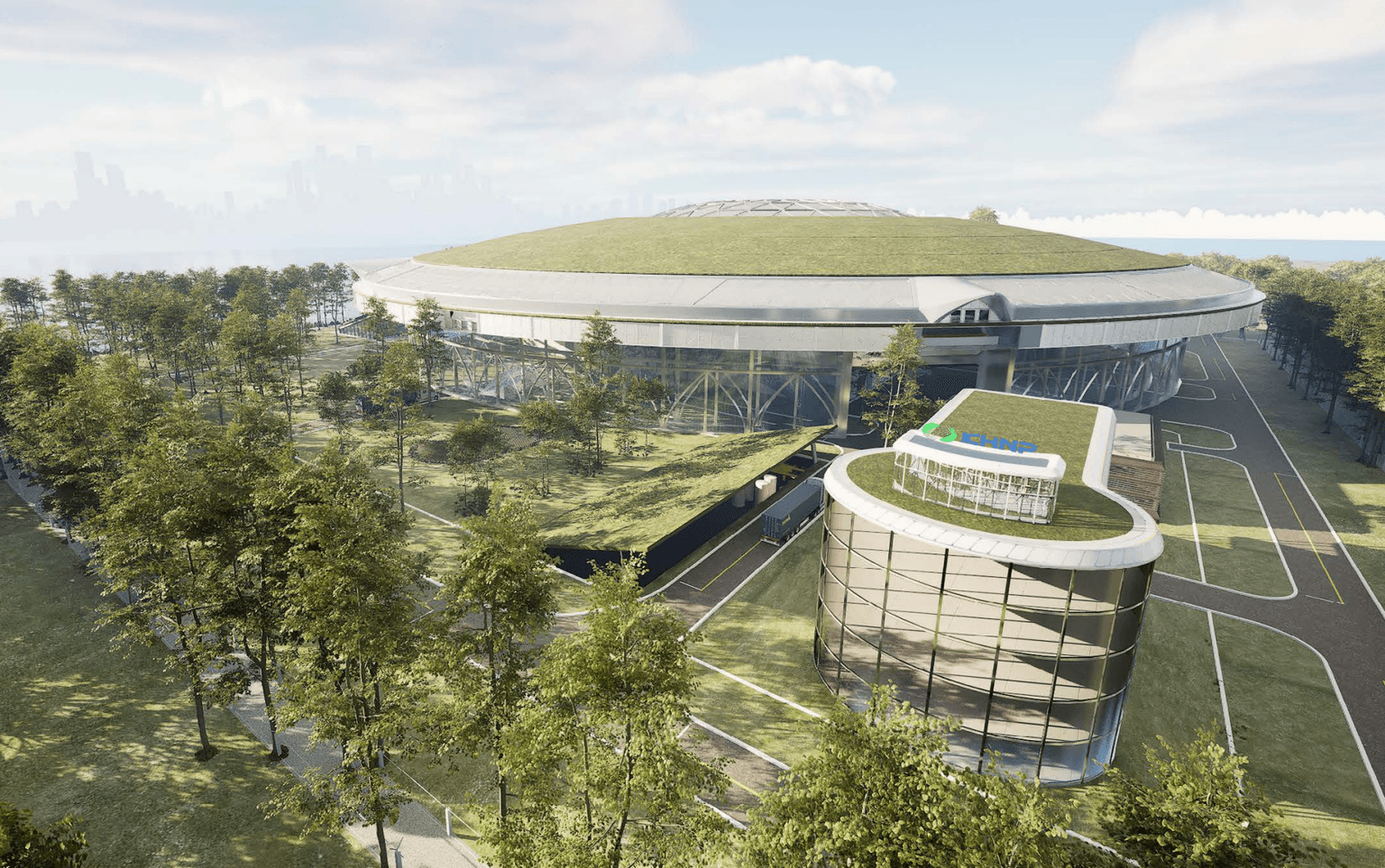
Trondheimsleia Kjernekraft AS and South Korean nuclear giant Korea Hydro & Nuclear Power (KHNP) are jointly preparing a feasibility study for a nuclear power plant using multiple i-SMR small modular reactors. The project is planned for the Norwegian municipalities of Aure and Heim.
The feasibility study, which is expected to begin in the second half of 2025, has been included in an international support programme run by South Korea’s export bank, Korea Eximbank. Its aim will be to assess the technical, environmental and regulatory conditions for building several i-SMR reactors designed and developed by KHNP.
Read the full article HERE.
4. Unique thermal energy storage system planned in Slovakia by 2030

Slovak company Vodohospodárska výstavba and US-based Westinghouse Electric Company have signed a memorandum of understanding to assess the feasibility of building a unique commercial pumped thermal energy storage system. The first of its kind, the system aims to become a model solution for Europe and the world.
The proposed project would provide long-duration energy storage, storing surplus electricity generated by hydropower plants operated by Vodohospodárska výstavba, with a capacity of up to one gigawatt. This technologically innovative solution is designed to store energy for periods ranging from 8 hours to several days. The system would enable more flexible use of renewable energy in Slovakia while helping to increase the stability and resilience of the power grid.
Read the full article HERE.
5. Investigation has yet to determine the exact cause of the blackout, and continues on several levels

The exact causes of the widespread power outage on 4 July remain unclear more than a month after the incident. The investigation into the blackout is continuing on several levels, according to ČEPS, the Czech transmission system operator. Results are expected in the coming weeks or months. Extraordinary inspections of the grid have been completed, and no major faults were found. ČEPS spokesperson Lukáš Hrabal told the Czech News Agency (ČTK) in response to a question.
The massive power outage on 4 July, which lasted several hours, affected about one million customers. There are 6.3 million connection points in the Czech Republic.
Read the full article HERE.
6. Slovenské elektrárne signs contract with Urenco for enriched uranium supplies

Slovenské elektrárne has signed a contract with the British group Urenco to supply enriched uranium for its nuclear power plants at Jaslovské Bohunice and Mochovce. The contract secures supplies for ten years and follows an international tender held in 2024, which aimed to strengthen Slovakia’s energy security by diversifying its nuclear fuel suppliers.
“We are pleased that our future cooperation with the Urenco Group will allow us to diversify our business relationships. This will help us significantly to maintain the stable and safe operation of our nuclear power plants,”said Branislav Strýček, Chairman of the Board and CEO of Slovenské elektrárne. .
This is the first delivery of nuclear fuel from Urenco for Slovak reactors.
Read the full article HERE.
7. Electricity prices in July were significantly higher than a year earlier, analysts say

Electricity prices on the Czech market were significantly higher this July than last year. On weekdays, they were almost 12 percent higher, with a median price of 96 euros per megawatt-hour (MWh), or 2361 crowns. At weekends, prices were as much as 90 percent higher than a year earlier. Last year, the median price was 72 euros (1771 Kč). Analysts said one factor was poorer weather for solar power generation. Consumption did not increase, however, as the cooler weather meant less need for air conditioning. Jan Palaščák, founder of the Amper energy group, said this in a press release today. As renewable generation increases, familiar patterns in how electricity prices move throughout the day are changing.
The most expensive hours included the evening peak at around 20:00, which came an hour later at weekends. The median price during the evening peak was 161 euros per MWh (3960 Kč) on weekdays and 123 euros (3025 Kč) at weekends. “The idea of an energy-cheap weekend and summer compared with winter and working hours is definitively a thing of the past. The new generation mix, with its higher share of renewables, is fully reflected in the price map, but the Czech energy sector has not yet been able to adapt completely. One reason is that we are lagging behind the emerging trend of electricity storage because of delayed legislation,” Palaščák said.
Read the full article HERE.
8. Net-Zero Banking Alliance rocked as European giants also leave

Following the departure of several major US banks from the Net-Zero Banking Alliance (NZBA), two European banks are also leaving the initiative. The latest to exit the alliance is British bank Barclays. The move comes just weeks after HSBC, Europe’s largest bank, left the initiative.
The Financial Times reported the departure, having first reported in July that Barclays was considering such a move. The newspaper also reported that the bank increased its exposure to fossil fuel projects last year, to the point where it became Europe’s largest financier of such projects.
Read the full article HERE.
9. European Commission agency issues new sustainability reporting standards

Independent EU agency EFRAG has published simplified draft European Sustainability Reporting Standards (ESRS). Under the proposals, larger medium-sized companies and all large companies in Europe will be required to report on sustainability.
Significant reduction
As ESGNews reported, the new draft standards, which will be mandatory for companies, respond to the need to simplify the existing reporting proposals under the Corporate Sustainability Reporting Directive (CSRD). The amount of information companies will be required to disclose will be reduced by 68%.
Read the full article HERE.
10. ČEZ completes geological drilling near Temelín for small modular reactor

In July, ČEZ carried out nine geological boreholes near the Temelín Nuclear Power Plant. It will use the results in its application for a site permit for a small modular reactor (SMR), which the energy company plans to submit to the State Office for Nuclear Safety next year. ČEZ aims to build the Czech Republic’s first SMR near Temelín in the mid-2030s. Last autumn, the company submitted an application for an environmental impact assessment (EIA). The Atomic Act requires the energy company to carry out a geological survey, Temelín spokesperson Marek Sviták said today.
The nine boreholes were between 50 and 200 metres deep. The aim of the geological survey is to obtain more precise data on the geological environment. For example, geologists use the samples to determine the strength, bulk density and other physical and mechanical properties of the rock. Experts carried out the first survey related to SMR preparations near Temelín three years ago. That involved four boreholes reaching a depth of 30 metres.
Read the full article HERE.
Energostat: electricity generation in the Czech Republic
Data in this chart is also available in 15-minute resolution60min15min
Energostat: electricity generation in Germany
Data in this chart is also available in 15-minute resolution60min15min
More up-to-date charts and data are available on Energostat
Translation disclaimer
This article is a machine translation of the Czech original and has not yet been fully reviewed. In case of any doubt, please refer to the Czech version.
Sdílejte článek prostřednictvím:
Topics:Energy Weekly
You might also like
27 October 2026, 06:15
26 October 2026, 19:59

26 October 2026, 14:24