Top 10 energy stories from the past week
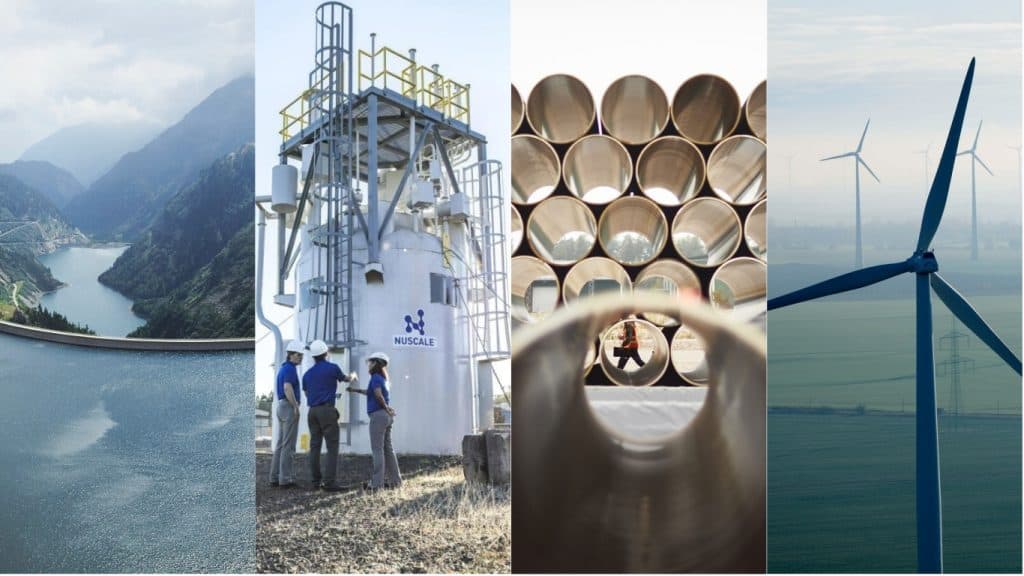
This week, we once again bring you a carefully selected list of the ten most important articles we published on oEnergetice.cz. If you missed any of them, here is a selection of the articles that attracted the most interest from our readers. Good luck in the new week!
1. Surprise comeback: German government and industry consider reviving Nord Stream 2

The German government and industry players are reportedly considering using parts of the Nord Stream 2 pipeline in the future to transport hydrogen from Finland. There is also speculation about the possible transport of natural gas from Russia if a peace agreement is reached between Russia and Ukraine. Handelsblatt reported, citing sources familiar with government discussions. However, several government spokespeople told Handelsblatt that no talks about using the pipeline had taken place and there were no plans to revive the project.
The controversial Nord Stream 2 pipeline, which runs along the bed of the Baltic Sea from Russia to Germany, was completed in 2021, but it was never brought into operation because of Russia’s war on Ukraine. An act of sabotage in 2022, which damaged one of the pipeline’s two strings, further reduced the chances of it being brought into operation to virtually zero.
You can read the full article HERE.
2. Electricity prices fall again. Perhaps for the last time, as first suppliers have already withdrawn attractive offers
Major electricity suppliers cut prices on their products again, effective 1 February. The largest supplier, ČEZ, lowered the prices of its fixed-price products, while innogy cut prices for products without fixed terms. Prague Gas currently offers the cheapest electricity supply deals with one- and two-year price fixes. However, its one-year fixed-price contract has become slightly more expensive. EPET has also withdrawn its most attractive offer. Does the withdrawal of these offers signal a reversal in the market for household and business customers?
An overview of current offers from major suppliers is available HERE.
The competition among electricity suppliers for new customers has not let up. High electricity prices during the energy crisis created plenty of room for prices to fall. Price lists for new customers are often the most attractive, further showing that suppliers are still competing fiercely for new customers.
You can read the full article HERE.
3. China is driving down the cost of clean technologies. Prices are expected to keep falling this year
The levelized cost of electricity (LCOE) from clean technologies such as wind farms, solar power plants and battery storage is expected to fall by a further 2 to 11% this year, according to a forecast by BloombergNEF (BNEF) researchers. A decline of between 22 and 50% is expected by 2035. China is expected to be the main driver of this decline: it can generate electricity from these sources more cheaply than the rest of the world and also exports clean technologies abroad at low prices.
The outlook published by BNEF researchers shows that, in terms of levelized costs, solar and wind power plants are already outcompeting new coal and gas plants in almost all the markets studied.
You can read the full article HERE.
4. Slovakia has the right to consider how to stop gas supplies to Ukraine, Fico says
Bratislava, 11 February (CTK) – Slovakia has the right to consider ways to stop foreign supplies of natural gas to Ukraine, Slovak Prime Minister Robert Fico said in a recording published on social media. Fico has repeatedly criticised Ukrainian President Volodymyr Zelenskyy for Kyiv’s decision to stop transporting Russian gas through Ukrainian territory at the beginning of January, after the relevant contract with Russia expired.
Following Russian attacks on its gas infrastructure, Ukraine resumed taking gas via a backup pipeline from Slovakia last week; according to Fico, foreign companies are the suppliers. Kyiv has also increased imports of the commodity from Poland and Hungary.
You can read the full article HERE.
5. What should we expect from electricity and gas prices in 2025? innogy’s view

Three years have passed since the collapse of Bohemia Energy, one of the largest electricity and gas suppliers. For hundreds of thousands of customers who chose three-year fixed-price contracts at the time, a key decision-making moment has now arrived. It has also been some time since the 2021 energy crisis, but its after-effects are still being felt in the market. On top of that, the regulated component of electricity prices is under growing pressure because of the infrastructure investment required, affecting costs for households and businesses alike.
How will energy commodity markets develop in 2025, and what will it mean for customers? We asked several electricity and gas suppliers.You can read the full article HERE.
6. Carbon border levy set for overhaul as EU responds to industry criticism
The European Commission is facing growing pressure over the so-called carbon border levy, which requires carbon emissions to be reported under the Carbon Border Adjustment Mechanism (CBAM), due to be fully implemented from January 2026. The current transitional phase is exposing weaknesses in the system and an excessive administrative burden for industry, which is already struggling to remain competitive. The Commission is therefore considering simplifying the legislation so that it applies only to the 20% of companies responsible for most emissions,Reuters reports.
Carbon border levy
The first-ever climate import levy (the so-called CBAM) came into force in October 2023, introducing charges on imports of emissions-intensive products such as cement, iron, steel, aluminium, fertilisers, electricity and hydrogen. Its aim is to level the playing field between European producers, who pay for emissions allowances, and competitors from countries outside the EU.
You can read the full article HERE.
7. Joint plans have fallen through: Municipalities in the Svitavy region are signing wind farm agreements individually
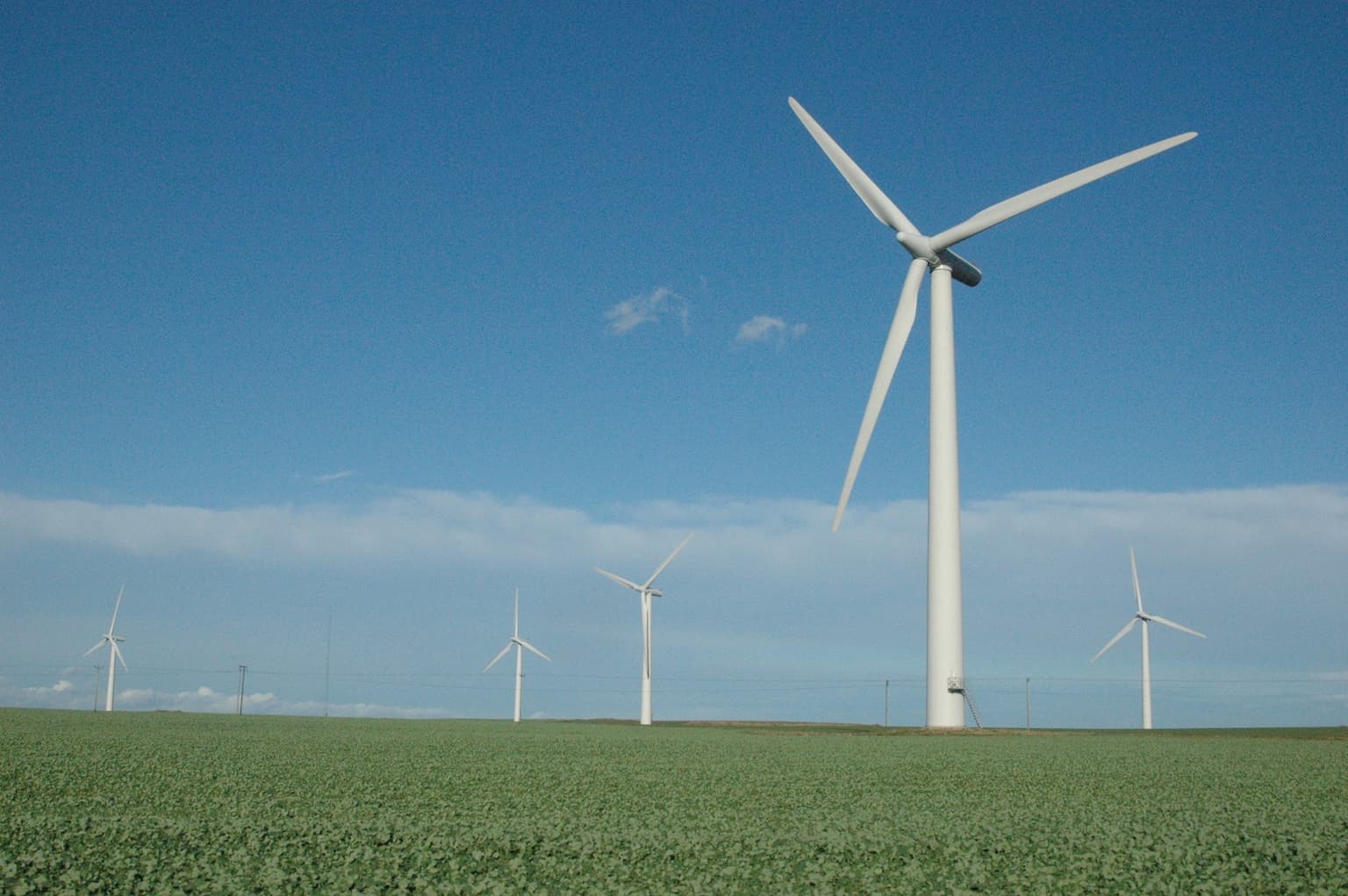
According to available information, individual municipalities in the Svitavy region are already signing agreements to build wind farms in their territories. This is happening despite regional political representatives having previously sought to negotiate the terms collectively. Some municipalities, however, have run out of patience and have decided to pursue projects on their own.
Municipalities such as Dětřichov, Sklené and Opatovec have already signed agreements with ČEZ confirming plans to build wind farms within their cadastral areas. The debate over building wind turbines has been going on for more than a year and a half. The local authorities decided to consider the offers individually, even though Svitavy Mayor David Šimka had initially planned to negotiate with the investor on behalf of the entire microregion.
You can read the full article HERE.
8. Belgium’s nuclear renaissance: New government plans to build new units

Belgium has a new government after almost eight months, led by Bart de Wever. In energy, Belgium’s approach to nuclear power has shifted significantly in recent years. While earlier plans envisaged a gradual phase-out of nuclear reactors, the incoming government is considering not only extending their operating lives but also building new facilities, Reuters reported.
“In the area of energy, the agreement provides for the development of a long-term strategy ensuring an affordable, secure and carbon-neutral energy mix made up of renewable sources, nuclear energy and other forms of carbon-neutral energy, guaranteeing security of supply, affordability for citizens and businesses, and sustainability,” one of the coalition parties, Les Engagés, said.
You can read the full article HERE.
9. Westinghouse and EDF in the running for Slovenian nuclear plant as KHNP withdraws
Westinghouse Electric Company and EDF will each conduct a technical feasibility study for Slovenia’s GEN energija. The study aims to assess the options for building their reactors at the site of the existing Krško nuclear power plant.
The Slovenian JEK2 project envisages building one or two reactors with a total installed capacity of up to 2400 MW. The existing Krško nuclear power plant, which has a 696 MWe pressurised water reactor, supplies approximately one-third of the country’s electricity. The plant is jointly owned by Croatia’s Hrvatska elektroprivreda (HEP Group) and Slovenia’s GEN energija.
You can read the full article HERE.
10. Owner of nuclear power plant in US state of Iowa working to restart it

The decommissioned Duane Arnold nuclear power plant in the United States could be brought back into operation. Its owner recently applied to the nuclear regulator for a licence amendment. This is the first official step towards restarting the single-unit, 615 MW plant. The plant ceased operations in 2020 and, if the process is successful, could resume generating electricity at the end of 2028.
US company NextEra Energy announced in its 2024 results that it had taken the first official step towards restarting its Duane Arnold nuclear power plant in Iowa. The owner said it had submitted a formal application for a licence amendment to the Nuclear Regulatory Commission. The plant, which generated electricity until 2020, has a boiling water reactor (BWR) with a capacity of 615 MW (gross).
You can read the full article HERE.
Energostat: electricity generation in the Czech Republic
Energostat: electricity generation in Germany
More up-to-date charts and data are available on Energostat
Translation disclaimer
This article is a machine translation of the Czech original and has not yet been fully reviewed. In case of any doubt, please refer to the Czech version.