10 October 2026, 07:37
Loading...
A new era in the EU: Clean Industrial Deal instead of the Green Deal
Veronika Jurcová
17 October 2025, 11:43
The European Commission’s 2026 work programme points to a shift from the Green Deal towards an industry-focused agenda. It is intended to support EU growth and competitiveness and respond to mounting pressure from industry and member states to ease the regulatory burden, reports Euractiv.
The European Commission will present its 2026 work programme in Strasbourg next week, setting the direction of EU policy through the end of the decade. The draft document, seen by Euractiv, may still be amended before formal approval, but it already outlines the main priorities for next year: a shift away from the green transition towards a greater focus on economic growth, defence and less bureaucracy.
The 2026 programme confirms a marked shift away from the Green Deal, which dominated von der Leyen’s first term, towards a new era dubbed the Clean Industrial Deal. It is intended to support EU growth and competitiveness and shift the focus away from the green transition towards economic growth, defence and less bureaucracy.
Climate
A review of the EU Emissions Trading System (EU ETS), long sought by the Czech Republic as well, is expected in the third quarter of 2026. In June, a qualified majority backed a proposal to revise the new emissions allowance system, which envisages five main changes to the system. The most important would likely be a cap on allowance prices at 45 euros per tonne of carbon dioxide. Other changes include adjustments to the allowance trading system, the launch of so-called advance allowance auctions as early as 2026, and the regular publication of key data and forecasts.
The Commission is also preparing changes to the rules for sectors outside the ETS—such as agriculture, transport, building heating, waste management and small industrial installations outside the EU ETS—as part of the Effort Sharing Regulation. Its current target is to reduce total EU greenhouse gas emissions across these five sectors by 40% by 2030, compared with 2005. Individual targets have been set for each member state, with the Czech Republic required to cut emissions by 26%.
The aim is to align climate legislation with the EU’s new 2040 target while adapting it to an industry-focused strategy.
The agenda also includes a climate change adaptation plan, due to be published in the third quarter, which will focus on the impacts of climate-related damage already under way.
Energy
Electrification will be a priority in the energy sector. The European Commission plans to put forward a proposal to simplify electrification processes in the third quarter. In September, the EU Agency for the Cooperation of Energy Regulators (ACER) had already responded, proposing ways to improve and clarify the legal framework for European energy networks, while also highlighting persistent problems in scenario planning, assessing infrastructure needs and selecting projects of common interest in a published document.
A revised energy security framework is also expected by March, bringing the rules for gas and electricity together under a single piece of legislation. The review aims to strengthen the Union’s energy security and ensure that the European energy system is resilient to physical and cyber threats, can cope with the impacts of climate change and adapt to new geopolitical conditions.
A so-called “energy omnibus”—a package of measures intended to simplify existing EU legislation—is also due to be published in the third quarter. It will include a review of the rules on energy governance, energy efficiency and CO₂ infrastructure.
The timetable also includes an update to the rules on renewable energy sources. According to Euractiv, this could involve replacing the term “renewable” with “clean” sources, as France is calling for in a coalition that also includes the Czech Republic. This shift would open the door to including nuclear energy and carbon capture and storage (CCS) technologies among the sources eligible for support.
Environment
The planned environmental measures suggest that reform of the key REACH chemicals regulation will not be part of the 2026 programme, indicating that it could be completed later this year. It is not yet included in the Commission’s current work programme, however, and according to Euractiv, Brussels is divided between those who favour modernising the legislation and those calling for it to be simplified or weakened.
The only environmental proposal planned for 2026 is therefore the Circular Economy Act, which is due to be presented in the third quarter. By introducing charges on waste products, such as critical raw materials, it is intended to encourage greater recycling.
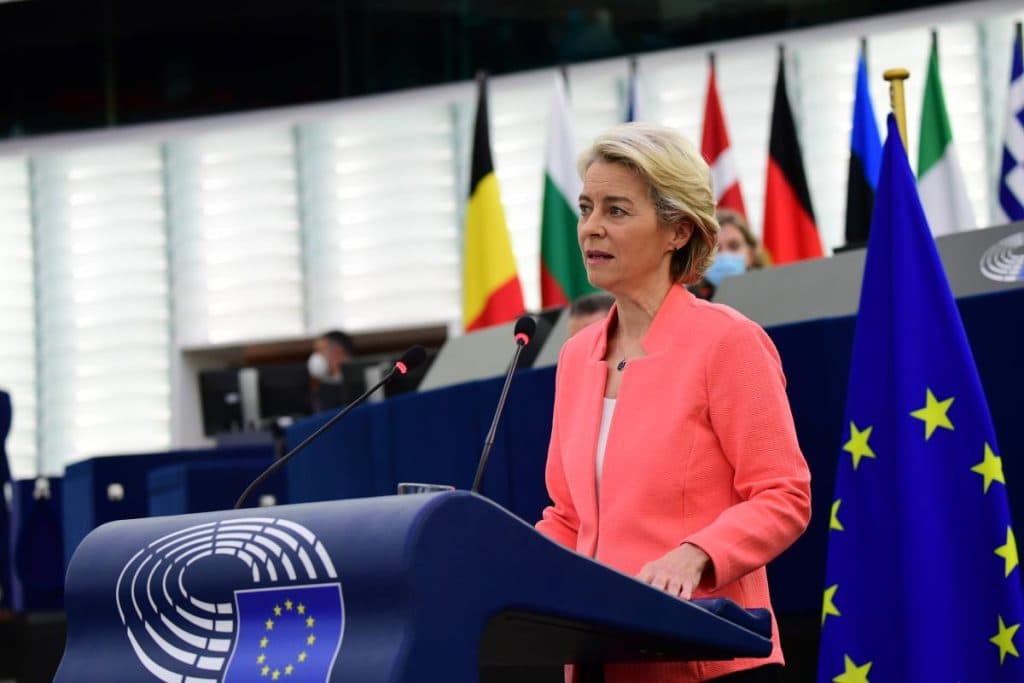
The European Commission is due to approve the final version of the programme next week and present it to MEPs through its president, Ursula von der Leyen.
Translation disclaimer
This article is a machine translation of the Czech original and has not yet been fully reviewed. In case of any doubt, please refer to the Czech version.
Sdílejte článek prostřednictvím:
You might also like

10 October 2026, 07:02

9 October 2026, 13:47