Nuclear alliance calls for a new low-carbon directive
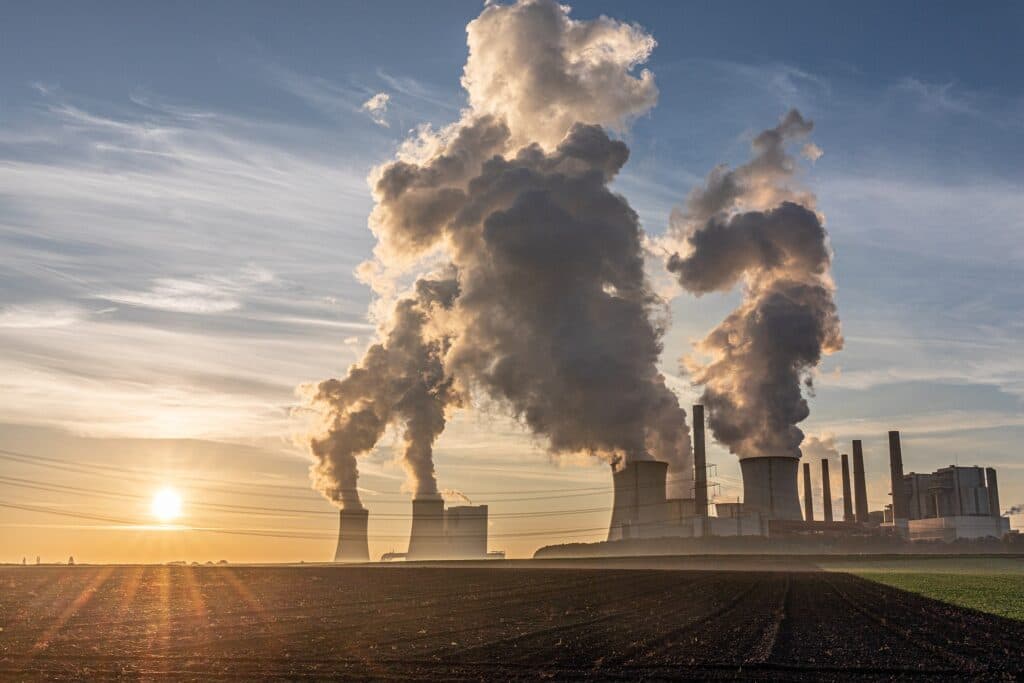
The nuclear alliance of eleven EU countries, led by France, has called on the European Union to fully account for “all non-fossil energy sources” when formulating future energy and climate policy targets. The countries stressed the need for a thorough review of the EU’s climate and energy policy framework, with an emphasis on fully recognising their contribution, reports Euractiv.
Eleven countries, including Czechia, attended the alliance meeting on 19 December 2023. Bulgaria, Croatia, Czechia, Finland, Hungary, Poland, Romania, Slovakia, Slovenia, Sweden and France called in a joint statement for a thorough review of the EU’s climate and energy policy framework.
In their view, the EU must fully recognise the contribution of all non-fossil energy sources to the goal of halving emissions by 2030 and achieving climate neutrality by 2050.
“Nuclear energy is undoubtedly sustainable and an equally valid technology for achieving these goals for member states that have chosen to use it,” the joint statement says.
At present, only renewable energy and energy efficiency are subject to binding, quantified targets.
“However, we must jointly recognise that these two dimensions are not enough to encompass the diversity of solutions and industrial capacities across member states,” the joint statement says, adding that nuclear energy must also be taken into account.“Looking ahead and towards our shared climate and energy goals for 2040 and 2050, we strongly urge the European Commission to propose a regulatory architecture that will make it easier for member states to achieve carbon neutrality by taking our energy diversity into account,”it adds.
At France’s instigation, support is growing among EU member states for revising the EU’s climate and energy targets and adopting a broader approach focused on decarbonisation, rather than solely on renewable energy.
In March, EU legislators agreed to raise the renewable energy target for 2030, but France and its allies had already insisted on a guarantee that the target for renewable hydrogen production would be reduced for countries with a low-carbon electricity mix.
Similarly, the nuclear alliance is now calling on the EU to adopt a target for low-carbon energy, rather than one for renewables alone.
“If we want to achieve the 2030 targets together, and then those for 2040, we will probably have to ask ourselves how these targets are structured. If we want to make progress on renewables, we will come up against the low-carbon baseline of some member states. That is why we must stop thinking about drafting a fourth Renewable Energy Directive and instead think about a first low-carbon directive,” said French Minister for Energy Agnès Pannier-Runacher.
France has long lagged behind European leaders in developing solar and wind power and has previously failed to meet the commitment set out in its National Energy and Climate Plan.
A change in the approach to setting targets
According to the countries in the nuclear alliance, a paradigm shift would require changing the targets set out in the National Energy and Climate Plans (NECPs), which EU member states must submit by June 2024.
The French draft NECP, submitted to the European Commission last month, already refers to a decarbonised energy target instead of a renewable energy target, as required by the EU Renewable Energy Directive. France has therefore refused to adopt a renewable energy target for 2030 in its plan, rejecting the Commission’s call to comply with the EU Renewable Energy Directive.
European Commissioner for Energy Kadri Simson has not yet commented specifically on France’s proposal for a low-carbon energy target, but has acknowledged the importance of nuclear energy in relation to the EU’s climate goals for 2040.
Translation disclaimer
This article is a machine translation of the Czech original and has not yet been fully reviewed. In case of any doubt, please refer to the Czech version.




