10 October 2026, 07:37
Loading...
Brussels seeks compromise with Sweden. Dispute over billions in grid revenues moves toward easing of rules
Veronika Jurcová
9 June 2026, 07:05
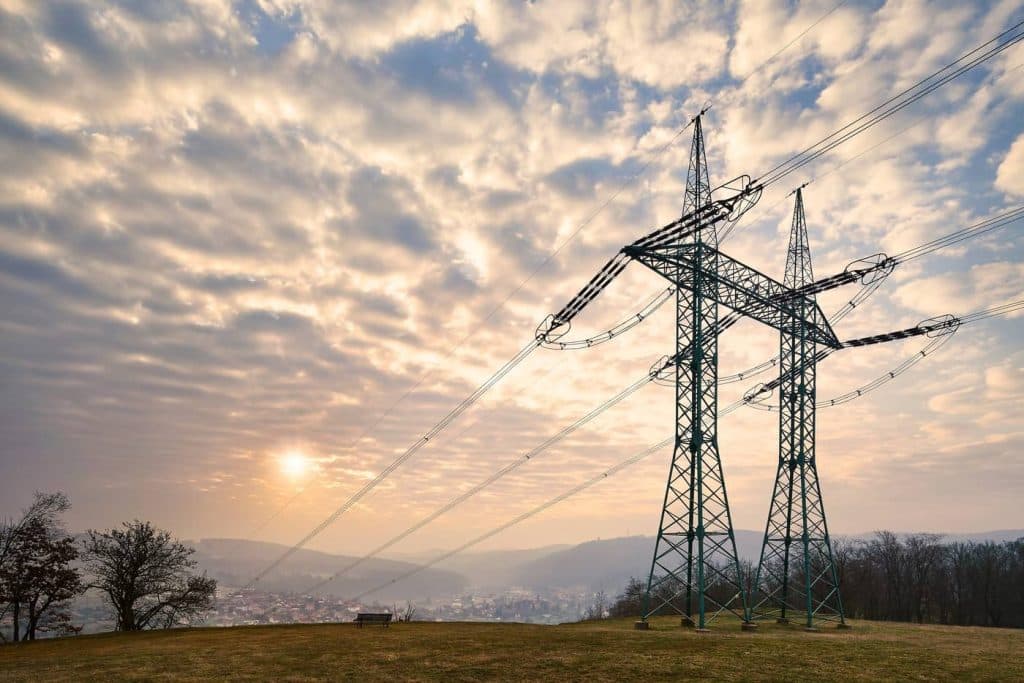
The European Commission wants to use part of the billions in revenue earned by grid operators to finance new cross-border interconnectors. Sweden and France have strongly opposed the proposal, and Stockholm has even frozen investment in new power lines. But according to European Commissioner for Energy Dan Jørgensen, an agreement is within reach. The outcome will be important for the future of European energy and for financing the massive modernisation of the grid, Montel News reports.
The European Union faces a paradox. On the one hand, it needs record investment in electricity grids to handle rapidly growing renewable energy generation and the electrification of industry, transport and heating. On the other hand, member states are still arguing over who will pay for these investments.
In recent weeks, the most visible manifestation of this conflict has been the dispute between Brussels and Sweden over a European Commission proposal included in the so-called Grids Package.
The proposal was also the subject of intensive debate last week at the Eurelectric Power Summit 2026 in Helsinki, which brought together representatives of European governments, energy companies and regulators. This year’s main topics included accelerating the electrification of the European economy, energy security, the competitiveness of European industry and financing new infrastructure—all areas directly relevant to the current dispute.
European Commissioner for Energy Dan Jørgensen sent a reassuring signal on the sidelines of the summit. He considers some of Sweden’s objections entirely justified and is confident that a compromise can be reached.
Dispute over eight billion euros
At the heart of the conflict are so-called congestion revenues. These arise from differences in electricity prices between individual bidding zones and are collected by transmission system operators.
The European Commission proposes that operators set aside 25 percent of unused revenues to finance cross-border projects of common European interest. The aim is to speed up construction of new power lines and interconnectors between countries, which will be essential for transmitting electricity from wind farms in the North Sea or solar parks in southern Europe to industrial hubs and areas with high demand.
It was here that the Commission encountered opposition, particularly in Sweden.
Sweden’s transmission system operator Svenska Kraftnät has accumulated almost eight billion euros in recent years from revenues generated by congestion between individual bidding zones. Stockholm argues that this money should primarily be used to strengthen domestic energy infrastructure.
Swedish Energy Minister Ebba Busch therefore froze investment in new cross-border interconnectors with other EU countries in May, including a planned 1 GW power line to Denmark. The unprecedented move was intended to show Brussels how seriously Stockholm viewed its objections.
France has taken a similarly critical stance. According to information from discussions among member states, Paris is particularly concerned that the European Commission would gain too much influence over decisions on how the funds are used. The French government has long opposed any further expansion of Brussels’ powers in energy policy.
Compromise: more money stays with member states
New negotiating documents also point to progress in the talks. According to a leaked draft seen by Reuters, governments are considering changing the system so that member states retain congestion revenues generated within their own territory. Only funds generated by congestion between cross-border bidding zones would then have to be contributed to European projects.
Such an option would effectively scale back the Commission’s original ambition to intervene in a larger share of transmission system operators’ revenues, while preserving the principle of jointly financing cross-border infrastructure.
The Commission argues that without joint financing it will not be possible to build a sufficiently robust European grid in time. Many countries, however, point out that these revenues already play a key role in domestic investment in transmission systems.
Political pressure mounts
Tensions are not limited to Sweden. Denmark and Austria have also voiced criticism, warning that changing the rules could disrupt grid operators’ investment plans and weaken incentives to build cross-border interconnectors. The European Commission stresses that the 2050 climate targets cannot be met without extensive modernisation of transmission grids.
The dispute is now moving into negotiations in the EU Council, where energy ministers are due to seek a common position in the coming weeks. Cyprus, which holds the presidency, is pushing for an agreement at the June meeting.
Statements so far suggest, however, that the Commission recognises the proposal’s political sensitivity. Jørgensen’s signal in Helsinki therefore indicates that Brussels will be willing to make concessions and seek a solution that gives member states greater control over how their revenues are used.
Translation disclaimer
This article is a machine translation of the Czech original and has not yet been fully reviewed. In case of any doubt, please refer to the Czech version.
Sdílejte článek prostřednictvím:
You might also like

10 October 2026, 07:02


9 October 2026, 13:47