German economists call for splitting Germany's single bidding zone

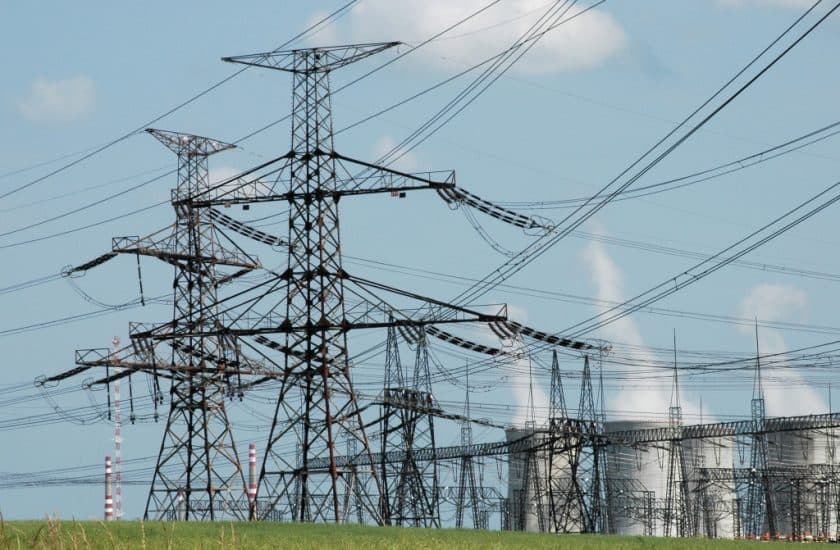
Leading energy economists have called for splitting Germany's single bidding zone to account for regional differences in electricity availability. They say this would eliminate decisions that are physically impossible from the grid's perspective and make no economic sense.
In an article published in the Frankfurter Allgemeine Zeitung, twelve economists argue that the value of electricity often varies significantly across different parts of Germany because the country's transmission capacity regularly reaches its limits.
In regions with many wind and solar power plants, the economic value of electricity is low when they are generating at high levels. It is often even zero or negative because there is a surplus of electricity. In these regions, the market price needed to balance supply and demand would accordingly be low.
The opposite is true in regions where high electricity consumption coincides with limited supply. Electricity is very valuable there, and the market price would be relatively high.
However, because the single electricity price is inherent to a single bidding zone, these regional differences are not reflected in wholesale electricity prices, leading to costly consequences. Wind farms in the north generate more energy than they would if there were several smaller bidding zones. This electricity cannot be transported to areas of consumption because of bottlenecks in the transmission system.
Conversely, electricity consumption in southern Germany is higher than it would be if it reflected local price signals. Grid operators have to address the consequences of a single bidding zone, including overloaded transmission lines, through costly measures such as redispatch. Germany regularly spends billions of euros a year on these measures.
Redispatch occurs when generators in a different location are brought online instead of the conventional generators originally scheduled to supply electricity to the grid, in order to prevent grid components from becoming overloaded. These measures are costly because the original generators must be compensated for being unable to supply electricity to the grid, while the electricity produced by the replacement generators must also be paid for.
“Only when the electricity grid has sufficient capacity to balance supply and demand in all regions simultaneously will regional differences in value disappear. Until then, the wholesale price of electricity should be higher where demand is high and lower where there is a surplus of supply at a given moment,” the economists argue.
The authors add that different price zones would also allow industry to benefit from local electricity surpluses and invest in energy-intensive applications such as electrolysers for hydrogen production.
“Because investors in Germany do not get cheap electricity, they are increasingly drawn abroad. For example, to Sweden, where regional electricity prices have long been in place,” the economists add.
The authors of the report include Ottmar Edenhofer of the Potsdam Institute for Climate Impact Research (PIK), government advisers Veronika Grimm and Andreas Löschel, Felix Matthes of the Öko-Institut, and Georg Zachmann of the EU think tank Bruegel.
Obstacles to the development of Germany's grids
The slow development of the German transmission grid has repeatedly been cited as an argument for splitting the single price zone. Northern federal states, where wind power generation is high, support the idea, while industrial regions in the south and west of the country oppose it for fear of rising electricity prices.
The main obstacles to expanding the grid in Germany include lengthy permitting and planning procedures, as well as recurring supply-chain problems involving materials such as steel or wood chips, and a shortage of skilled workers, says the head of one of Germany's four transmission system operators.
A legislative change last year, however, appears to have significantly accelerated permitting and planning procedures, but this has further exacerbated shortages of skilled workers and supply-chain problems.
Translation disclaimer
This article is a machine translation of the Czech original and has not yet been fully reviewed. In case of any doubt, please refer to the Czech version.




