6 November 2026, 14:13
Loading...
German gas boiler ban may directly threaten the single European market, US and European companies say

Marek Kršák
7 August 2023, 06:25
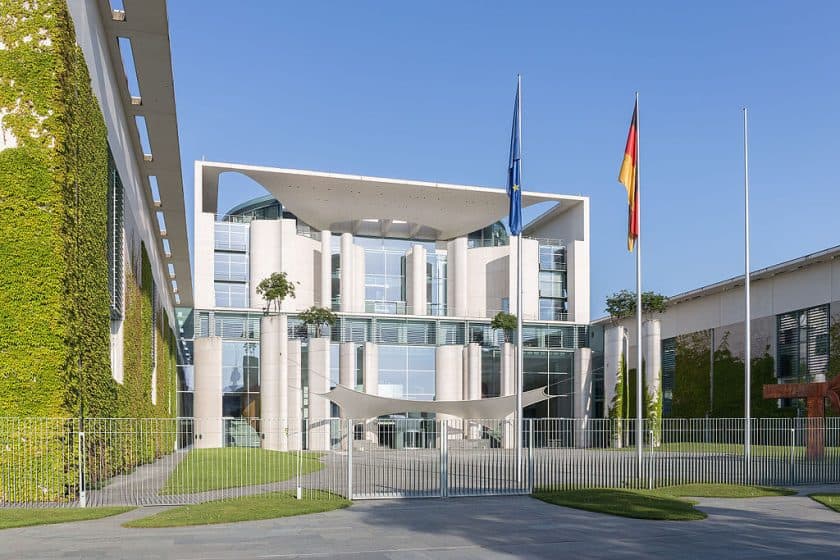
According to some European and US companies, new German legislation on the transition to low-carbon heating will negatively affect future heat pump sales and reduce the competitiveness of many European businesses. The objections come after Europe’s strongest economy announced that it is most likely to put an end to fossil fuels in the heating sector this autumn.
The newly proposed German law says that new heating systems must use at least 65% energy generated from renewable sources. This does not mean that German households using gas boilers will no longer be able to use them. It will also be possible, for example, to use hybrid systems that burn natural gas under certain conditions, or to burn blue hydrogen in gas boilers, which is produced in combination with carbon capture technologies.
If the bill is successfully passed, German politicians may also ban the use of certain gases that serve as refrigerants in heat pumps. Specifically, these are known as fluorinated greenhouse gases, or F-gases.
Why are F-gases so harmful?
The controversy surrounding these gases is not about their harm to the ozone layer, but rather their global warming potential (GWP). F-gas emissions therefore have a negative impact on the Earth’s climate system by contributing to warming.
GWP is expressed as a ratio comparing a molecule of any gas with a molecule of CO2, which is set as the reference value with a potential of one. Some F-gases have a potential thousands of times greater than that of a single CO2 molecule.
This means that if a substance has a GWP of 1430, one molecule released into the atmosphere has the same effect as 1430 molecules of CO2. Another major drawback of these substances is that they are chemically stable and remain in the atmosphere unchanged for decades.
According to Julien Soulet, vice president and general manager of Honeywell Advanced Materials’ Fluorine Products division, the part of the law that will ban the use of F-gases in the future is “counterproductive” and even “violates the principles of the EU internal market”.
"The unintended consequences of removing hydrofluoroolefins (HFOs) from the market in Germany could be far-reaching, with adverse impacts on energy efficiency, energy security and costs for citizens," Soulet said.
Germany’s Ministry of Economic Affairs, which is responsible for the controversial legislation, insists, however, that it is “important” to switch from HFOs to “natural refrigerants” such as propane or carbon dioxide, because they have a lower global warming potential.
Almost no alternatives
The problem is that only around 5% of all heat pump manufacturers use butane-based refrigerant gases in their technologies. And as many as 40% of all heat pumps manufactured for the European market do not have a safe and scalable plan for replacing existing gases with natural alternatives.
Kai Schiefelbein, chief executive of Stiebel Eltron, one of Germany’s leading heat pump manufacturers, believes a more liberal approach is needed to address which refrigerants can be used.
“Politicians, companies and tradespeople all agree that we really need to speed up heat pump installation. To achieve that, we need to take all heat pump segments into account,” Schiefelbein said.
Negative externalities of the gas boiler installation ban
The proposed ban on new gas boilers seems likely to lead to a series of unintended consequences. Thousands of Germans are already trying to get ahead of the ban by installing new gas boilers before the deadline set by the law, 1 January, meaning that CO2 emissions from newly installed gas boilers will continue for at least another ten to fifteen years.
Around 168,000 gas boilers were sold in Germany in the first quarter of this year, a 100% increase on the previous year, according to ZVSHK, the trade association for heating, plumbing and air conditioning technicians.
Translation disclaimer
This article is a machine translation of the Czech original and has not yet been fully reviewed. In case of any doubt, please refer to the Czech version.
Sdílejte článek prostřednictvím:
You might also like
6 November 2026, 10:25