
23 October 2026, 14:38
Loading...
German plan to develop district heating is at risk due to government cuts

Jan Budín
26 August 2024, 06:17
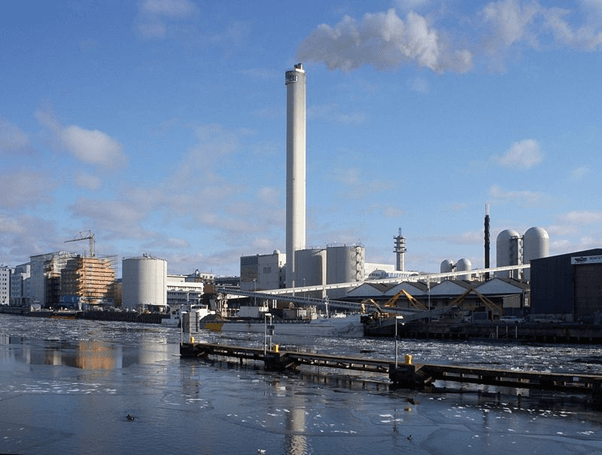
Government cuts in the 2025 budget are jeopardising the country’s plans to develop its district heating networks, according to the German Association of Local Utilities (VKU). Clean Energy Wire reported.
District heating is one of the main keys to achieving climate-neutral heat supplies for buildings. Alongside improving the energy efficiency of buildings, it therefore plays a crucial role in ensuring the decarbonisation of heating in Germany.
A recent report assessing the investment needs for Germany’s planned expansion of district heating, commissioned by the German Association for Energy Efficiency in Heating, Cooling and CHP (AGFW) and the German Association of Local Utilities (VKU), found that investment of 43.5 billion euros will be needed by 2030. Most of the funding (60%) will be needed to expand heat networks, with the remainder going towards heating plants using renewable energy sources and their connection to the networks.
The report also estimates that 3.4 billion euros in state support for investment and the operation of modernised district heating will be needed annually until 2030.
Only a fifth of the support needed
The German government has nevertheless allocated only 3.4 billion euros to the Federal Funding Programme for Efficient Heat Networks for the period from 2025 to 2029. This amounts to just a fifth of the state funding needed, as estimated above.
“The government’s draft budget, approved by the coalition parties on 19 August, has created uncertainty and undermined trust,” said VKU President Ingbert Liebing.
According to Liebing, the proposed allocation of state support for district heating will make it impossible to achieve the government’s target of tripling the share of heat supplied through district heating networks by 2045.
This is to be achieved by expanding heat networks in which renewable energy or waste heat accounts for at least 50% by 2030. Around 100,000 buildings are expected to be connected to these networks each year.
District heating already supplies more than a third of homes in Germany’s three largest cities: Berlin, Hamburg and Munich.
According to information published by Germany’s Ministry for Economic Affairs, around 14% of German households were connected to heat networks in 2022. Renewable energy sources accounted for around 20% of the total heat supplied by these networks.
Translation disclaimer
This article is a machine translation of the Czech original and has not yet been fully reviewed. In case of any doubt, please refer to the Czech version.
Sdílejte článek prostřednictvím:
You might also like


23 October 2026, 11:01


23 October 2026, 06:34