German utilities skeptical about plan to build 25 GW of gas-fired power plants

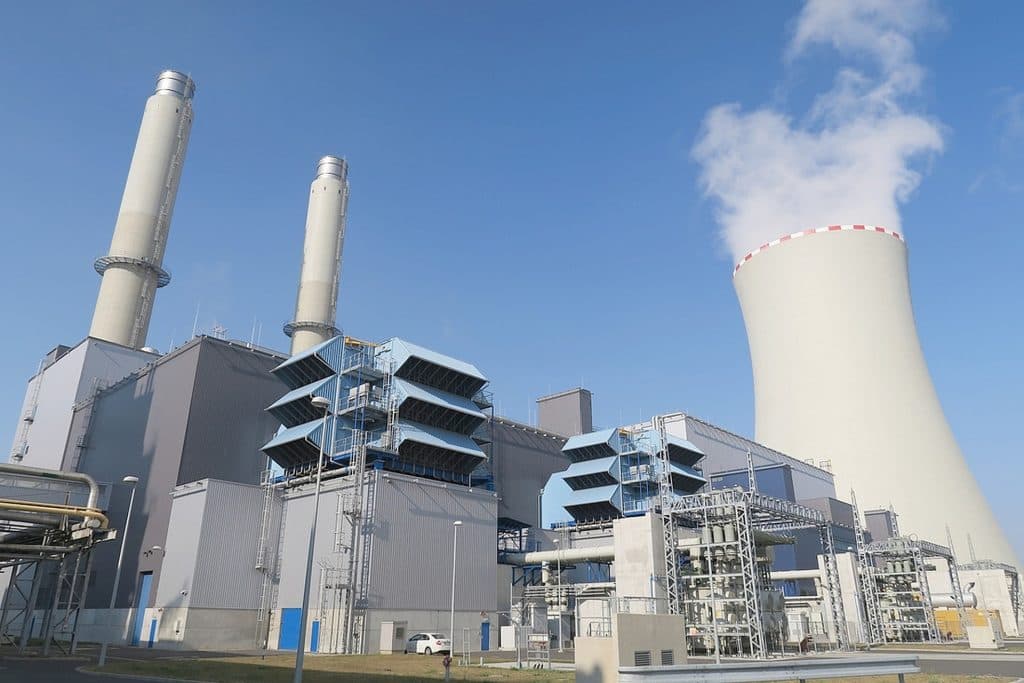
Germany’s largest energy companies are skeptical, according to international news service Argus, about the German government’s plan to build around 25 GW of new gas-fired power plants by 2030. Germany says these plants will be essential in the future to ensure security of electricity supply when solar and wind power generation is insufficient.
Germany’s plans to build new gas-fired power plants, which will be needed to ensure electricity supplies when renewables are not generating enough power to meet demand, were announced at the beginning of this year. According to a statement by Economy Minister Robert Habeck in March, around 25 GW of new dispatchable capacity is planned.
The construction of these plants is to be supported through auctions, which Germany originally planned to launch later this year. Following objections to the proposed measure, which the European Commission had raised from the outset, Germany had to make changes.
According to information published by the German economy ministry in early August, three support schemes will ultimately have to be prepared in parallel, with only one for natural gas-fired power plants. This scheme is expected to support the construction of 15 GW of new capacity. The remaining 9 GW or so will consist of hydrogen-fired power plants.
This change has also pushed back the timetable for the first auctions, with the economy ministry now targeting 2024.
Utilities are skeptical about the plan
Germany’s largest energy companies are taking a rather skeptical view of the government’s plans, partly because of the complications involved in securing European Commission approval for state aid. Uniper, for example, estimates that even building 20 GW of new gas-fired capacity would be an ambitious target, as it would require annual additions of around 3 GW. According to Uniper, in recent years the maximum amount of this type of capacity built has been 1–2 GW.
Steag said that, based on the published framework for the proposed support schemes, potential plant operators are unlikely to invest significant sums in construction given the high level of uncertainty.
EnBW, meanwhile, pointed out that the role of combined heat and power plants in the planned tenders remains unclear. Vattenfall agreed, saying that CHP plants should also be considered to kick-start the development of hydrogen-fired capacity.
“Energy companies generally agreed that clarifying the details of the planned measures and then implementing them quickly will be essential to their success,” Argus said.
Argus added that both Steag and Leag plan to build 3 GW of gas-fired capacity by 2030, while EnBW plans to carry out projects to switch the fuel used by around 1.5 GW of dispatchable capacity. In response to a question from Argus, Uniper said it plans to build new flexible capacity totalling several gigawatts, but did not give a specific figure. RWE and Vattenfall declined to disclose their plans.
Translation disclaimer
This article is a machine translation of the Czech original and has not yet been fully reviewed. In case of any doubt, please refer to the Czech version.