10 September 2026, 15:21
Loading...
Germany is highly dependent on energy commodity supplies from Russia. What will its next steps be?
Daniel Grecman
27 February 2022, 10:20
Following the start of Russia’s unprovoked aggression against Ukraine, Europe’s security situation has changed radically. As a result of this change, measures will have to be adopted to increase Europe’s energy security, even at the expense of its economy. How Germany, the EU’s strongest economy, now responds will be decisive in many respects, as it has based its Energiewende transition, for the time being, on a combination of natural gas and renewable energy sources.
Legislative changes lie ahead
Germany, which is highly progressive in the field of renewable energy sources (RES), is also currently highly dependent on fossil fuels. At the end of last year, Germany stood by its plan to shut down its remaining nuclear power plants.
The closure of stable nuclear power plants that remain fit for operation goes hand in hand with an increasing need for power generation from coal or gas. RES are not being built quickly enough to replace such a substantial reduction in capacity, even leaving aside their intermittent output and the not fully resolved issue of long-term storage.
Gas supplies from Russia were also below average compared to previous years, which, combined with several factors, caused a sharp rise in energy commodity prices and strong inflationary pressures in individual economies.
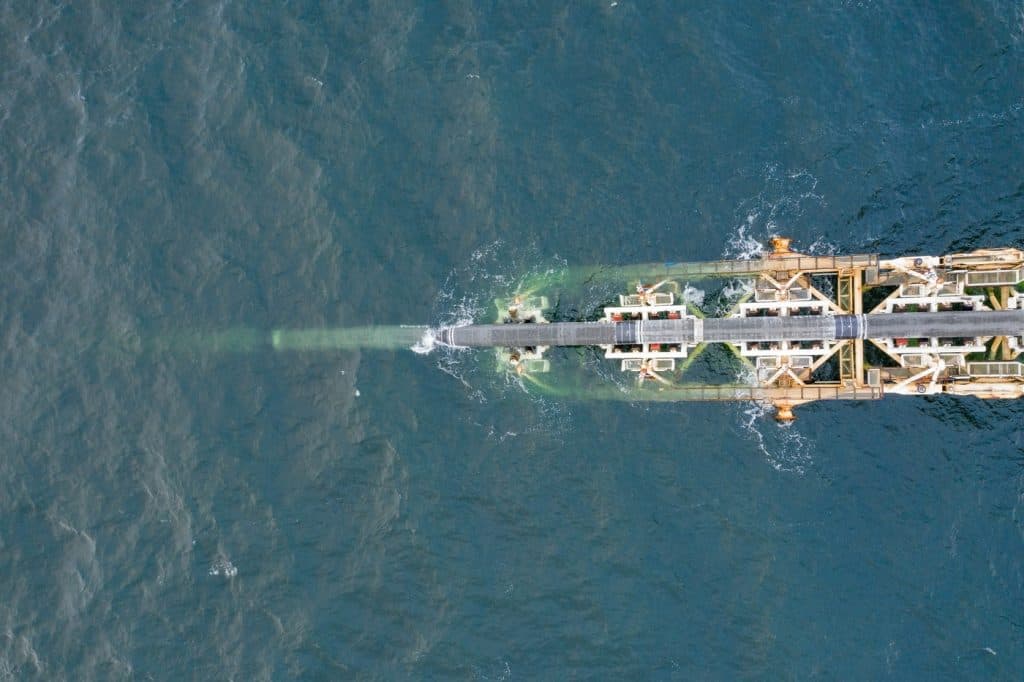
According to most analysts, lower Russian pipeline gas supplies were attributed to Russia’s efforts to speed up the certification of Nord Stream II. The project had broad support among Germany’s population given the country’s climate ambitions. However, at the end of last year, German Green politician and Vice-Chancellor Robert Habeck said that, from a geopolitical perspective, construction of the pipeline had been a mistake.
“We are preparing further measures for the next winter season, including measures requiring storage facility owners to fill them before the start of the winter season,” Vice-Chancellor Robert Habeck said on 24 February. “Draft legislation is being drawn up and will be presented swiftly so that gas can be purchased as early as the summer.”
The EU’s and Germany’s dependence on Russia
The EU is dependent on pipeline supplies of natural gas for approximately 35-40% of its needs. Germany itself is 55% dependent, according to Habeck. Germany is also dependent on coal imports from Russia, by approximately 50%, according to the Vice-Chancellor. Germany’s 35% dependence on Russia can also be seen in its oil imports. Germany’s hesitation over cutting Russia off from the SWIFT system at a time when its industry is already facing significant strain as a result of the energy crisis therefore stems from purely economic considerations.
But where will the gas to fill storage facilities come from? Does Germany expect pipeline gas flows to continue due to mutual dependence? Is it willing to continue paying Russia’s Gazprom for supplies? The EU is able to get through the current winter without gas supplies, but not the next one if pipeline deliveries are halted, however.
Russian aggression will undoubtedly also affect climate policy. Greater emphasis will be placed on the development of RES, but in the interim above all on coal. Answering the following questions will be important for the EU’s economic development: Will Germany change its stance on zero-emission nuclear power plants given the current situation? Could it “revive” its recently shut-down nuclear power plants? Will it be willing to discuss a revision of the emissions trading system?
Translation disclaimer
This article is a machine translation of the Czech original and has not yet been fully reviewed. In case of any doubt, please refer to the Czech version.
Sdílejte článek prostřednictvím:
You might also like
10 September 2026, 10:37
9 September 2026, 15:05
9 September 2026, 13:24