11 October 2026, 08:24
Loading...
Germany will officially reject a split of its bidding zone by the end of October

David Vobořil
18 October 2025, 07:34
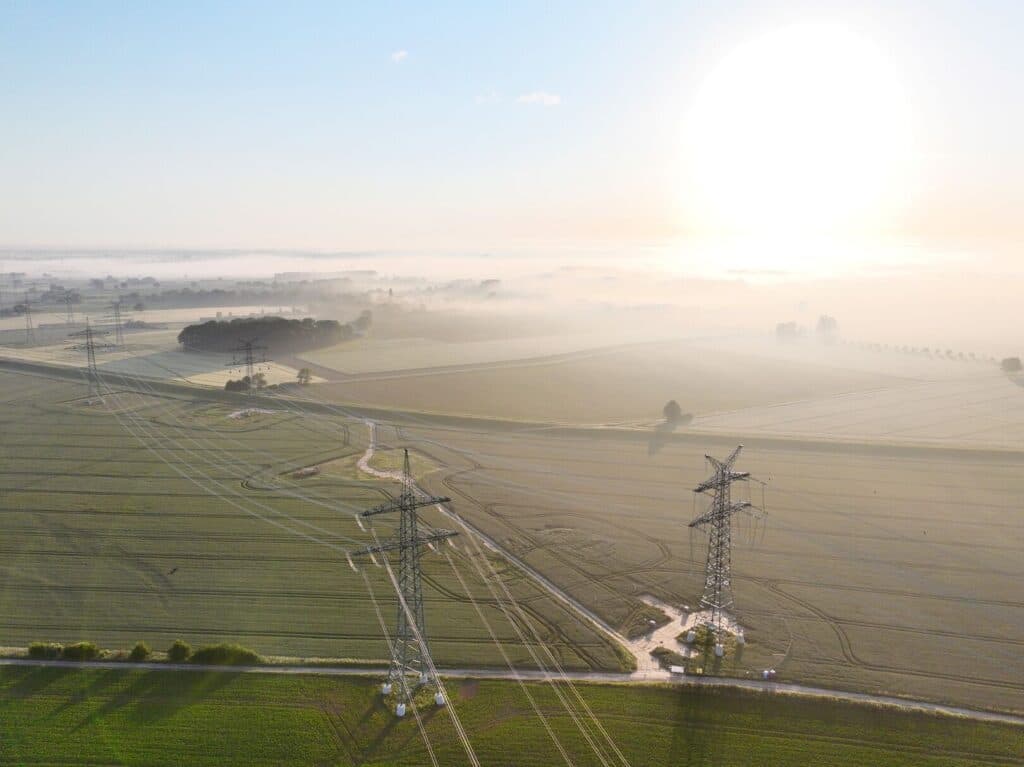
By the end of October, Germany will inform the European Commission that it will retain its single bidding zone rather than split it, as recommended by a study by European transmission system operators. Montel reported, citing an announcement by the German economy ministry on Thursday.
In April, the European Network of Transmission System Operators for Electricity (ENTSO-E) published a study assessing alternative configurations of bidding zones in Europe. Among other things, from an economic perspective, it recommended splitting Germany's bidding zone. However, the study says that implementing a change to the current configuration requires more in-depth political and economic assessment. A significant weakness of the study, whose methodology is set by a decision of the European regulator ACER, is its use of outdated data.
Under the EU regulation on the internal electricity market, EU member states with proven structural grid congestion must decide within six months of the study's publication whether to address the identified congestion by reconfiguring their bidding zone or submit an alternative plan.
Bidding zone (also known as a trading zone)
is a fundamental element of the European electricity market. The electricity price within a bidding zone is uniform for each trading interval. Trade between bidding zones is limited by the available transmission capacity calculated by transmission system operators, while trade within bidding zones takes place without restrictions. The definition of bidding zone boundaries is therefore a matter of great importance to the market and requires thorough analysis.
The German economy ministry worked with Germany's network regulator (BNetzA) on an alternative to a split, spokesperson Tim Niklas Wentzel said. To this end, it published the “Bidding Zone Action Plan” on Tuesday, through which the country's decision will be submitted to the European Commission.
Proponents of splitting Germany's bidding zone argue that it would lead to a more efficient market and better price signals, while opponents warn that it would reduce liquidity in Europe's largest electricity market.
Action plan
In its action plan, Germany interprets the study's results as not explicitly identifying any structural congestion in the German grid and points to methodological shortcomings in the study, given its recommendation to split Germany's bidding zone to increase economic efficiency across Europe.
On this basis, it decided in its action plan to retain a single bidding zone.
“The Federal Republic of Germany stands by the existing single German-Luxembourg bidding zone. This decision is also in line with the current coalition agreement between the CDU/CSU and SPD, which confirms the retention of a single bidding zone,” the action plan states.
The action plan cites the preservation of a liquid electricity market and favorable conditions for electricity generation within a large bidding zone as reasons to retain a single zone. In addition, Germany's transmission system will be significantly expanded and strengthened in the coming years. According to the plan, the commissioning of the first domestic high-voltage direct current (HVDC) transmission lines will substantially increase the capacity of Germany's transmission system and reduce existing bottlenecks.
Germany also rejects a zone split for broader reasons. It would significantly increase uncertainty around energy investments, lead to regional differences in costs for end consumers, call into question the economic viability of generation facilities in some regions, and raise complex industrial policy questions at a time when European industry is already facing major challenges, the action plan says.
Translation disclaimer
This article is a machine translation of the Czech original and has not yet been fully reviewed. In case of any doubt, please refer to the Czech version.
Sdílejte článek prostřednictvím:
You might also like

10 October 2026, 13:19

10 October 2026, 07:37

10 October 2026, 07:02