
23 October 2026, 14:38
Loading...
Lower electricity demand growth could reduce grid expansion costs in Germany

Jan Budín
27 December 2024, 12:12
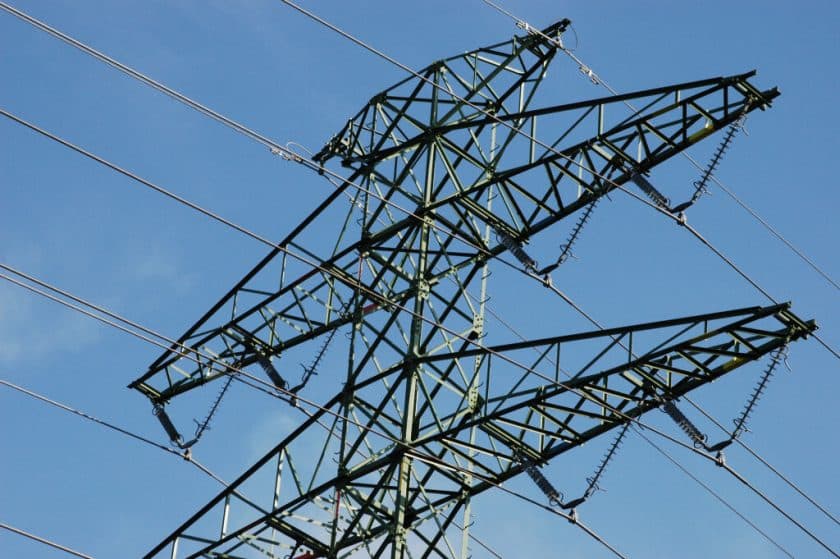
If electricity demand in Germany grows less than currently expected, the cost of expanding the transmission and distribution grids could fall by almost 20%. This is according to an analysis by consultancy e.venture, commissioned by 50Hertz, one of Germany’s four transmission system operators. The information was reported by international news outlet Clean Energy Wire.
The expansion of Germany’s transmission and distribution grids is set to cost more than half a trillion euros by 2045. Investments in the transmission grid are expected to account for around 320 billion euros, with a further 200 billion euros going to distribution grids. Some estimates suggest that costs could be even higher, reaching as much as 650 billion euros.
Consultancy e.venture takes a slightly more conservative view of the issue. According to its analysis, prepared for 50Hertz, one of Germany’s transmission system operators, total costs for expanding the German grid could amount to just under 440 billion euros if electricity demand is lower than expected.
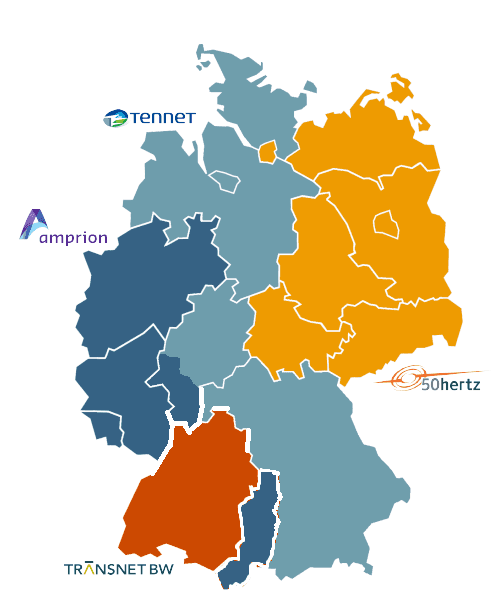
Control areas of the individual transmission system operators in Germany. Source: PRÄQUALIFIKATIONS-PORTAL
Demand outlook affected by crisis, new consumption growing slowly
The latest outlook for electricity demand in Germany, prepared by the country’s network regulator BNetzA, dates back to 2021. It projected that demand would rise to 665 TWh by 2030, primarily as a result of electrification in selected sectors. In 2023, however, demand amounted to just 517 TWh, around 50 TWh less than in 2019.
Low electricity consumption is due, on the one hand, to the contraction of German industrial production and, on the other, to the slower uptake of heat pumps, electric vehicles and electrolyzers for green hydrogen production.
"Consumers also reduced their energy use following the energy crisis, when the government promoted conservation measures," said 50Hertz CEO Stefan Kapferer, adding that the next transmission grid development plan should also include a scenario for lower electricity demand.
According to Kapferer, the pressure to expand Germany’s power grid could also be eased by slowing the connection of new solar power plants. Another possibility would be to implement a proposal by the German Association of Energy and Water Industries (BDEW), under which the output that new small solar power plants can feed into the grid could temporarily be limited to 50% of their potential capacity. This would remain in place until distribution system operators are able to control generation from these smaller installations as well.
Translation disclaimer
This article is a machine translation of the Czech original and has not yet been fully reviewed. In case of any doubt, please refer to the Czech version.
Sdílejte článek prostřednictvím:
You might also like


23 October 2026, 11:01


23 October 2026, 06:34