6 November 2026, 14:13
Loading...
Finnish modular reactor for residential heating to be built by 2030

Jiří Salavec
3 July 2023, 06:28
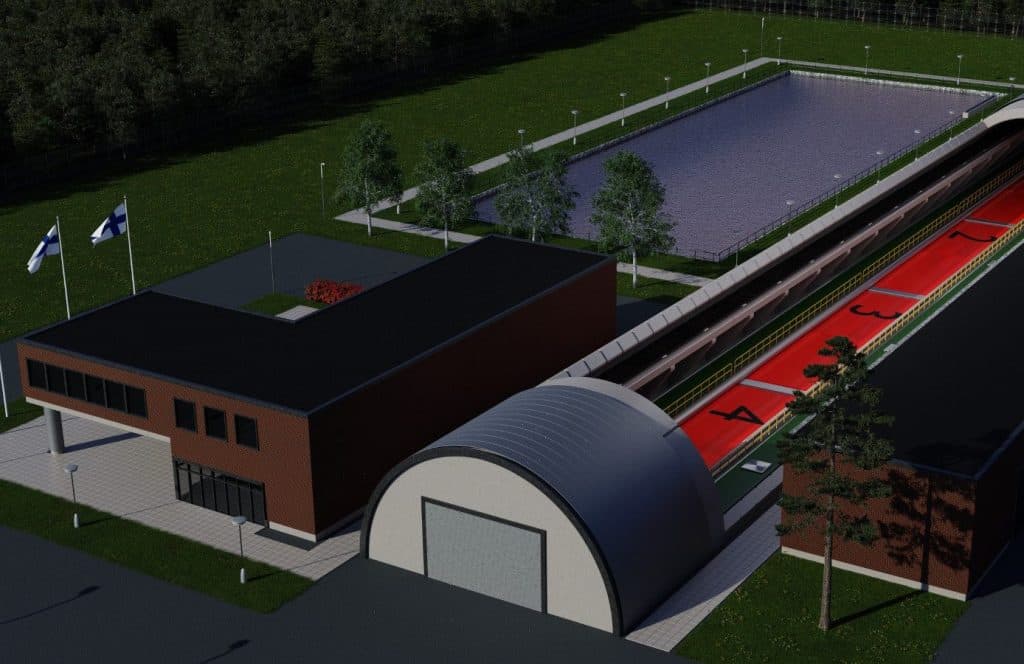
A Finnish small modular reactor project for district heating has secured EUR 2 million for further development. The Finnish company aims to build the LDR-50 reactor, with a thermal capacity of 50 MW, by 2030, helping to decarbonise district heating. Among other things, the funding will enable the construction of a full-scale mock-up of the reactor.
Finnish company Steady Energy announced that it had secured EUR 2 million (around CZK 47 million) to develop a district heating plant powered by a small nuclear reactor. The LDR-50 project, with a thermal capacity of 50 MW, was launched in 2020 by the Finnish Technical Research Centre VTT, where Steady Energy was established.
Unlike conventional reactors, the LDR-50 operates at a temperature of around 150 degrees Celsius and at a pressure below 10 bar. These operating conditions make it simpler to implement the technical solutions needed to meet the nuclear industry's high safety standards.
“The pressure required in the LDR-50 reactor is comparable to that of a domestic espresso machine. It operates at a lower pressure than the district heating network. This ensures that, in the event of a fault that causes a leak, the leak will remain contained within the heating plant, without endangering people or the environment,” says Tommi Nyman, CEO of Steady Energy.
The company plans to use the funding for research and to demonstrate the heating plant's functionality using a full-scale mock-up powered by electricity. Steady Energy's aim is to bring the first heating plant based on the LDR-50 into operation by 2030.
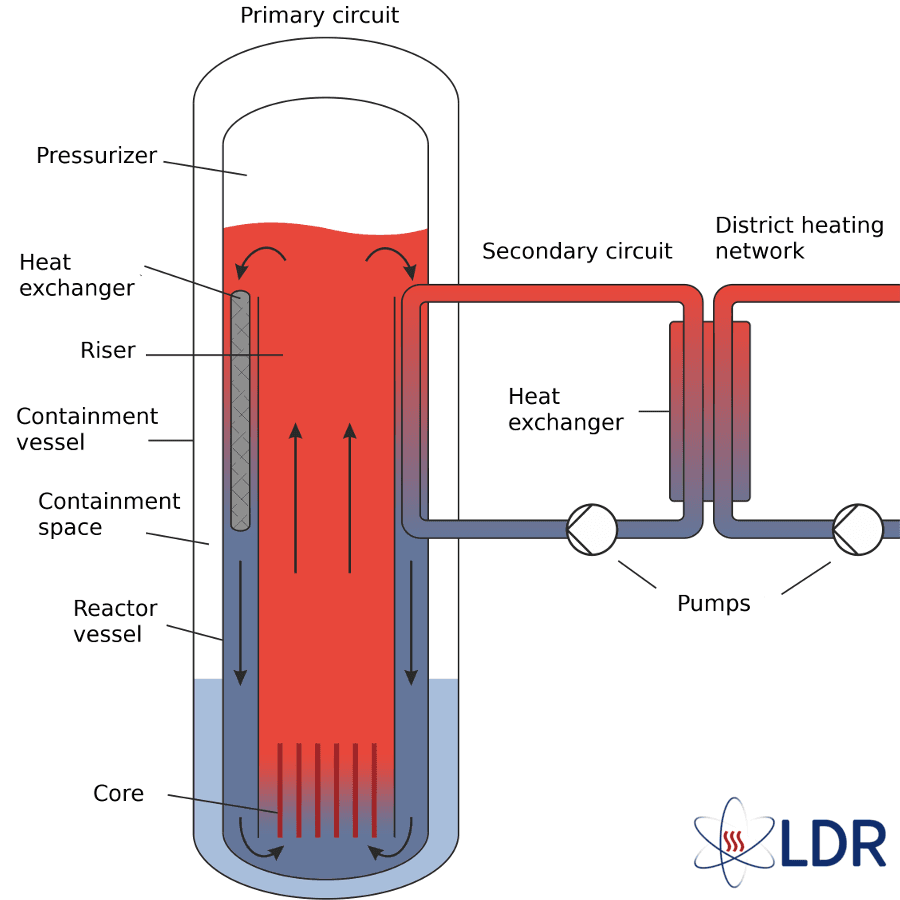
Cross-section of the LDR-50 reactor (Source: LDR-Reactor)
The LDR-50 reactor module consists of two nested pressure vessels, with the space between them partially filled with water. If heat removal through the primary heat exchangers is disrupted, the water in the space between the vessels begins to boil, creating an effective passive heat-transfer path to the reactor pool. The heating plant therefore does not rely on external electricity or on any moving mechanical parts that could fail and prevent cooling from functioning.
Decarbonising district heating
Steady Energy sees nuclear reactors as a way to decarbonise the energy-intensive district heating sector, starting with residential and district heating. According to the company, a heating plant of this size would be sufficient to heat a small city.
“Currently, 75% of district heating systems in the EU use fossil fuels. The situation is even worse in China. Nuclear energy is already a major source of low-carbon electricity, and small modular reactors offer a way to extend the technology's use beyond heating to other energy sectors. Our long-term plan is to operate several heating plants around the world and produce carbon-neutral heat for homes, offices and various industrial applications,” Nyman adds.
In addition to supplying heat, the LDR-50 could be used as a desalination plant to produce fresh water. Another option is to adapt it to produce steam for industrial use.
Translation disclaimer
This article is a machine translation of the Czech original and has not yet been fully reviewed. In case of any doubt, please refer to the Czech version.
Sdílejte článek prostřednictvím:
You might also like
6 November 2026, 10:25