11 October 2026, 08:24
Loading...
Hydrogen blending into gas pipelines has limited potential in Germany, expert council warns

David Vobořil
25 June 2026, 12:55
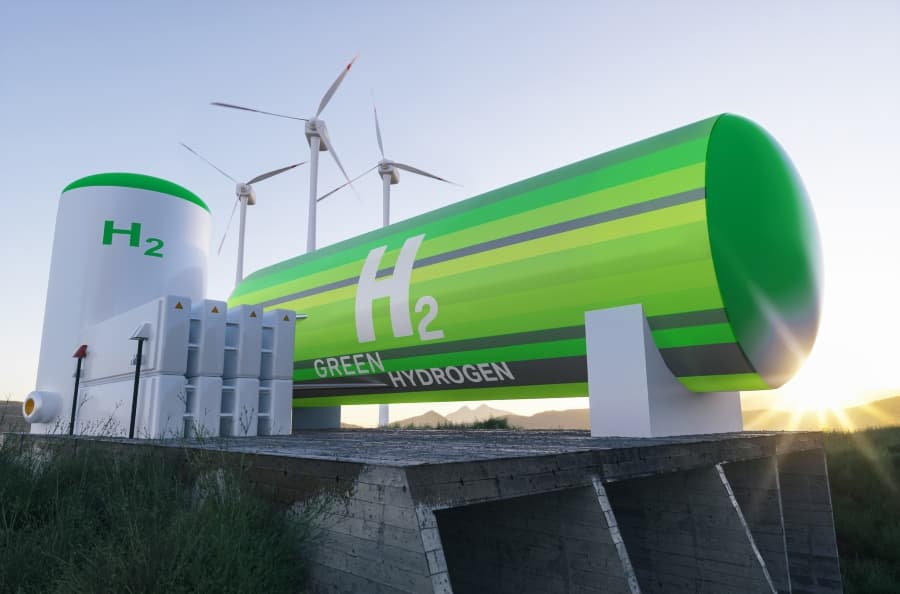
Blending renewable hydrogen into existing gas infrastructure could help reduce emissions, but its benefits are significantly limited, according to Germany’s National Hydrogen Council. Experts point out that even a relatively high share of hydrogen in the blend leads to only a small reduction in emissions and faces technical and regulatory hurdles. They say Germany should therefore focus primarily on building dedicated hydrogen infrastructure.
Blending renewable hydrogen into natural gas is often described as one way to accelerate the decarbonisation of the gas sector, rather than taking the lengthy route of building separate hydrogen networks. However, according to a new report by Germany’s National Hydrogen Council (NWR), the potential of this solution is far more limited than is often assumed.
Hydrogen produced by electrolysis using electricity from renewable energy sources is considered an important tool for decarbonising sectors where emissions are difficult to reduce, such as heavy industry, chemical production and aviation. Under its National Hydrogen Strategy, Germany has set a target of reaching 10 GW of installed electrolyser capacity by 2030. However, the development of both hydrogen production and consumption is significantly behind the original plans.
The council’s report highlights a fundamental problem with thinking in terms of the volume of hydrogen blended into gas. A 10% hydrogen share by volume represents only about 3% of the energy content of the gas mixture and reduces emissions by only around 2%. This assumes that the hydrogen is entirely “green”, meaning it is produced exclusively using electricity from renewable energy sources.
According to the council, blending in 30% hydrogen would reduce emissions by approximately 7%, but such concentrations are not technically feasible in most of Germany’s gas network.
"The lower calorific value has a direct effect on the climate impact of this additive. The potential reduction in greenhouse gas emissions is significantly lower than might be assumed at first glance based on the volume share," the council’s report says.
The most significant limitations apply to high-pressure transmission pipelines. According to the council, they are effectively limited to around a 2% hydrogen share due to European gas quality rules and the requirements of industrial customers such as refineries and chemical plants. Higher hydrogen concentrations can adversely affect their technologies and production processes.
Although distribution networks supplying households and smaller businesses do not have a uniform limit on hydrogen content, they face other problems. For example, there is no comprehensive overview of the types of appliances connected to the network, and some older equipment is not suitable for hydrogen blends at all. Another complication is the seasonality of green hydrogen production, which peaks in summer, while gas consumption is highest in winter.
"In the case of physical blending into distribution networks, the amount of hydrogen that can be blended depends primarily on the compatibility of the relevant application technology (e.g. equipment burners) in a given network area. … [shares] range from 0% by volume (for specific industrial equipment), through 2% by volume (tanks in older natural gas vehicles), to 20% or 30% by volume in more modern equipment in the heating and commercial services sectors," the report says.
Germany’s Hydrogen Council therefore warns that without major changes to the legislative and regulatory framework, hydrogen can be blended into the gas network only to a very limited extent. An excessive focus on this route could also divert investment from building dedicated hydrogen infrastructure, which Germany will need regardless of the extent to which hydrogen and natural gas blends are used, according to experts.
Translation disclaimer
This article is a machine translation of the Czech original and has not yet been fully reviewed. In case of any doubt, please refer to the Czech version.
Sdílejte článek prostřednictvím:
You might also like


10 October 2026, 13:19

10 October 2026, 07:37

10 October 2026, 07:02