11 October 2026, 08:24
Loading...
New German law aims to speed up hydrogen availability and now also covers low-emission hydrogen

David Vobořil
9 March 2026, 12:00
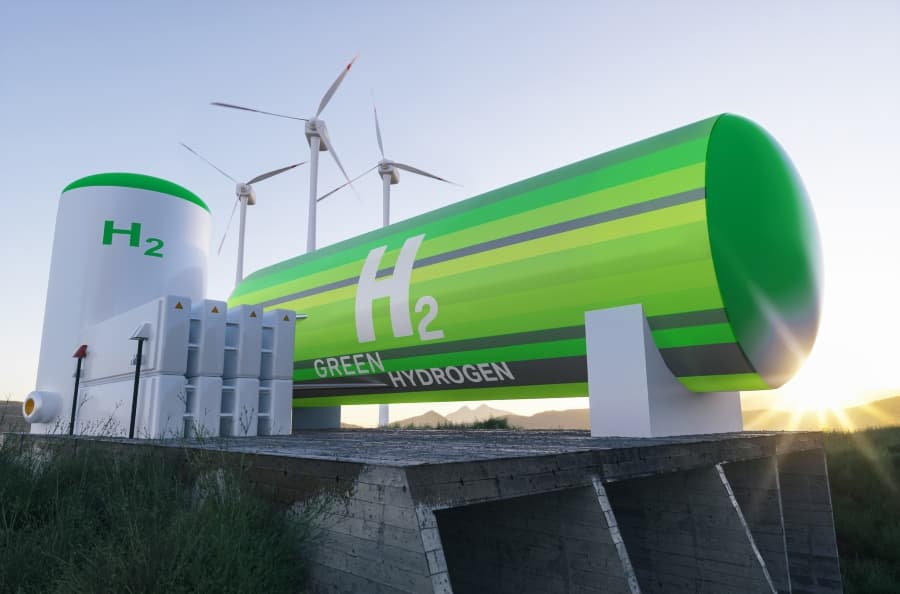
A new law approved by the German parliament aims to accelerate the development of hydrogen production and remove some of the regulatory barriers that have so far held back projects. The energy industry has welcomed the move as an important boost for the emergence of a hydrogen market, while warning that further support measures will be needed to truly develop the sector.
Germany’s new Hydrogen Availability Acceleration Act (WasserstoffBG), approved by parliament, will speed up approval procedures for hydrogen infrastructure and facilities, and will also be extended to facilities producing low-carbon hydrogen. Hydrogen production will now be classified as being in the overriding public interest, making it easier to grant permits and implement new projects.
This creates the right conditions for the initial phase of Germany’s emerging hydrogen market, according to energy association BDEW. BDEW chief Kerstin Andreae added that using other forms of hydrogen—not just so-called “green” hydrogen produced from renewable electricity—would be an important complement in the market’s early stages.
Mahmuat Özdemir, a representative of the Social Democratic Party (SPD), which is part of the governing coalition, and a hydrogen expert, described the law as a clear signal to hydrogen producers, traders and industrial consumers. He said the new rules would primarily simplify and clarify permitting procedures.
“The law sets clear rules, provides greater legal certainty and will help prevent projects from failing because of unnecessary administrative barriers,” Özdemir said.
Hydrogen plays a pivotal role in Germany’s transition to a low-carbon economy. It can serve as an energy carrier for sectors that are difficult to electrify, such as some industrial processes in the mechanical engineering, chemical and steel sectors, and as a means of flexibly storing surplus renewable energy generation using electrolyzers.
The development of Germany’s hydrogen economy is, however, significantly behind schedule. The previous German government set a target of bringing 10 GW of hydrogen-producing electrolyzers online by 2030, but the country currently has only 181 MW in operation. Germany’s ambitious plans to increase production are running into difficulties, as both supply and demand remain far below expectations despite billions in subsidies.
Further support measures needed
BDEW says more needs to be done to ensure the successful launch of the country’s hydrogen market. Andreae said projects need support through contracts for difference (CfDs) to bridge initial cost uncertainties and price gaps, compensating for the higher costs of low-emission production compared with conventional technologies.
Alongside financial support, faster infrastructure development—particularly of transmission networks and storage capacity—will also be crucial, according to BDEW. Without sufficient expansion, investment projects could face further delays.
Concerns over water resources
The Association of Local Utilities (VKU) has also voiced support for faster development of hydrogen infrastructure. At the same time, however, it warned that the expansion of the technology must take the protection of water resources into account.
According to VKU chairman Ingbert Liebing, water utility operators must be involved in project planning at an early stage. He said this is the only way to prevent conflicts over the use of increasingly scarce water resources, which are essential for producing hydrogen through electrolysis.
Translation disclaimer
This article is a machine translation of the Czech original and has not yet been fully reviewed. In case of any doubt, please refer to the Czech version.
Sdílejte článek prostřednictvím:
You might also like

10 October 2026, 13:19
10 October 2026, 07:37
10 October 2026, 07:02