British Prime Minister Rishi Sunak wants to maximise North Sea production despite opposition and activists

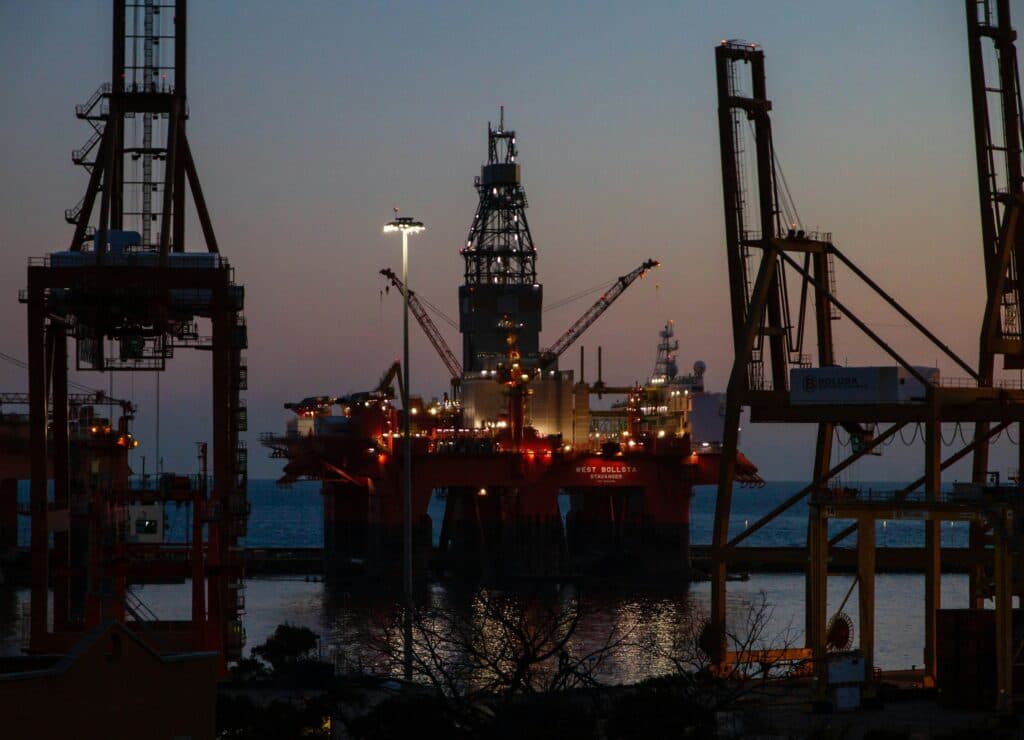
The second reading of the Offshore Petroleum Licensing Bill (The Offshore Petroleum Licensing Bill) began yesterday in the House of Commons of the UK Parliament. The bill has sparked debate across British society. While the Conservative Party supports it as a way to strengthen energy security, Labour and activists are firmly opposed, seeking to prevent further use of fossil fuels. British Prime Minister Rishi Sunak, who supports maximising production in the North Sea, is facing pressure that has been heightened by the recent resignation of a Conservative MP and former energy minister.
The bill proposes requiring the North Sea Transition Authority (NSTA) to hold annual licensing rounds for applications to extract oil and natural gas in the North Sea. The change from the current system would be the regularity of new licensing rounds: at present, the NSTA decides whether to hold new licensing rounds only when necessary, with no requirement to do so regularly.
In practice, this would mean more licences being granted for projects each year. The award of a licence would be conditional on meeting two tests: a carbon intensity test (carbon intensity) and a net importer test (net importer). The first test assumes that domestically produced gas has a lower carbon intensity than imported gas, while the second requires the UK to be a net importer of oil and gas during the 15-year assessment period.
The government sees the bill as strengthening the UK’s energy security and independence. It also aims to give the industry and potential investors greater certainty that new licences will continue to be issued. Finally, it wants to protect the domestic oil and gas industry, which employs more than 200,000 people in the country. The government describes the bill as a pragmatic, proportionate and realistic way to achieve net zero without placing an undue burden on the public and industry.
The government is opposed by Labour and environmental activists. Labour argues that the bill is harmful to the climate, while activists from the UpLift organisation have called the move unnecessary, saying it would bring only a minimal increase in production while causing maximum harm. Environmental organisations point to the UK’s climate commitments, including those made at the recent COP28, which they say the new law would undermine.
Criticism has also been directed at Sunak himself, including from within his own party. The situation escalated in early January when Conservative MP Chris Skidmore announced his resignation. Skidmore, who briefly served as energy minister in Theresa May’s government, was a leading voice on climate issues within the party. He called the bill a tragedy and also had this to say about the prime minister:
“He is on the wrong side of the future economy, which will be based on renewable energy and clean industries, not fossil fuels,” he continued, turning to voters: “He is on the wrong side of modern voters, who will vote in the next general election for the party that protects our environment rather than putting it at risk.”
Finally, it should be noted that the Conservatives are likely to win even without Skidmore’s vote. However, if the bill is passed at this stage, it will still go through a third reading, so there is no need to get ahead of ourselves.
Translation disclaimer
This article is a machine translation of the Czech original and has not yet been fully reviewed. In case of any doubt, please refer to the Czech version.




