
28 October 2026, 15:10
Loading...
Climate policy under fire: People in Germany, France and Poland oppose a ban on combustion engines

Marek Kršák
14 March 2024, 14:32
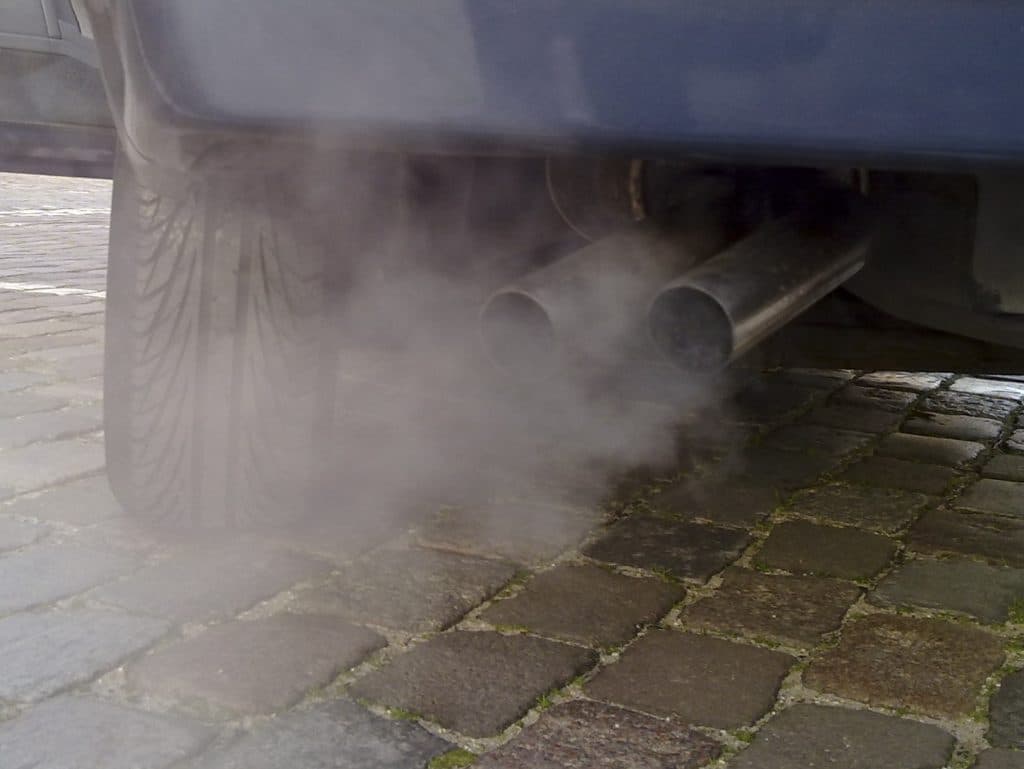
A survey conducted in Germany, France and Poland found that the ban on sales of new cars with combustion engines from 2035 is considered the least popular climate measure. Euractiv.com reports that this measure was also the least popular among voters for centre-left parties.
In 2023, EU countries and the European Parliament effectively banned sales of new petrol and diesel cars from 2035 by reducing permitted exhaust emissions to zero. The only exception is for cars powered exclusively by climate-neutral fuels, the implementation of which has yet to be completed.
This policy, widely known as the “combustion-engine ban”, is the least popular climate policy among the 40 options presented in a survey by researchers from the University of Oxford, Humboldt University of Berlin and Hertie School in Berlin.
A total of 15,000 respondents from Germany, France and Poland took part in the survey, which aimed to assess different climate policies, as well as the status quo, in pairwise comparisons, producing a ranking of the measures by popularity.
The results showed that the ban on cars with combustion engines ranked last in all three countries. It was followed by measures such as higher CO2 charges (Germany and Poland) and tolls for all cars except electric ones (France).
While dissatisfaction with the combustion-engine ban is highest among right-wing voters, it spans political camps, making the policy the least popular even among potential voters for centre-left parties such as Germany’s SPD, Poland’s Lewica and France’s Parti Socialiste (all S&D).
Unlike centre-right and far-right parties, the centre-left S&D group in the European Parliament has consistently supported the measure, arguing that it is necessary to achieve climate neutrality across the EU by 2050 and give carmakers the clarity they need to focus on electric vehicles.
Green investment and industrial policy measures dominate the other end of the spectrum
At the other end of the spectrum, the most popular measures include increased government investment in public transport (Germany), switching to green heating in public buildings (France and Poland), and other measures that place the burden on the public sector and large corporations rather than consumers.
“Popular” regulatory interventions included green standards for power generation and industry, bans on short-haul flights or private jets, for example. In other words, these are regulations that do not directly affect the everyday lives of most people.
Researchers warn
Despite opposition to certain measures, the authors warn that this does not amount to blanket opposition to ambitious climate policies. They also point out that during European Parliament election campaigns, some parties are seeking to offer the greatest possible relaxation of climate targets because they believe this is a popular move.
Instead, the authors say, politicians should focus on green public investment, for example through an EU-wide industrial policy fund, or on reducing economic dependence on third countries and protecting the competitiveness of European industry.
For highly unpopular measures such as higher carbon prices on petrol and diesel, the authors argued that redistributing revenues, particularly to the lowest-income households, could reduce public opposition.
Translation disclaimer
This article is a machine translation of the Czech original and has not yet been fully reviewed. In case of any doubt, please refer to the Czech version.
Sdílejte článek prostřednictvím:
You might also like

28 October 2026, 13:08

28 October 2026, 11:10

28 October 2026, 09:08
