Estonia opens its first rare-earth magnet factory
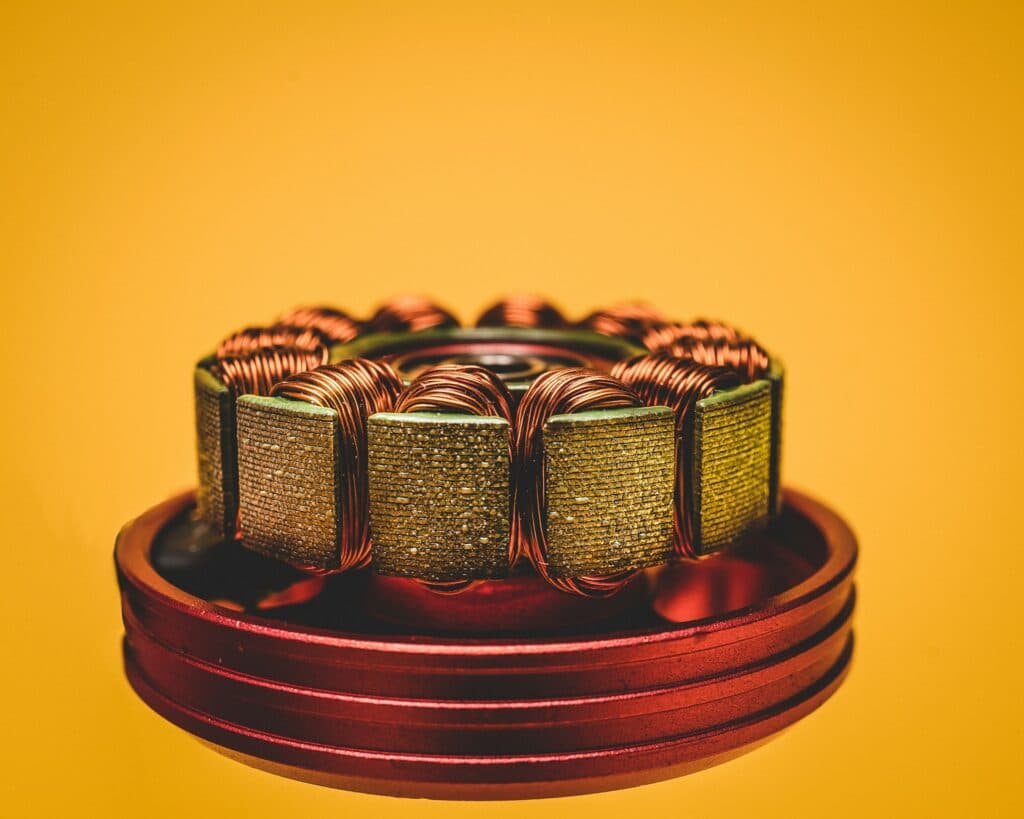
Canadian company Neo Performance Materials has opened Europe’s first large-scale factory focused on producing rare-earth magnets. The company’s management expects demand to triple over the next ten years.
The factory, built in Estonia, began production on Friday. The company has managed to sign its first contracts with German suppliers Schaeffler and Bosch.
China disrupted supply chains for valuable materials this April by introducing export controls on a range of these raw materials (specifically germanium, gallium and graphite) in response to US tariffs. Although this does not directly affect magnets, it is creating uncertainty in the market. Beijing has also said it is addressing problems with delivery delays, but many European companies are reportedly still facing difficulties obtaining export licences.
The European Union is up to 98% dependent on Chinese supplies of rare-earth magnets. According to Neo Performance’s CEO, this is “unsustainable”, particularly given the expected growth in demand. The EU currently imports approximately 22 000 tonnes of these magnets, and consumption is estimated to rise to as much as 60 000 tonnes. The factory in Estonia is expected to initially produce around 2 000 tonnes, with plans to increase capacity to as much as 5 000 tonnes.
The EU has set a target of localising 40% of critical raw material processing capacity, including for rare earths, by 2030. The Critical Raw Materials Act (CRMA) also aims to ensure that 10% of annual extraction and 25% of recycling take place within the EU. Another target stipulates that no more than 65% of annual consumption of any individual critical raw material can come from a single third country. This is highly ambitious, as China controls more than 90% of global production of some materials. However, other countries could also be affected, such as the Democratic Republic of the Congo and its cobalt exports.
The new factory has therefore received EUR 14.5 million (approximately CZK 360 million) in support from the EU’s Just Transition Fund, as well as a USD 50 million loan (just over CZK 1 billion) from Export Development Canada (a state-owned corporation supporting Canadian exports).
According to Neo’s CEO, completely cutting ties with Chinese products is unrealistic, but up to 30% of global production could be moved outside China, weakening its current dominance. The new plant is located near the company’s existing mineral separation facility. Neo sources its raw materials primarily from Australia and Malaysia.
What are rare-earth magnets?
These magnets are made mainly from two materials: neodymium and samarium-cobalt. Neodymium magnets (NdFeB) are the most widely used today. They can be found, for example, in electric motors, wind turbines and hard drives. Their advantages include high coercivity (resistance to demagnetisation) and a very strong magnetic field. However, they are less resistant to oxidation and have a lower Curie temperature (the temperature at which a material loses its magnetic properties).
Samarium-cobalt magnets (SmCo) are less common because of their high cost. Their main advantages are resistance to high temperatures and corrosion, which is why they are used primarily in aviation, the military, satellites and specialised industrial robotics.
As its name suggests, Neo Performance focuses mainly on neodymium magnets and powders. Production is a complex process in which neodymium is fused with boron. These products are used primarily in the automotive industry, but increasingly also in renewable energy, particularly wind power. The company therefore expects demand to grow rapidly.
Translation disclaimer
This article is a machine translation of the Czech original and has not yet been fully reviewed. In case of any doubt, please refer to the Czech version.




